Belgian Film ‘Notre Salut’ Premieres at Cannes for Palme dOr
Belgian cinema took center stage at the 79th Cannes Film Festival on Wednesday as Emmanuel Marre’s ‘Notre Salut’ (international title: A Man of His Time) premiered in the Official Competition, vying for the prestigious Palme d’Or. The 155-minute historical drama, a co-production between Belgium’s Michigan Films and France’s Kidam, is one of four Belgian films selected for the Official Selection this year — a historic showing for the country’s film industry.
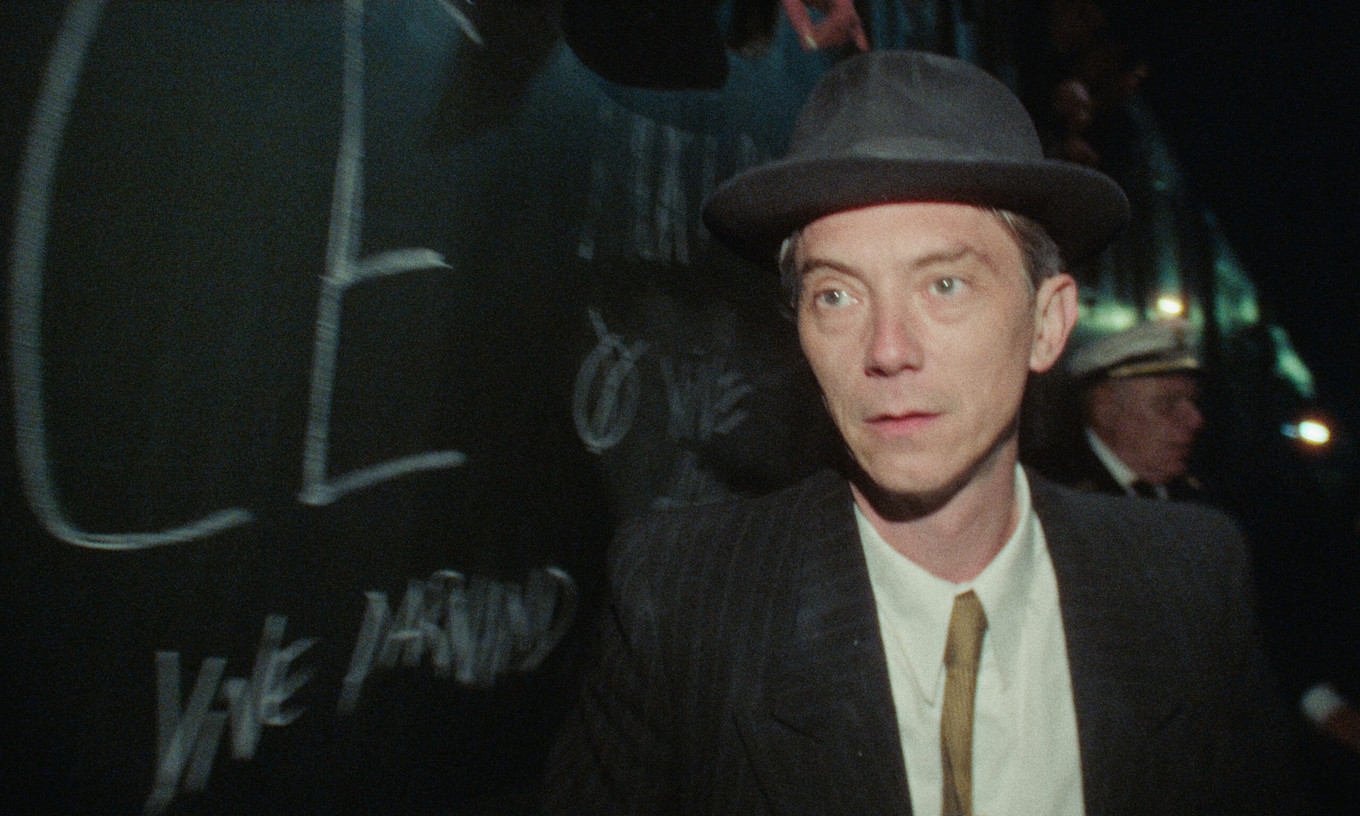
A Story Rooted in Family History
Set in September 1940 at the dawn of the Vichy regime, ‘Notre Salut’ follows Henri Marre (played by César Award-winning actor Swann Arlaud), a 49-year-old man who arrives alone in Vichy carrying copies of his self-published political manifesto. Broke and estranged from his family, he seeks to secure a place in the new collaborationist administration. The film also features Sandrine Blancke, a Magritte Award winner for Dalva, alongside Mathieu Perotto, Harpo GUIT, Mathilde Abd-El-Kader, and Jean-Baptiste Marre.
The film is deeply personal for Marre. As he explained in an interview with the Festival de Cannes, his great-grandfather was a Vichy civil servant who wrote the real Notre Salut manifesto, self-published by Fernand Sorlot — the same publisher who released Hitler’s Mein Kampf in French. “The idea was to give a face to the countless government officials that were cogs in the administration’s machine,” Marre said. “It wasn’t about exploring my family history, but rather accessing a memory portal.”
The voiceovers in the film are lifted almost verbatim from family war correspondence preserved by Marre’s aunt, offering an intimate window into the daily lives of those who became cogs in the collaborationist machinery. “One of my aunts had kept my great-grandparents’ war correspondence, which this movie is based on,” Marre said. “They enabled me to access something very rare, to go through the war on the side of the individuals labeled collaborators, but from within, in their most intimate daily life.”
A Nuanced Portrait of Collaboration
Rather than creating a traditional historical fresco, Marre focuses on the bureaucratic and psychological dimensions of collaboration. The film explores how ordinary individuals became complicit in an authoritarian system through seemingly trivial administrative decisions. The director shot in locations where actual events took place, including a hotel in Vichy where the Minister of Finance once stayed.
“How do fascist regimes create such a climate in which individual neuroses settle and work for them?” Marre asked in the interview. The director noted that his protagonist’s work consisted of “micro-decisions, rationalizing unemployment management, classifying foreign workers, directing Jews toward specific groups.” He described the archives he consulted as “truly astounding” — including a 30-page file from the Commissariat-General for Jewish Affairs containing staff complaints about food and fuel compensation.
Marre emphasized the importance of distinguishing empathy from sympathy: “The idea is to enable the viewer to have a certain empathy for the character, but not to confuse that emotion with sympathy. This is the most confronting aspect, contemplating this from a contemporary point of view.” The director noted that the pendulum “easily swings from grotesque to dark until we realize it’s no longer funny.”
Belgium’s Historic Year at Cannes
‘Notre Salut’ is one of four Belgian films in the Official Selection at this year’s festival, alongside Lukas Dhont’s ‘Coward’ (also in Competition), Valentina Maurel’s ‘Ton animal maternel’ (Un Certain Regard), and Rakan Mayasi’s ‘Yesterday the Eye Didn’t Sleep’ (Un Certain Regard). Several Belgian co-productions are also featured, including Asghar Farhadi’s ‘Histoires parallèles’ and the opening film ‘La Vénus électrique’.
As RTBF reported, producer Sébastien Andrès of Michigan Films described the significance: “Being in official competition offers incredible international exposure for a film.” Andrès noted that this is the first time Michigan Films has competed for the Palme d’Or after two decades of producing documentaries and fiction.
Challenges Behind the Spotlight
The film’s €5 million budget required French co-production partners, highlighting structural challenges facing Belgian cinema. Andrès explained that Belgium is “too small a market to make €5 million films,” necessitating international partnerships. He also pointed to systemic issues: public funding has not been indexed to inflation, squeezing producer margins, while salary costs continue to rise.
“The climate for the cinema sector and culture in general is not looking good,” Andrès told RTBF. “We’ve seen bankruptcies, companies whose margins are shrinking enormously.”
What’s Next
‘Notre Salut’ represents a milestone for Emmanuel Marre, marking his first solo feature and his first time in Official Competition after a career built on award-winning short films including Le Film de l’été (Prix Jean Vigo, 2017) and D’un château l’autre (Pardino d’oro at Locarno, 2018). With Belgium enjoying an exceptionally strong presence at Cannes this year, the film’s reception could have lasting implications for the country’s film industry — potentially unlocking new co-production opportunities and international partnerships.
The 79th Cannes Film Festival runs through May 23, with the Palme d’Or winners set to be announced at the closing ceremony.