SpaceX Launches ISS Cargo Mission as Blue Origin Moon Lander Mockup Arrives
SpaceX successfully launched a Dragon cargo spacecraft to the International Space Station on May 15, delivering 6,500 pounds of supplies and scientific equipment, while a full-scale replica of Blue Origin’s Blue Moon Mark 2 crew cabin has been installed at NASA’s Johnson Space Center to prepare astronauts for the next crewed Moon landing. The twin developments underscore the accelerating pace of both commercial resupply operations and NASA’s Artemis lunar program.
Two Fronts of Space Progress
The SpaceX CRS-34 mission lifted off at 6:05 p.m. EDT from Space Launch Complex 40 at Cape Canaveral Space Force Station after a three-day delay due to bad weather, according to CBS News. The Falcon 9 rocket’s first stage, making its sixth flight, landed successfully at Landing Zone 40 approximately 7.5 minutes after liftoff — marking SpaceX’s 611th successful booster recovery.
Meanwhile, at NASA’s Johnson Space Center in Houston, a 15-foot-tall prototype of Blue Origin’s Blue Moon Mark 2 crew cabin is now operational in the Space Vehicle Mockup Facility. NASA announced that the mockup will be used for mission simulations, spacesuit checkouts, and design feedback as the agency prepares for crewed lunar landings.
SpaceX’s Record-Breaking Cargo Run
The CRS-34 Dragon became the first Cargo Dragon spacecraft to make a sixth flight to the ISS — a new reusability record. “This will be the first Cargo Dragon spacecraft to head to the station for a sixth time, so a great milestone there,” said Bill Spetch, ISS operations integration manager at Johnson Space Center, as reported by CBS News.
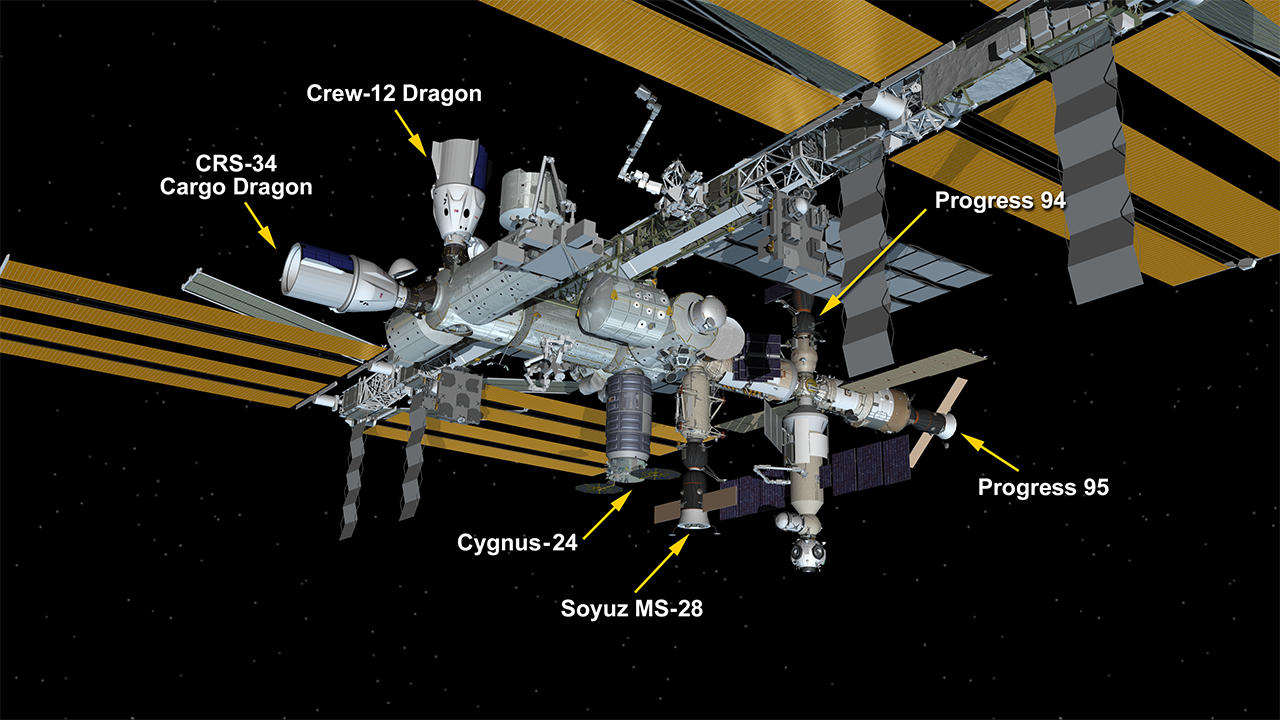
The cargo manifest included 1,363 pounds of crew essentials, more than 1,000 pounds of vehicle hardware, 282 pounds of spacewalk components, 186 pounds of computer gear, and 1,834 pounds of research equipment. Space.com reported that the scientific payload includes a bone scaffold made from wood to study osteoporosis treatments, equipment to evaluate how red blood cells change in space, and a new instrument to study charged particles around Earth.
Dragon docked autonomously to the forward port of the Harmony module on May 17 at 6:37 a.m. EDT, according to NASA’s ISS blog. The spacecraft will remain at the station for approximately one month before returning to Earth with time-sensitive research, splashing down off the coast of California in mid-June.
“The ISS has enabled more than 4,000 different science experiments and technology demonstrations in its 25 years on orbit,” said Liz Warren, deputy chief scientist for the ISS program, as quoted by CBS News. “It serves both as a proving ground for scientific breakthroughs and as a critical stepping stone to help enable the Artemis program, lunar exploration and future Mars missions.”
Blue Origin’s Lunar Training Milestone
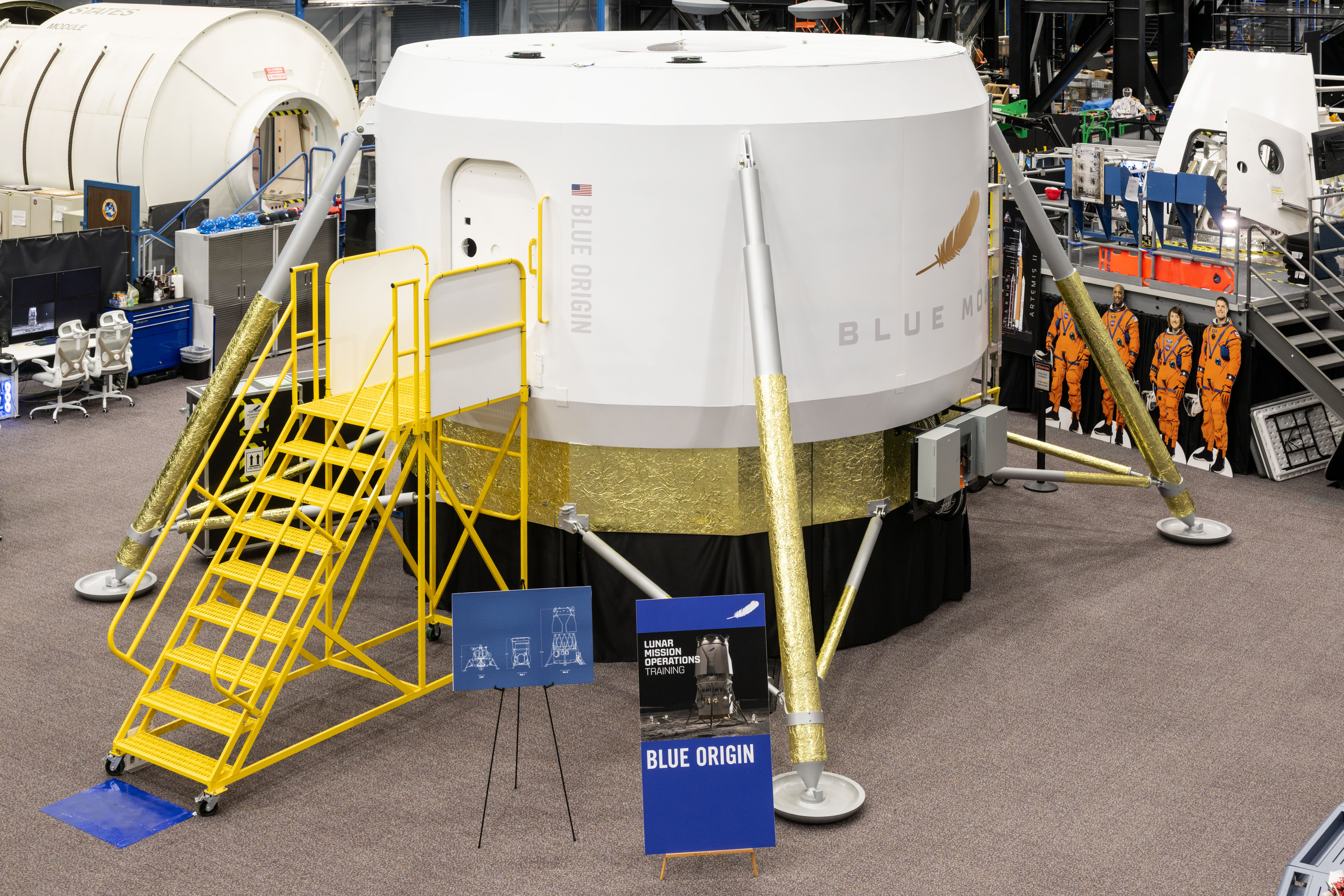
The Blue Moon crew cabin mockup, standing over 15 feet tall, features an exterior ladder similar to what astronauts would use to exit onto the lunar surface. The actual lander will stand approximately 52 feet tall, with the crew cabin at its base. USA Today reported that both NASA and Blue Origin can access the exterior and interior for human-in-the-loop tests, including mission scenarios, communications drills, and simulated moonwalks.
“The training cabin will also be used to provide design feedback to the Blue Origin team as the lander continues to be developed and mission planning evolves,” NASA said in a statement.
The Race to the Moon
The development comes as both Blue Origin and SpaceX race to have lunar landers ready for NASA’s Artemis program. Following the successful Artemis II mission in April 2026, which sent four astronauts around the Moon, the agency has outlined a revised timeline: Artemis III in 2027 will test rendezvous and docking with commercial landers in Earth orbit, while Artemis IV in 2028 targets the first crewed Moon landing since 1972.
Blue Origin is also preparing an uncrewed Mark 1 variant of its Blue Moon lander for a pathfinding mission to the Moon’s south pole later this year. NASA plans to dramatically increase uncrewed landings under its Commercial Lunar Payload Services program, eyeing up to 30 missions in 2027 alone.
What’s Next
As the CRS-34 Dragon continues its month-long stay at the ISS, the crew cabin mockup at Johnson Space Center will evolve over time into an integrated simulator with interactive systems. The dual-track approach of contracting both SpaceX and Blue Origin for lunar landers gives NASA redundancy and flexibility as it pushes toward establishing a sustainable human presence on the Moon — a critical stepping stone for future missions to Mars.