Woman Charged After Shooting Two Lawyers Outside Raleigh Courthouse
A 57-year-old Raleigh woman is accused of shooting two attorneys outside the Wake County Courthouse in downtown Raleigh on Friday morning, shortly after a tense civil court hearing, according to police. The suspect, Gwendolyn White, was taken into custody at the scene and charged with two counts of attempted murder.
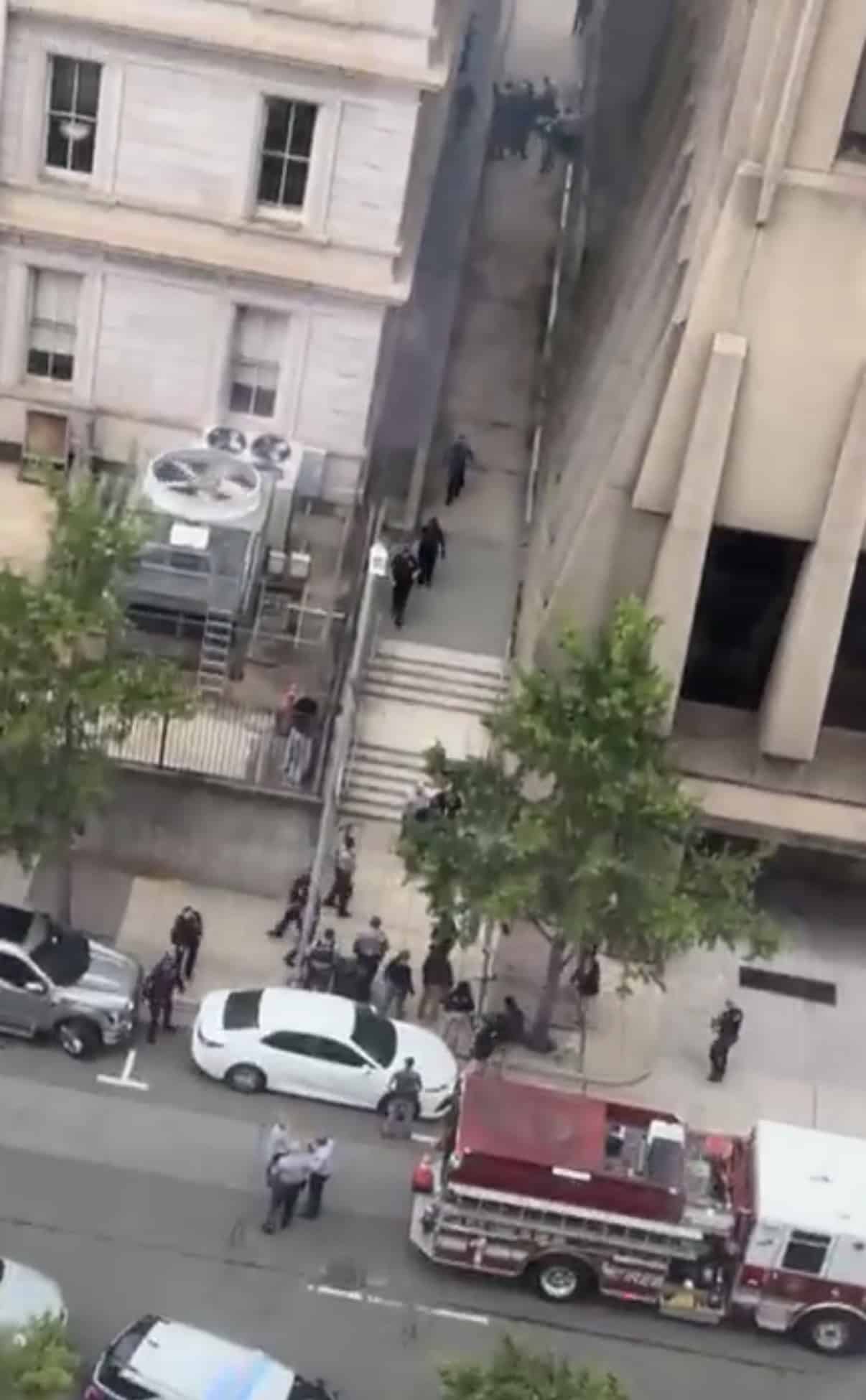
What Happened
The shooting occurred at approximately 10:30 a.m. on May 22 outside the Old Wake County Courthouse on Fayetteville Street, according to the Raleigh Police Department. White had been in court for a hearing in a civil case she filed against the Rolesville Police Department, which she had sued over body camera footage.
According to Raleigh Police Chief Rico Boyce, White became “belligerent” during the proceeding. The hearing ended, and White left the courthouse, retrieved a handgun from her vehicle, and returned to shoot the two attorneys as they exited the building. Law enforcement officers immediately took her into custody.
“When deputies and officers came out of the courthouse, they encountered an adult female who was in possession of a handgun. That female was taken into custody,” Boyce said at a press conference.
The Victims
The victims were identified as Mary K. Harris and Jeffrey R. Whitley, attorneys at the national law firm Fox Rothschild. They were representing the Town of Rolesville Police Department in the civil case filed by White, the town confirmed.
Harris underwent surgery and was reported in stable condition. Whitley’s condition has not been publicly disclosed. Todd A. Rodriguez, Fox Rothschild’s firmwide managing partner, issued a statement saying the firm was “doing everything possible to support them” and expressed gratitude to first responders.
A Years-Long Legal Battle
ABC11’s I-Team reported that White’s legal dispute with the Rolesville Police Department dates back to March 2021, when officers responded to a verbal altercation between White and two neighbors. No crime was determined, but White later requested body camera footage from the incident.
She filed a lawsuit in 2022 seeking the footage, which was not provided until January 2026 — nearly four years after her initial request. A judge dismissed her case but ordered the footage released. Friday’s hearing was scheduled to determine whether her case should be reinstated.
The Backstory: Allegations of Elder Neglect
White’s legal battles extended beyond the police department. According to The North Carolina Beat, White had spent more than a year publicly accusing the North Carolina Department of Health and Human Services and Wake County Adult Protective Services of allowing her 90-year-old mother, Elleen Abrom White, to die from severe neglect while under state guardianship.
White alleged that her mother, placed under guardianship in late 2024, developed more than 30 open bedsores, was left lying in urine and feces, and suffered from multiple infections, starvation, and dehydration at a nursing facility. She claimed a wound care provider told her someone poured acid into her mother’s open wounds. Her mother died on May 13, 2025.
Broader Implications
The shooting has raised serious concerns about courthouse security. Both Wake County courthouses were closed for the remainder of the day, and several streets in downtown Raleigh were shut down. The incident has sent shockwaves through North Carolina’s legal community.
White remains in custody without bail. A criminal hearing is scheduled for May 26. Authorities have not disclosed a motive, and the outcome of the civil hearing that preceded the shooting has not been made public.
What to Watch For
As the case proceeds, several questions remain unanswered: the current condition of both victims, why White was hospitalized after the incident, whether her allegations about her mother’s death under state guardianship will be investigated, and what security changes may be implemented at the Wake County Courthouse.
The case also highlights broader systemic issues around guardianship reform in North Carolina and the emotional toll of prolonged legal disputes.