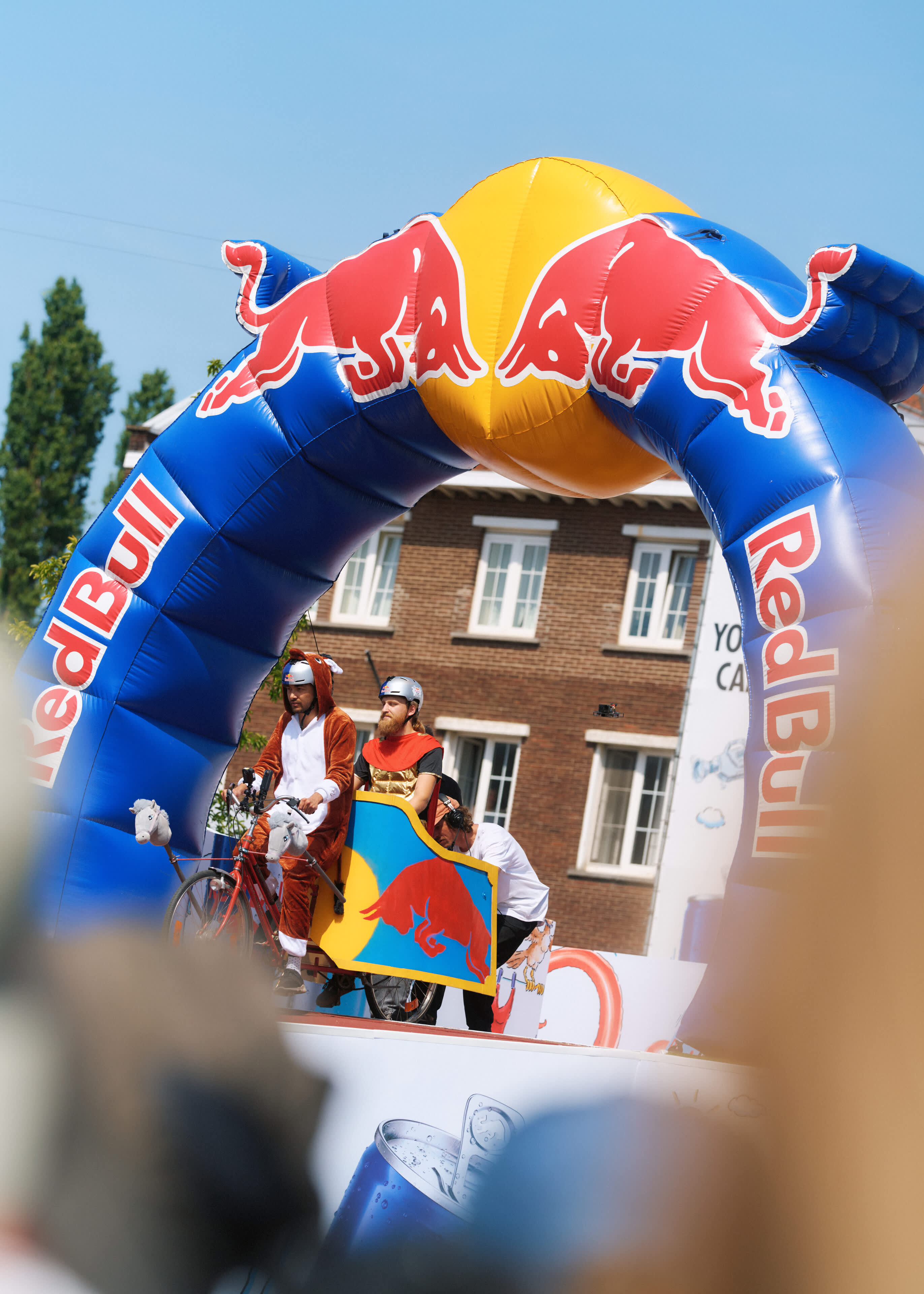
Red Bull Vél’eau Draws 25,000 to Hasselt Bike Race
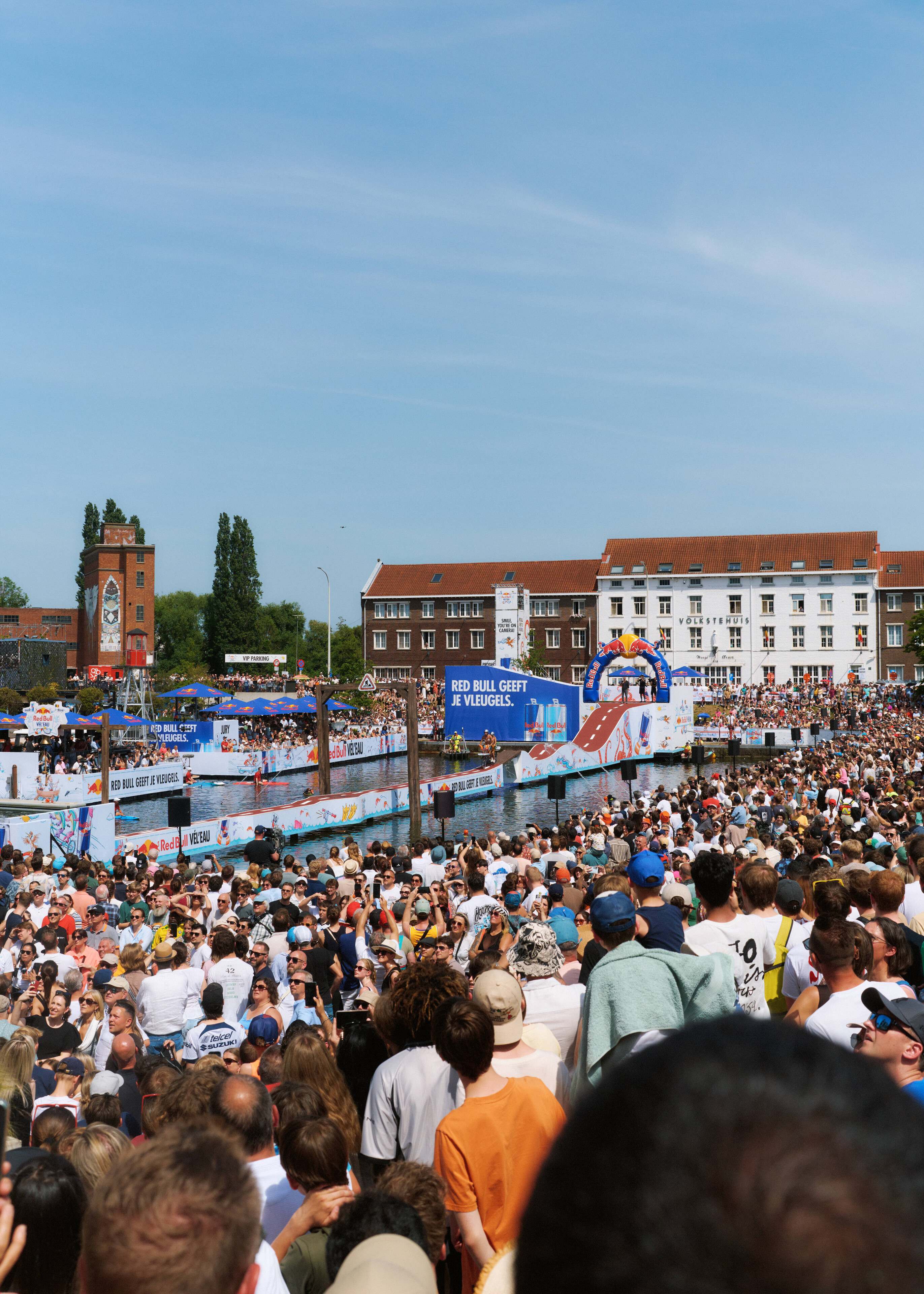
More than 25,000 spectators gathered at the Kanaalkom canal basin in Hasselt on Sunday for the second Belgian edition of Red Bull Vél’eau, a spectacular and ludicrous cycling event where 30 teams raced self-built tandem bicycles over a narrow obstacle course suspended above the water. Only 11 of the 30 teams successfully reached the finish line without taking an early bath, according to VRT NWS.
A Course Designed for Chaos
The course at the Kanaalkom was deliberately engineered to test both creativity and composure. Teams launched from a steep descent onto a bumpy pumptrack section, followed by a drawbridge that shook their vehicles violently. Riders then plunged through fountains that temporarily blinded them, navigated a “typical Belgian” roundabout complete with roadworks, and finally attempted to cross a narrow plank to ring the finish bell.
“The course looks really challenging and that’s what makes it so fun,” said Ward Lemmelijn, the Belgian rower and media figure who served on the jury. “The descent, the drawbridge, the fountain where you can’t see anything for a moment, the typical Belgian roundabout with roadworks and then that narrow plank towards the finish… It’s really full of traps.” Lemmelijn’s comments were reported by KMO Insider.
Local Heroes Take the Crown
Victory went to Team “The Ginger One” from Hasselt itself, consisting of rally driver Thomas Martens and navigator Marc Huysegems. They completed the course in just 11.77 seconds—the fastest time of the day.
“We were last to go and we were the fastest, I didn’t expect that,” Martens told VRT NWS. “We had to wait a long time before it was our turn, but there are lots of people and a great atmosphere. And of course we’re happy that we won.”
The design prize was awarded to Tibo Dierckx and Ruben Poels from Leuven for their creation named “TrAPPAtar.” The jury, which also included Ayana Doucouré and rally driver Guillaume de Mévius, judged teams on originality and concept as well as speed.
Entertainment Meets Endurance
The event was hosted live at the Kanaalkom by Belgian TV personality Tom Waes and content creator Shauna Dewit. Waes, no stranger to eccentric events, was visibly delighted by the spectacle.
“From the side you think: how hard can it be? Until you see one duo after another fly into the water,” Waes said. “But that provided fantastic entertainment. Masses of enthusiasm, and even with that heat, this went incredibly well.”
The hot weather—temperatures reached approximately 30°C (86°F)—did take its toll. Around 30 spectators required medical attention from emergency services stationed at the event, as confirmed by Red Bull Belgium.
Popular Belgian content creators added to the event’s social media appeal. Average Rob and Arno The Kid, who participated for the second time, built a Harley Davidson-themed turbo flame bike. “We ended up in the water just before the finish line. But that’s part of it, right? Otherwise you haven’t really experienced it,” Average Rob said.
Growing Demand and Strategic Significance
Over 200 teams applied for just 30 available spots, underscoring the event’s surging popularity. The second edition followed a successful debut in Kortrijk, West Flanders, and represents a key part of Red Bull’s broader strategy of positioning itself as a media and entertainment brand rather than simply an energy drink producer.
According to KMO Insider, the event is designed to be accessible, visually striking, easily shareable on social media, and attractive to a young audience. Many teams built anticipation for weeks via TikTok, Instagram, and YouTube, amplifying the event’s reach to younger demographics.
The City of Hasselt implemented significant traffic measures to accommodate the crowds, including the closure of Kempische Kaai for the duration of the event and a parking ban running from May 15 to May 29, as detailed on the official city website.
What’s Next for Vél’eau?
With 25,000 visitors, a waiting list of over 170 teams, and widespread social media coverage, Red Bull Vél’eau has firmly established itself as a highlight on Belgium’s event calendar. The combination of sport, creativity, and pure absurdity has proven to be a winning formula. If demand continues at this pace, future editions may need to expand capacity—or build an even more outrageous course.