Nvidia RTX Spark Superchip Brings AI to Windows Laptops
Nvidia has announced a major push into the personal computer market with the launch of its RTX Spark superchip, a new processor designed to bring advanced artificial intelligence capabilities directly to Windows laptops and desktop PCs. The announcement, made at the Computex technology show in Taipei, signals the company’s ambition to transform everyday consumer devices into powerful AI-driven machines.
A New Class of Personal Computer
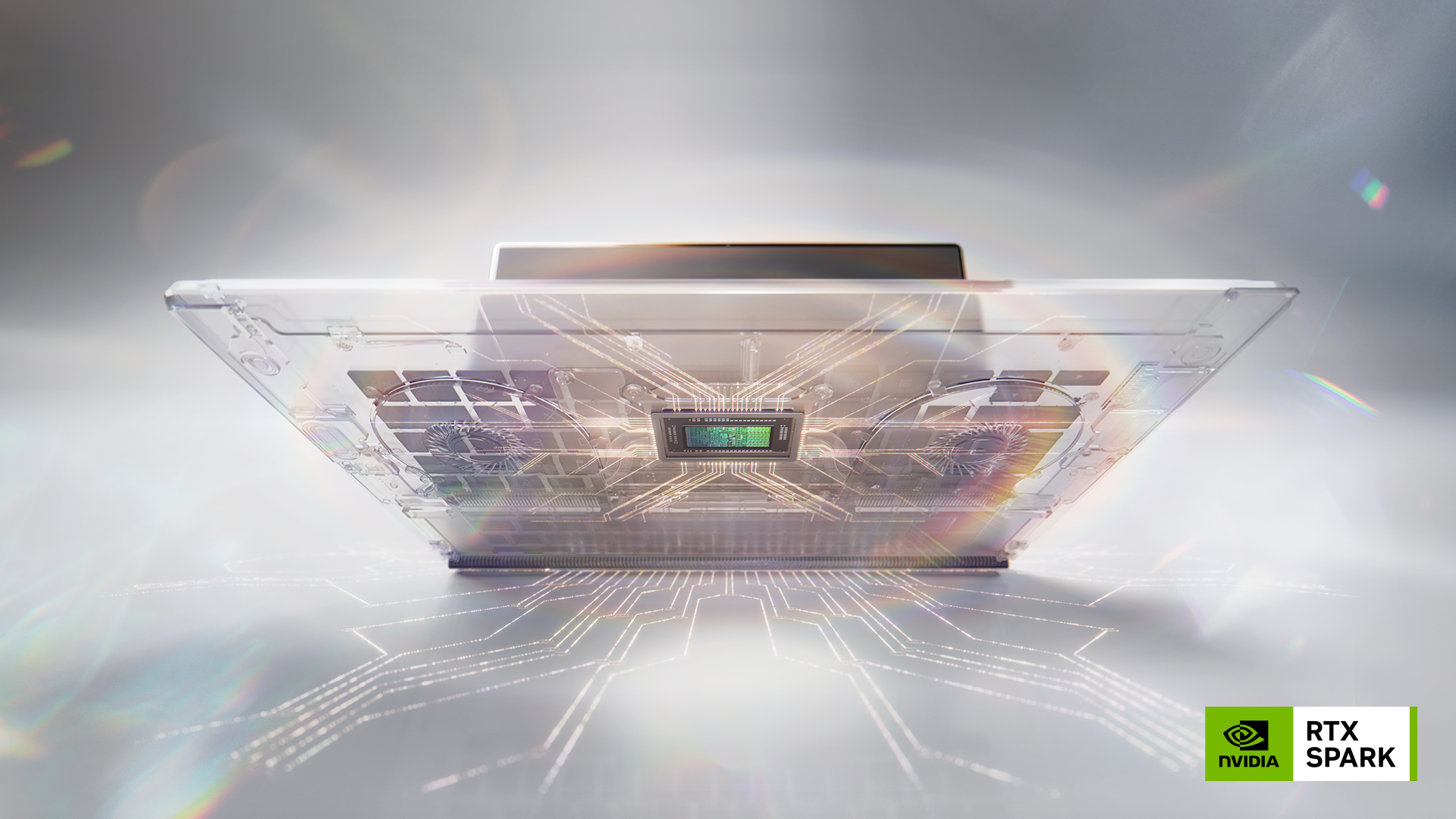
The RTX Spark superchip combines a 20-core Arm-based CPU with a Blackwell GPU featuring 6,144 CUDA cores, delivering up to 1 petaflop of AI performance and 128GB of unified memory. According to AP News, Nvidia CEO Jensen Huang described the chip as a reinvention of the personal computer, saying: “This is going to be the new PC.”
“For forty years, you launched apps. Click. Type. With RTX Spark and Microsoft Windows, you ask — and the PC does the work,” Huang said during his keynote, as reported in the Nvidia official press release. The chip is designed to run AI agents locally on the device, allowing users to interact with their computers through natural language rather than traditional mouse and keyboard inputs.
Industry-Wide Support
Major PC manufacturers are already backing the platform. According to BBC News, RTX Spark-powered laptops and desktops will be available this fall from ASUS, Dell, HP, Lenovo, Microsoft Surface, and MSI, with models from Acer and Gigabyte to follow. The devices are expected to feature slim designs as thin as 14 millimeters and weigh as little as three pounds, with tandem OLED displays and all-day battery life.
Microsoft is a key partner in the initiative. Satya Nadella, Microsoft’s chairman and CEO, said: “Our goal is to deliver unmetered intelligence to every home and every desk with Windows. RTX Spark marks a real breakthrough towards that vision,” as reported by The Guardian.
Performance and Capabilities
The RTX Spark is positioned as a powerhouse for creators, AI developers, and gamers. Nvidia claims the chip can render ultralarge 90GB 3D scenes, edit 12K video, run 120-billion-parameter large language models with up to 1 million tokens of context, and play AAA games at 1440p resolution at over 100 frames per second with ray tracing and DLSS 4.5 upscaling.
Tom’s Hardware notes that Nvidia expects over 30 laptops and approximately 10 desktop designs to launch with the platform. The chip was developed in collaboration with MediaTek, which contributed to the custom Arm-based CPU design for optimal power efficiency.
Market Implications
The move places Nvidia in direct competition with Intel, AMD, Qualcomm, and Apple in the PC processor market. Nvidia’s stock rose approximately 4% following the announcement, while Intel and AMD both fell more than 3%, reflecting investor confidence in Nvidia’s expansion strategy.
Analysts view the development as strategically significant but note it will take time to materialize. Susannah Streeter, chief investment strategist at Wealth Club, told The Guardian that investors are likely to view the move as “a longer-term growth opportunity rather than an immediate earnings driver.” Neil Shah of Counterpoint Research compared the “RTX Spark moment” to the advent of the iPhone and ChatGPT, predicting it would transform the traditional app-centric PC into a useful agentic AI computer.
The Agentic AI Vision
A central element of Nvidia’s strategy is the concept of “agentic AI” — autonomous software agents that can perform tasks on behalf of users. Nvidia and Microsoft are collaborating on new Windows security primitives and the NVIDIA OpenShell runtime to ensure these agents run safely and under full user control. Adobe is also rearchitecting Photoshop and Premiere Pro for RTX Spark, promising up to 2x faster AI and graphics performance.
What’s Next
RTX Spark systems are expected to begin shipping in the fall of 2026. While the initial target audience appears to be creators, AI developers, and enthusiasts rather than the mass market, the platform represents Nvidia’s most ambitious effort yet to bring its AI dominance from the data center to the desktop. Further details on Windows agent capabilities are expected at Microsoft Build on June 2-3.
As the PC industry watches closely, the success of RTX Spark will depend on real-world performance, pricing, and whether the agentic AI use case resonates with mainstream consumers — questions that will only be answered once the first devices reach reviewers and customers later this year.