Jesuits Prepare to Leave Liège After 456 Years
After 456 years of continuous presence in Liège, the Society of Jesus — the Jesuits — is preparing to close its community house definitively, marking the end of a historic chapter in the religious and educational life of the city. Only five Jesuits remain in the community at 92 rue Saint-Gilles, with the youngest aged 66 and the oldest 91, and all will soon relocate to retirement homes.
A Legacy Spanning Nearly Five Centuries
The Jesuit presence in Liège dates back to 1569, less than three decades after the founding of the Society of Jesus by St. Ignatius of Loyola in 1540. Early Jesuits including Pierre Canisius visited the city in the mid-16th century, and under Prince-Bishop Gérard de Groesbeek, a permanent residence was established. The Collège en Isle was founded in 1582 and quickly grew to 1,200 students by 1601, becoming one of the most influential educational institutions in the region.
After the suppression of the Jesuits in 1773 and their restoration in 1814, the order returned to Liège through a different path. In 1828, Abbé Robert Julliot founded a clandestine school near the Church of Saint-Servais, which he later entrusted to the Jesuits upon entering the order in 1838. That school became the Collège Saint-Servais, now part of the Saint-Benoît-Saint-Servais school group, which educates over 2,000 students today.
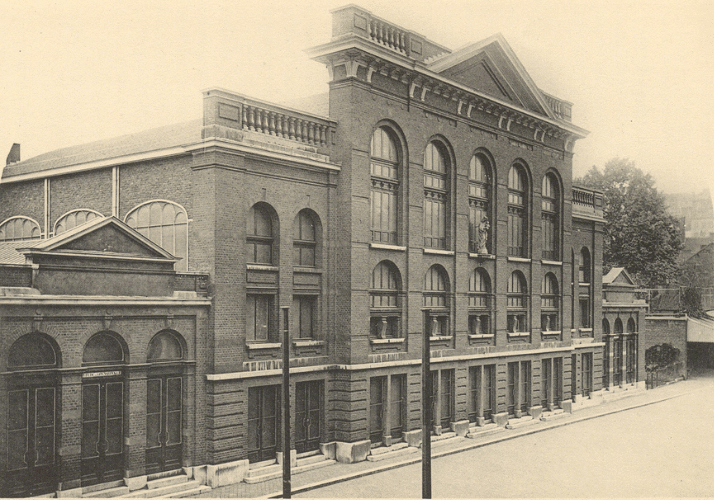
Why the Jesuits Are Leaving
The decision, announced in a press release on May 12, 2026, by the Jesuit Province of Western Francophone Europe (EOF), is driven by a drastic decline in religious vocations and the aging of the remaining members. According to RTBF, Father André Moreau, 84, the current superior of the Liège Jesuits who has served at Saint-Servais for half a century, explained: “The trigger is the drastic reduction in the number of Jesuits and therefore their aging. We are now five in the community, including one who is finishing his career at the college, who will be 66 in June. And so obviously, it’s the end.”
The retirement of the last Jesuit teaching at Saint-Servais was the final catalyst. The community had deliberately waited for his retirement before closing. This departure follows the closure of the Jesuit community in Charleroi in 2021 and is part of a broader reorganization of the Jesuit presence in Western Francophone Europe.
Institutions Founded by the Jesuits
Beyond Saint-Servais, the Jesuits left an indelible mark on Liège through several institutions. They founded the Collège Saint-Louis on the opposite bank of the Meuse in 1892 and the Institut Gramme, an engineering school now integrated into HELMo. The La Libre newspaper noted that the Jesuit presence also included the Chapelle Saint-Joseph, a spiritual center, and the Espace Loyola, a community meeting space that hosted numerous associations.
Reactions from the Diocese
The Diocese of Liège responded with both sadness and gratitude. As reported by L’Avenir, the diocese stated: “This departure was not our wish. We take note of it with sadness, but also with deep gratitude. The Jesuits have indeed shaped a large part of the educational, social and spiritual landscape of our regions.” Bishop Jean-Pierre Delville of Liège, himself a former student of Collège Saint-Servais, will preside over the farewell Mass.
What Remains
While the physical Jesuit presence ends, the Jesuit educational tradition will continue. The official Jesuit announcement emphasized that “the Jesuit pedagogical tradition will continue to irrigate the city through the Saint-Benoît-Saint-Servais School Centre,” which remains part of the Coordination of Jesuit Colleges in Francophone Belgium (Cocéjé). Ignatian spirituality will also persist through the Christian Life Community (CVX) and other lay-led initiatives.
A Farewell Ceremony
A farewell Mass of Thanksgiving will be held on June 13, 2026, at 18:00 at the Church of Saint-Christophe in Liège, presided over by Bishop Delville and Father Thierry Dobbelstein, Provincial of the Jesuit Province EOF. The ceremony will be followed by an academic session on Jesuit education in Liège through the centuries and a reception at the Collège Saint-Benoît-Saint-Servais.
A Broader Trend
The closure of the Liège community reflects a wider trend affecting Catholic religious orders across Europe. With religious vocations declining sharply, the remaining Jesuit communities in francophone Belgium are now concentrated in Brussels, Namur, Wépion, and Louvain-la-Neuve. As Father Moreau noted: “The main reason is really the decline in religious vocations, and we are not alone.”
For Liège, the departure closes a chapter that began in the 16th century — nearly five centuries of education, spiritual life, and social engagement that shaped generations of students and left an enduring imprint on the city’s identity.