Antares Nuclear Achieves First Private Criticality in 40 Yrs
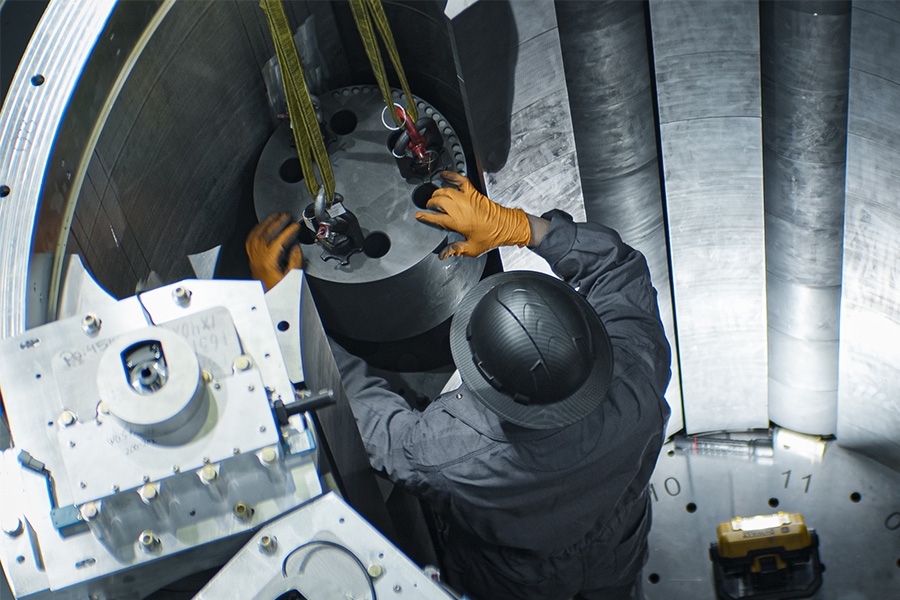
Antares Nuclear, Inc. has achieved a historic milestone in American energy, becoming the first private company in more than four decades to bring a non-light-water advanced reactor to criticality. The company’s Mark-0 microreactor reached zero-power criticality on June 4 at Idaho National Laboratory (INL), marking the first privately developed advanced reactor to achieve a self-sustaining nuclear chain reaction in the United States since the 1980s.
A Milestone Decades in the Making
The achievement came under the U.S. Department of Energy’s Reactor Pilot Program, established by President Donald Trump’s Executive Order 14301 in May 2025. The program set an ambitious target of achieving criticality for at least three advanced reactor concepts by July 4, 2026 — a deadline Antares beat by a full month.
“Today’s achievement is a historic moment for American nuclear energy,” Energy Secretary Chris Wright said in a statement, as reported by the Department of Energy. “By bringing the first American non-light water privately developed reactor to criticality in more than four decades, Antares has shown what is possible when American innovation is unleashed.”
The Mark-0 is the 53rd reactor built at the INL site since 1951 and the first novel reactor design to achieve criticality there in more than 50 years, according to INL Laboratory Director John Wagner.
From Concept to Criticality in Under 12 Months
Antares Nuclear, founded in 2023 and headquartered in Torrance, California, has raised more than $140 million in private capital, including a $96 million Series B round closed in December 2025. The company went from concept to a critical reactor in less than 12 months — a pace that challenges the long-held narrative that nuclear projects are inevitably plagued by delays and cost overruns.
“Hitting our commitments is everything to us. Nuclear in America has been defined for too long by delays, by companies that said they would and then didn’t,” Antares CEO Jordan Bramble said, according to Fox News. “We said criticality in 2026, electricity production in 2027, and power to the warfighter in 2028. Today is the first of those commitments delivered on the schedule we set.”
The Technology Behind the Mark-0
The Mark-0 is a sodium heat-pipe-cooled microreactor using high-assay low-enriched uranium (HALEU) TRISO fuel compacts. TRISO (TRI-structural ISOtropic) fuel consists of uranium kernels coated in successive layers of carbon and silicon carbide, capable of containing fission products under extreme temperatures. The fuel was fabricated by BWX Technologies (BWXT) in Lynchburg, Virginia, using HALEU allocated by the DOE.
Importantly, the Mark-0’s fuel specification was developed through Project Pele, a Department of War program to build a transportable microreactor for military applications. This reuse of an existing, qualified fuel design helped accelerate Antares’ timeline significantly, as POWER Magazine reported in its in-depth analysis.
“We went from concept to a critical reactor, safely, in less than 12 months. That doesn’t happen by accident. The team treated the schedule as non-negotiable,” Bramble said.
What Zero-Power Criticality Means
INL Director John Wagner provided important technical context, emphasizing that zero-power criticality is not electricity generation. “Criticality is the condition at which a nuclear fission chain reaction becomes self-sustaining,” Wagner explained, as reported by the American Nuclear Society. “What Antares achieved is specifically zero-power criticality — the chain reaction was sustained at essentially no measurable energy output. This is not electricity generation. It is not full-power operation. It is proof that the system works: the scientific and engineering validation that every subsequent step depends on.”
The demonstration validated key reactor physics parameters and produced testing data and control system performance information that will support future reactor development and eventual commercial licensing.
The Road Ahead: Mark-1 and Military Deployment
Antares has a clear roadmap for the coming years. The company plans to operate the Mark-1, a full-power electricity-producing prototype, at the same INL facility in 2027. The Mark-1 will be integrated with a nitrogen-closed Brayton cycle power conversion system and will validate temperature-dependent reactor effects and the coupled behavior between the reactor core and power conversion system.
In April 2026, the Department of the Air Force selected Antares under the Advanced Nuclear Power for Installations (ANPI) initiative to deploy a prototype microreactor at Joint Base San Antonio, with systems targeted for deployment by 2028. The U.S. Army also participated as a future end user in the Mark-0 demonstration.
Validating a New Regulatory Approach
The milestone validates the Trump administration’s approach of using DOE authorization authority to fast-track advanced reactor development, bypassing the traditional, lengthier NRC licensing process for demonstration projects. Assistant Secretary of Nuclear Energy Ted Garrish celebrated the achievement, saying, “The skeptics didn’t believe President Trump’s Reactor Pilot Program could achieve criticality in less than a year. Today, we celebrate the first of the pilot projects to reach criticality and the people who rolled up their sleeves to shape the future of nuclear energy in the United States.”
Broader Nuclear Renaissance
Antares is the first, but not the only company racing toward criticality under the Reactor Pilot Program. Other companies including Valar Atomics, Aalo Atomics, Radiant Nuclear, and Oklo are close behind, each pursuing different advanced reactor designs. The DOE has stated that multiple reactors are anticipated to go critical by the July 4 deadline.
Challenges Ahead
Despite the historic achievement, significant challenges remain. Zero-power criticality, while a crucial validation of reactor physics, does not prove the full power conversion system. The company must successfully transition from Mark-0 to Mark-1 by 2027. Additionally, no U.S. commercial enricher currently produces HALEU at commercial scale, and Antares’ contract with Urenco in the UK won’t come online until 2031. While the DOE authorization pathway works for demonstration, commercial deployment will ultimately require NRC licensing, which could introduce significant delays.
What to Watch For
The coming months will be critical for Antares and the broader advanced nuclear sector. Key questions include whether Antares can successfully produce electricity from Mark-1 by 2027, whether the DOE Reactor Pilot Program’s success will lead to permanent policy changes in how advanced reactors are regulated, and how competing companies will perform against their own criticality deadlines. For now, Antares has delivered on its first promise — and the American nuclear renaissance has its first proof point.