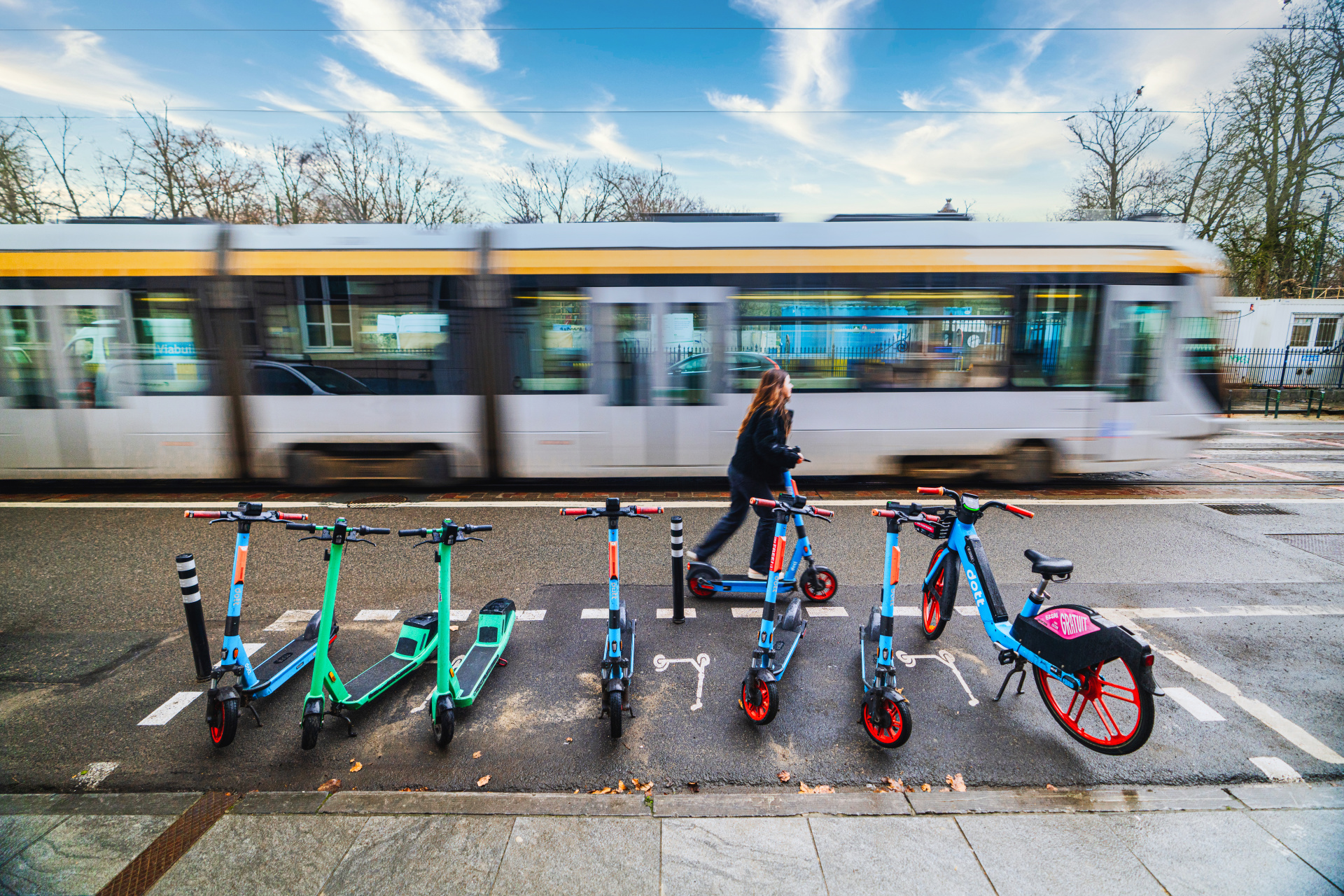
STIB Shuts Down Floya App After Costly €6M Fiasco
Brussels’ public transport operator STIB has announced it will shut down its Floya multimobility application on December 31, 2026, bringing an end to a project that cost over €6 million and failed to attract sufficient users. The app, launched in September 2023 as a Mobility-as-a-Service (MaaS) pilot, was designed to integrate public transport, shared bikes, e-scooters, car-sharing, and taxis into a single platform.
What Was Floya?
Floya, whose name derives from the Norwegian word “floy” meaning “wing,” was developed by STIB on behalf of the Brussels-Capital Region following a 2019 mandate to explore MaaS solutions. The app integrated 11 mobility partners, including STIB, SNCB, De Lijn, and TEC for public transport; Villo!, Dott, and Bolt for shared bikes and e-scooters; Poppy and Cambio for car-sharing; and Taxis Verts for taxi services. It was developed by Trafi with payment integration by Worldline.
According to RTBF, the app was launched in September 2023 in collaboration with Bruxelles Mobilité, aiming to make it easier for travelers to combine different forms of mobility through a single application.
A Costly Failure
Despite achieving 433,416 total downloads and approximately 23 million route searches, Floya struggled to convert users into regular customers. STIB reported an average of just 33,600 monthly active users, while Brussels MP Sofia Bennani (Les Engagés) cited figures of 44,500 active users out of 147,000 registered accounts. By comparison, the existing STIB app, launched in 2018, served 350,000 monthly users.
As DH Les Sports reported, the project cost over €6 million, making it an “immense fiasco.” The financial burden was compounded by the fact that Floya required a team of approximately 12 people to maintain, compared to just three for the STIB app.
Why Did Floya Fail?
STIB cited three primary reasons for the shutdown. First, the Brussels Region’s decision to ban shared e-scooters effective January 1, 2027, removed a key component of Floya’s multimodal offering. As RTBF reported, the ban was justified by rising accident numbers, nuisance to other road users, and the use of e-scooters for criminal activities.
Second, STIB pointed to “current budgetary pressures and cost-saving measures required of Brussels’ public institutions.” The €6 million cost for an app with limited adoption was deemed unsustainable, especially when the existing STIB app had cost half as much to develop and served ten times more users.
Third, Floya faced intense competition from established players. Brussels Mobility Minister Elke Van den Brandt (Groen) acknowledged that “getting people to use a new mobility app remains a huge challenge when there are already giant players like Google Maps on the market.”
Political Pressure
The decision to shut down Floya followed mounting political criticism. In early June 2026, MP Sofia Bennani called for the app to be shut down, arguing that “Brussels residents have already embraced the MIVB/STIB app” and that the city did not need “two expensive platforms competing, resulting in enormous costs and few results.” She advocated for integrating Floya’s best features into the main STIB app rather than maintaining two separate platforms.
What Happens Next?
Floya will remain operational until December 31, 2026, and customer service will be available until January 31, 2027. Users are advised to use any remaining tickets or subscriptions before the shutdown. STIB has confirmed that the closure will not affect the services of mobility partners, which remain accessible through their own applications.
STIB spokesperson Cindy Arents expressed gratitude to Floya users, stating that “thanks to them, we now better understand what travelers need when they combine different mobility solutions.” The operator plans to integrate lessons learned from the project into its main app, particularly around real-time traveler information and integration of third-party mobility services.
Broader Implications
The failure of Floya raises questions about the viability of public-sector-led MaaS platforms in an era dominated by established navigation apps like Google Maps and Apple Maps. While STIB maintains that the project provided valuable data and insights, the €6 million price tag for an app that never gained critical mass serves as a cautionary tale for other cities exploring similar initiatives.
As Brussels prepares for the e-scooter ban in 2027 and focuses on strengthening its public transport and bike-sharing networks, the Floya experiment will be remembered as an ambitious but ultimately unsuccessful attempt to create a one-stop shop for urban mobility.