Xi Meets Cambodian Senate President Hun Sen in Beijing
Chinese President Xi Jinping met with Cambodian People’s Party President and Senate President Samdech Techo Hun Sen at the Great Hall of the People in Beijing on June 26, reaffirming the “ironclad friendship” between the two nations and advancing their comprehensive strategic partnership. The meeting was the centerpiece of Hun Sen’s three-day official goodwill visit to China from June 25 to 27, conducted at the invitation of the Chinese Communist Party, as reported by Xinhua News.
Context and Background
The Xi-Hun Sen meeting builds on decades of close bilateral ties. China and Cambodia established diplomatic relations in 1958 and have since characterized their relationship as an “ironclad friendship” — a term reserved for China’s closest international partnerships. In 2025, the two countries formally announced the establishment of a “new-era all-weather China-Cambodia community with a shared future,” elevating their partnership to unprecedented levels.
This latest visit follows Xi Jinping’s state visit to Cambodia in April 2025, during which he met Hun Sen in Phnom Penh at the Peace Palace, as documented by People’s Daily. Since then, bilateral cooperation has deepened further, with the first China-Cambodia “2+2” strategic dialogue between foreign and defense ministers held in Phnom Penh in April 2026.
Key Developments
During his visit, Hun Sen held a series of high-level meetings. On June 25, he met with Zhao Leji, Chairman of the Standing Committee of the National People’s Congress, who described Cambodia and China as “long-standing friends and ‘ironclad’ partners that have consistently supported one another,” according to Fresh News Asia. Hun Sen responded that “regardless of changes in the international landscape, the friendship between Cambodia and China remains steadfast.”
Zhao Leji further underscored that “Cambodia-China relations are founded on deep mutual trust that cannot be undermined by any external force,” a statement that reflects the strategic depth of the partnership.
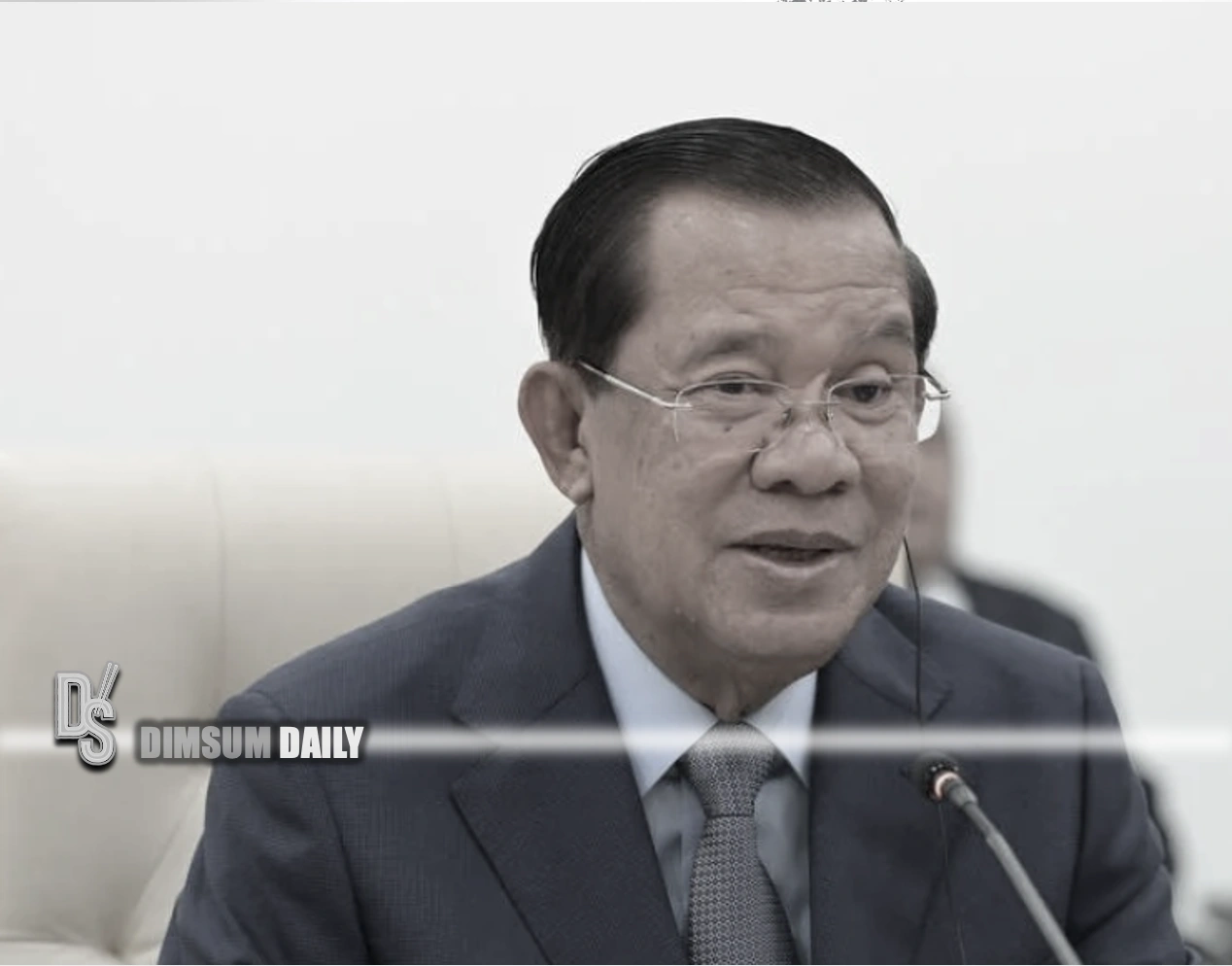
Hun Sen was accompanied by Tea Banh, Supreme Adviser to the King and Vice-President of the Cambodian People’s Party, along with senior representatives from the Senate, National Assembly, and government. He was also scheduled to meet Premier Li Qiang and visit King Norodom Sihamoni, who has been recuperating in Beijing after cancer surgery.
Analysis and Implications
The visit carries significant strategic weight. Cambodia is a crucial ally for China within the Association of Southeast Asian Nations (ASEAN), often supporting Chinese positions on regional issues. China has been Cambodia’s largest foreign investor and aid donor for many years, with major infrastructure projects including the Sihanoukville Special Economic Zone, expressways, and the proposed Funan Techo Canal project.
Seng Vanly, a Phnom Penh-based geopolitical analyst, characterized the relationship as rooted in “strategic necessity and regime survival,” noting that “Phnom Penh relies on Beijing’s financial resources, while Beijing seeks a dependable partner in ASEAN, reflecting a calculated partnership rather than mere subordination,” as reported by Cambodianess.
Chinese analysts offered a more collaborative framing. Zhou Shixin, Director of the Southeast Asia Research Center at the Shanghai Institute of International Studies, told Beijing Daily/Global Times that the China-Cambodia “ironclad friendship” is characterized by its “enduring nature, stability, mutual support, and closeness like family,” emphasizing that cooperation comes “without any political conditions — a model of equal treatment and mutual benefit between nations.”
Ge Hongliang, Vice Dean of the ASEAN College at Guangxi University for Nationalities, added that the “new-era all-weather China-Cambodia community with a shared future” sets “an excellent example for Global South countries.”
The visit also occurs amid a broader Chinese diplomatic push in 2026. According to The Guardian, Xi Jinping has hosted more than a dozen world leaders this year, including leaders from the United States, Russia, the United Kingdom, Canada, Myanmar, and Bangladesh, as Beijing positions itself as a hub of global diplomacy and a counterweight to Western influence.
What’s Next
Hun Sen’s visit demonstrates the enduring influence of Cambodia’s former prime minister even after stepping down in 2023, as he retains the party presidency and Senate presidency while his son Hun Manet serves as Prime Minister. The visit reinforces the multi-generational ties between the two countries and signals continued alignment of Cambodia’s “Pentagonal Strategy” with China’s Belt and Road Initiative.
Key areas to watch include potential new agreements on infrastructure projects, cooperation on transnational cyber-scam operations — a concern for both countries — and how Cambodia balances its deepening ties with China against simultaneous efforts to diversify its foreign policy. The health and future role of King Norodom Sihamoni, who remains in Beijing for medical care, also remains an open question with diplomatic implications.