Virginia County Urges Power Saving in Data Center Rate Hike
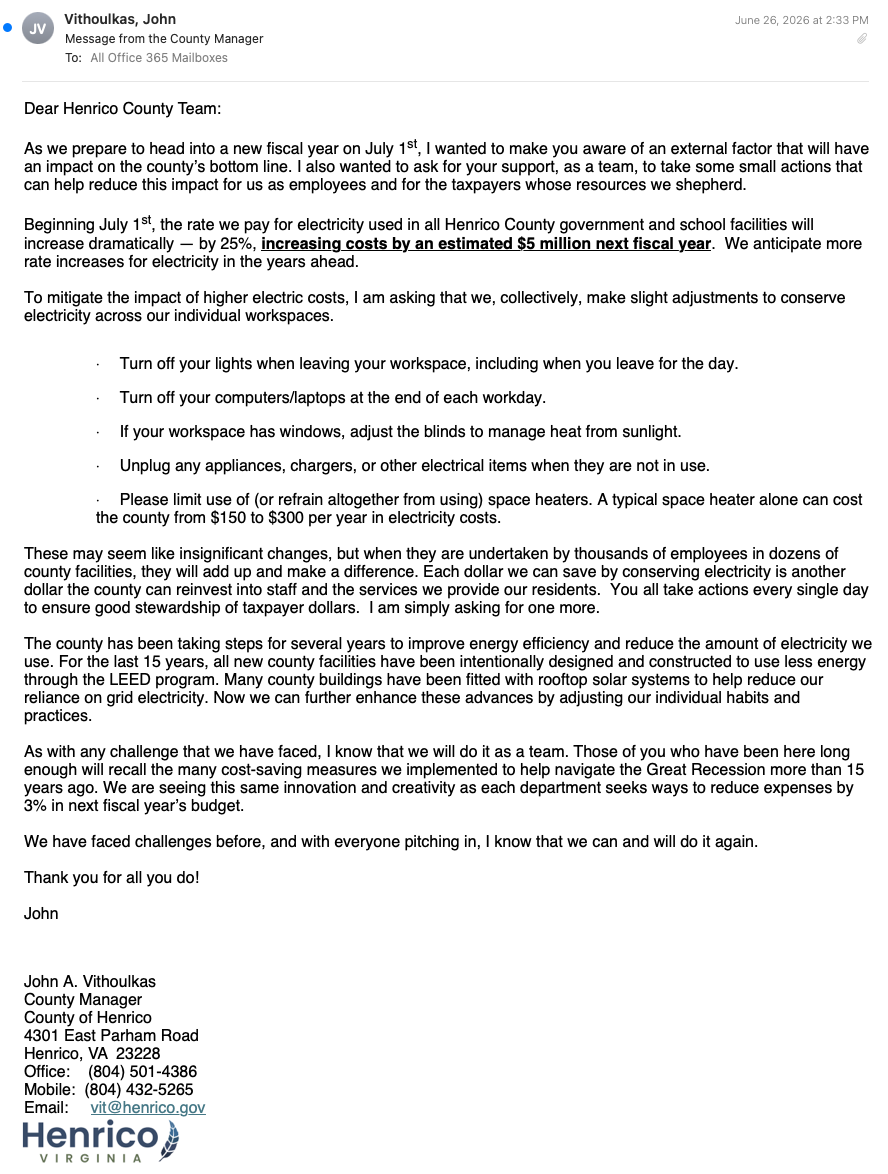
Henrico County, Virginia — a rapidly growing data center hub east of Richmond — is facing a 24.9% increase in electricity rates effective July 1, 2026, adding an estimated $5 million to the county’s annual electric bill. County Manager John Vithoulkas has sent an all-staff email asking employees to voluntarily conserve electricity, warning that further increases are expected in the years ahead.
A Growing Burden on Local Government
In a June 26 email obtained by the Henrico Citizen, Vithoulkas outlined the scale of the challenge: “Beginning July 1st, the rate we pay for electricity used in all Henrico County government and school facilities will increase dramatically — by 25%, increasing costs by an estimated $5 million next fiscal year. We anticipate more rate increases for electricity in the years ahead.”
The rate hike, negotiated by the Virginia Energy Purchasing Governmental Association (VEPGA) with Dominion Energy, affects approximately 170 member localities across Virginia, including Chesterfield, Hanover, Goochland, and the city of Richmond. According to the Virginia Association of Counties, members can expect at least another 12% increase effective July 1, 2027.
Vithoulkas asked employees to turn off lights when leaving workspaces, shut down computers at the end of each workday, unplug appliances and chargers when not in use, and limit the use of space heaters — which he noted can cost the county $150 to $300 per unit annually. “Each dollar we can save by conserving electricity is another dollar the county can reinvest into staff and the services we provide our residents,” he wrote.
The Data Center Connection
While Vithoulkas did not explicitly cite data centers in his email, the broader context strongly links the rate increase to the explosive growth of the industry in Virginia. Henrico County now hosts 37 data centers, with plans for 17 more from QTS across 1,100 acres in Varina, as reported by 404 Media.
Virginia has more than a quarter of all U.S. data centers and 13% of the world’s, according to a 2023 report from the Joint Legislative Audit and Review Commission. JLARC concluded that “the data center industry boom in Virginia has substantially driven up energy demand in the state” and that “data centers’ increased energy demand will likely increase system costs for all customers, including non-data center customers.”
Fox Business reported that the county manager compared the current austerity measures to those implemented during the Great Recession more than 15 years ago, noting that each department is seeking ways to reduce expenses by 3% in the next fiscal year’s budget.
Regulatory Response and Future Outlook
The strain on Virginia’s grid has prompted regulatory action. In November 2025, the Virginia State Corporation Commission approved a new GS-5 rate class for large customers using 25+ megawatts, requiring them to pay minimum demand charges. The American Action Forum noted that AI data center demand contributed to an 833% increase in PJM capacity market auction prices for 2025-2026, and Virginia’s energy demand is projected to rise 183% by 2040, driven primarily by data centers.
Henrico Communications Director Ben Sheppard defended the county’s approach, stating: “This email represents good fiscal stewardship and good environmental stewardship, both of which are core values of the County.”
What’s Next
Henrico County faces a difficult balancing act. It has approved massive data center expansions that generate tax revenue and jobs, but those same facilities are contributing to electricity cost increases that strain county budgets. The county’s 2045 Comprehensive Plan, up for a Planning Commission vote on July 9, 2026, will be a critical decision point for how Henrico manages this tension going forward.
As Vithoulkas warned in his email, the rate increases are not a one-time event. With at least another 12% hike expected in 2027 and data center development continuing at a rapid pace, the question of who bears the cost of Virginia’s digital infrastructure boom remains far from settled.