CGN’s Taipingling Nuclear Unit 2 Connects to Grid in China
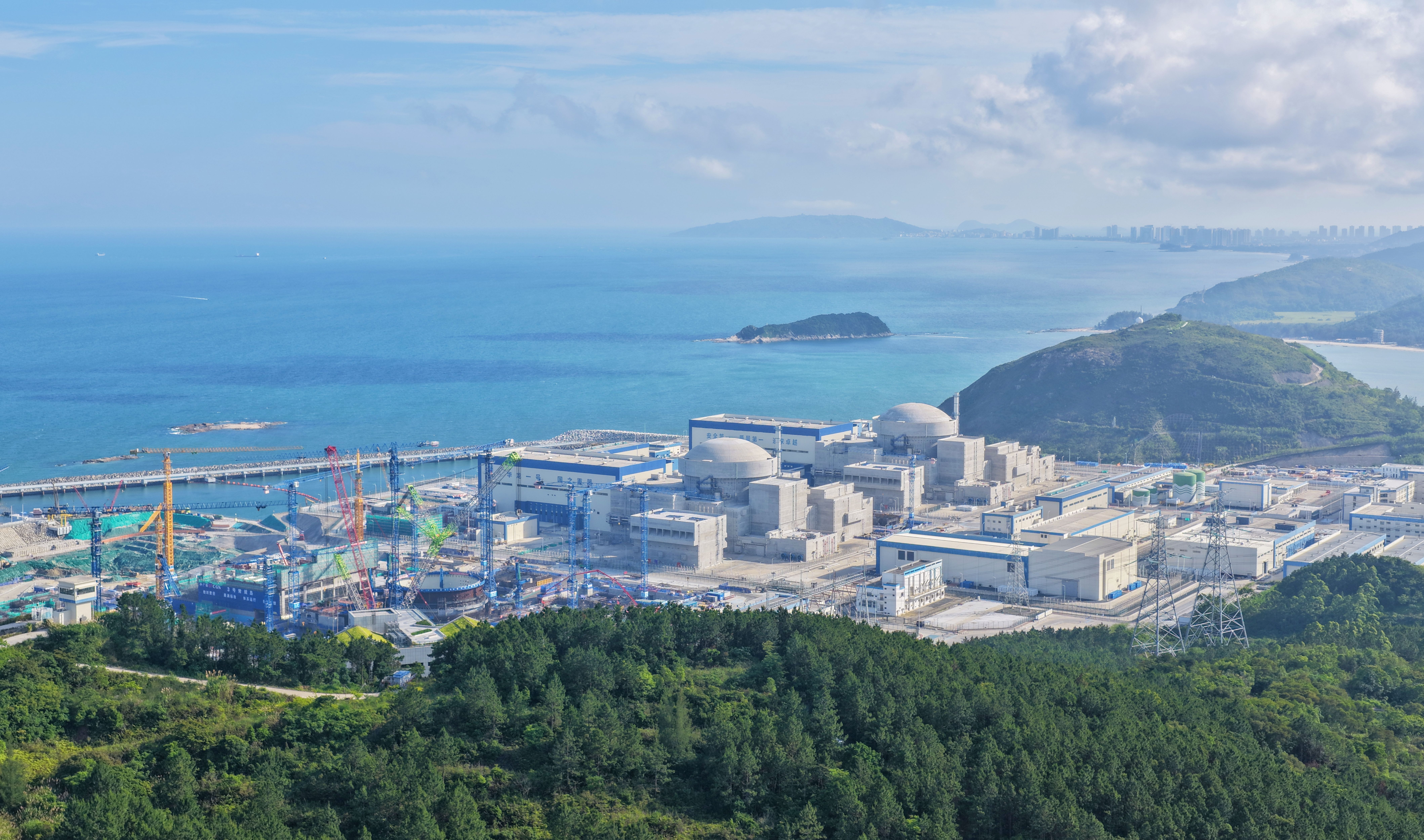
Unit 2 of the Taipingling Nuclear Power Plant in Guangdong Province, operated by China General Nuclear Power Group (CGN), was successfully connected to the grid for the first time on the morning of July 4, 2026, generating its first electricity. The milestone brings the second Hualong One (HPR1000) reactor at the site one step closer to full commercial operation, expected in the second half of 2026.
A Milestone for the Greater Bay Area
The Taipingling plant, located in Huizhou City, is the first “Hualong One” nuclear power base in the Guangdong-Hong Kong-Macao Greater Bay Area. According to Xinhua News Agency, the successful grid connection means that the second unit at the site is now capable of supplying power to the grid, marking a critical step toward commercial operation.
Zhang Guoqiang, Chairman and Party Secretary of CGN Huizhou Nuclear Power Co., Ltd., said that after Unit 2 is officially put into operation, it is expected to generate over 9 billion kWh annually, meeting the annual electricity needs of nearly 1 million people. As reported by Yicai, the unit will also reduce carbon dioxide emissions by over 8.3 million tonnes each year.
Hualong One Technology at Scale
Unit 2 is powered by the Hualong One (HPR1000), China’s indigenous third-generation pressurized water reactor technology with a net capacity of 1,116 MWe. Construction began on October 15, 2020, and the unit received its 40-year operating license from China’s National Nuclear Safety Administration (NNSA) on April 30, 2026. Fuel loading of 177 fuel assemblies was completed on May 3, 2026, and the reactor achieved first criticality on June 25, 2026, as World Nuclear News reported.
Unit 1 of the Taipingling plant entered commercial operation on April 19, 2026, after connecting to the grid on February 13, 2026. Once both units are fully operational, the plant will generate over 18 billion kWh annually, serving nearly 2 million people.
Advanced Construction and Innovation
During the construction of Unit 2, a range of digital and intelligent technologies were deployed. According to the Securities Times, the project implemented smart construction site 3.0 systems, digital handover processes, and exoskeleton robots for construction workers. It also marked the first application of steel liner bottom plate and truncated cone module integral hoisting technology in a Hualong One project.
CGN’s “Smart Nuclear” operating system, China’s first intelligent nuclear industrial operating system, was utilized to enhance efficiency and safety across the construction and commissioning phases.
Broader Strategic Context
The Taipingling plant is a key component of Huizhou’s “wind-solar-nuclear-gas-storage” multi-energy clean energy cluster and supports China’s “3060” carbon goals — peaking carbon emissions by 2030 and achieving carbon neutrality by 2060. The project strengthens energy security for the Greater Bay Area, one of China’s most economically vital regions.
CGN is simultaneously advancing 18 Hualong One units under construction across multiple sites in China, including San’ao in Zhejiang, Ningde in Fujian, Lufeng in Guangdong, and Zhaoyuan in Shandong. The company is also developing the Hualong One 2.0 demonstration project and researching the next-generation Hualong 3.0 design, as Yang Changli, Chairman of CGN, noted in March 2026.
Looking Ahead
The Taipingling site is planned for six Hualong One units in three phases, with a total investment exceeding CNY 120 billion (USD 17 billion). Once fully completed, the six units will generate over 55 billion kWh annually, saving approximately 16.65 million tonnes of standard coal and reducing CO2 emissions by 50.82 million tonnes each year.
Construction of Units 3 and 4 is already underway, with Unit 3 beginning construction in June 2025 and the first nuclear safety concrete for Unit 4 poured in May 2026. Unit 2 is expected to enter full commercial operation in the second half of 2026, following the completion of remaining performance tests.