China Sends Second Medical Team to DRC as Ebola Worsens
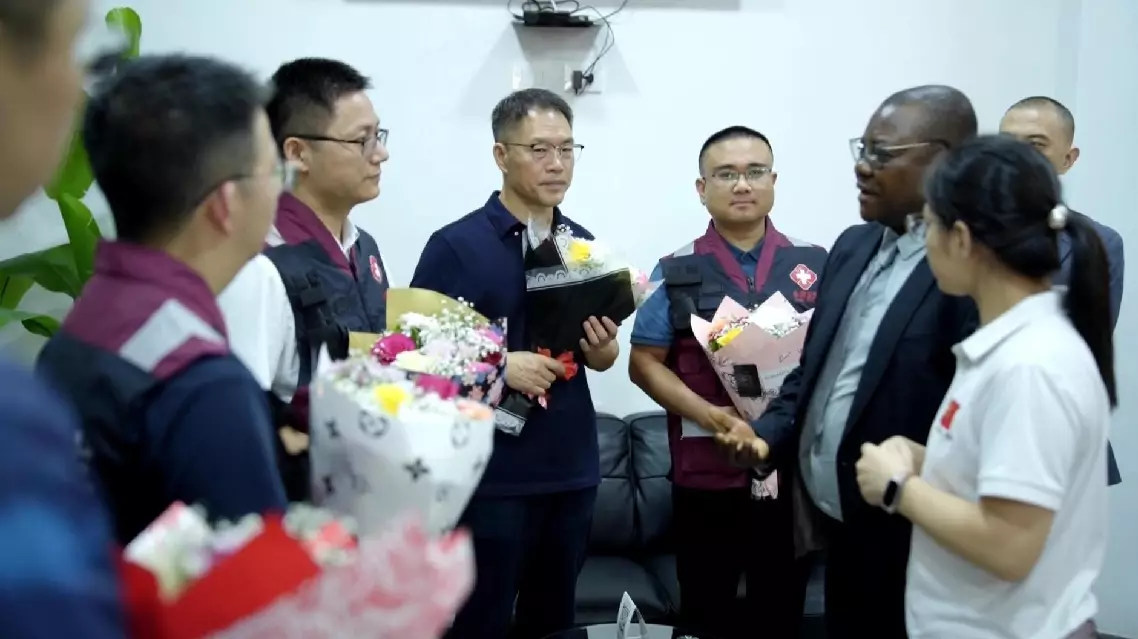
China has deployed a second team of medical experts to the Democratic Republic of the Congo (DRC) to reinforce Ebola prevention and control efforts, as the outbreak continues to escalate with more than 1,500 confirmed cases and nearly 500 deaths. The five-member team arrived in Kinshasa on July 3, 2026, just over a month after the first Chinese medical contingent began work on the ground.
The deployment highlights China’s expanding role in global health security and its deepening partnership with African nations facing public health emergencies.
A Rapidly Worsening Outbreak
The DRC’s latest Ebola outbreak, caused by the Bundibugyo virus species, has proven particularly challenging. According to the World Health Organization, there is no licensed vaccine or specific treatment for this strain, making early intervention critical. The WHO declared the outbreak a Public Health Emergency of International Concern (PHEIC) on May 17.
As of July 4, DRC health authorities reported 1,502 confirmed cases including 473 deaths, with 628 patients currently in isolation and 229 recorded recoveries. The outbreak is concentrated in the eastern provinces of Ituri, North Kivu, and South Kivu — regions already grappling with humanitarian crises and insecurity. The Xinhua News Agency reported that 75 healthcare workers have been infected since May, with 17 deaths, underscoring the extreme risks faced by medical personnel.
China’s Medical Response
The second team brings specialists in public health, clinical treatment, infection prevention and control, laboratory testing, and epidemiological quarantine. They will work alongside Congolese health officials to strengthen surveillance, patient care, and outbreak response.
Team leader Gu Zhiqiang, who also serves as Director of the Division for African Affairs at China’s National Health Commission, outlined the mission’s broader ambitions. “We’ll actively respond to our foreign partners’ interest in scientific and technological cooperation, moving institutions on both sides toward signed agreements, so we can offer more public-health products to the international community,” he told Bastille Post.
Su Qiudong, an associate research fellow at the Chinese CDC, emphasized the focus on diagnostic capacity. “Contact tracing has reached only 87.1 percent, leaving a considerable share of close contacts not yet isolated in time,” Su said. “We’ll focus on building up diagnostic capacity, above all helping shorten sample testing times and improve the speed and accuracy of lab confirmation.”
DRC Health Ministry representative Luku Maleyo Marius welcomed the team at the airport. “We are very happy to receive this second team of Chinese doctors who will help us deal with the current Ebola outbreak,” he said. “China has always supported us every time we faced challenges.”
A Legacy of Health Cooperation
China’s medical engagement in Africa is not new. According to the China News Service, Foreign Ministry Spokesperson Lin Jian noted that China currently has 44 medical teams stationed in 43 African countries, with over 900 medical personnel. “At this very moment, Chinese medical teams are on the ground, fighting alongside the African people on the front lines,” Lin said at a June 1 press conference.
During the 2014-2016 West Africa Ebola crisis — the largest in history — China deployed over 1,000 health workers and contributed more than $120 million in assistance, as CGTN noted in an analysis by Stephen Ndegwa of South-South Dialogues. China also provided financial and technical support for the Africa CDC headquarters in Addis Ababa, which became operational in 2023.
The latest deployment aligns with commitments made at the 2024 Forum on China-Africa Cooperation (FOCAC) summit in Beijing, where China pledged to send 2,000 medical personnel to Africa and train 100 professionals.
Strategic Implications
The deployment comes against the backdrop of deepening China-DRC ties. The two countries upgraded their relationship to a Comprehensive Strategic Partnership in 2023, expanding collaboration in healthcare, trade, and mining. DRC is a mineral-rich nation whose cobalt, copper, and lithium reserves are critical to global supply chains for batteries and electronics — sectors where Chinese investment is substantial.
China’s rapid and sustained health response — deploying a first team within weeks of the PHEIC declaration and a second team just a month later — positions Beijing as a reliable partner in contrast to what analysts describe as more intermittent engagement from other international actors.
What to Watch
With the Bundibugyo virus continuing to spread and no licensed vaccine available, the effectiveness of China’s “expert team plus medical team” model will be closely watched. The WHO noted on July 2 that patient enrollment has begun in clinical trials for the first potential treatments, and the first diagnostic test for Bundibugyo virus has been added to its Emergency Use Listing. These developments, combined with continued international cooperation, will determine whether the outbreak can be brought under control before it reaches the scale of previous Ebola crises.