Russia Strikes Kyiv with Missiles on Eve of NATO Summit
Russia launched a combined ballistic missile and drone attack on Ukraine’s capital city of Kyiv in the early hours of July 6, killing at least 9 people and wounding 46 others, including 5 children. The assault struck multiple residential districts across the city and came just hours before a high-stakes NATO summit in Ankara, Turkey, where US President Donald Trump is scheduled to meet with Ukrainian President Volodymyr Zelensky.
Context & Background
The attack, which began in the early hours of Monday morning, was the second major assault on Kyiv in less than a week. On July 2, Russia fired a record 28 ballistic missiles at the capital in an 11-hour combined drone and missile assault that killed at least 30 people and wounded 91, according to The Kyiv Independent.
The timing of the latest barrage carries significant strategic weight. The NATO summit in Ankara, scheduled for July 7-8, was expected to feature a meeting between Trump and Zelensky, with Trump also speaking separately with Russian President Vladimir Putin ahead of the talks. Zelensky had called for “American resolve” to help end the war, as France 24 reported.
Key Developments
Ukrainian air defenses were active throughout the attack, which involved ballistic missiles, Kalibr cruise missiles, and Shahed drones, according to The Guardian. Tymur Tkachenko, head of the Kyiv City Military Administration, warned residents on Telegram: “The enemy is striking with ballistic missiles. Please stay in shelters.”
Kyiv Mayor Vitali Klitschko reported that non-residential buildings and a warehouse in the Holosiivskyi District were hit and caught fire, while a residential building in the Podilskyi District was struck. He urged residents to remain in shelters as air defenses operated overhead.
The Podilskyi District suffered the most severe damage. A direct hit on a 9-story residential building destroyed structures from the 5th to 9th floors. Rescue workers evacuated 28 people from upper floors using ladder trucks. Damage was also reported in the Holosiivskyi and Darnytskyi districts, where multiple high-rise buildings were struck, with fires breaking out on upper floors of a 30-story building.
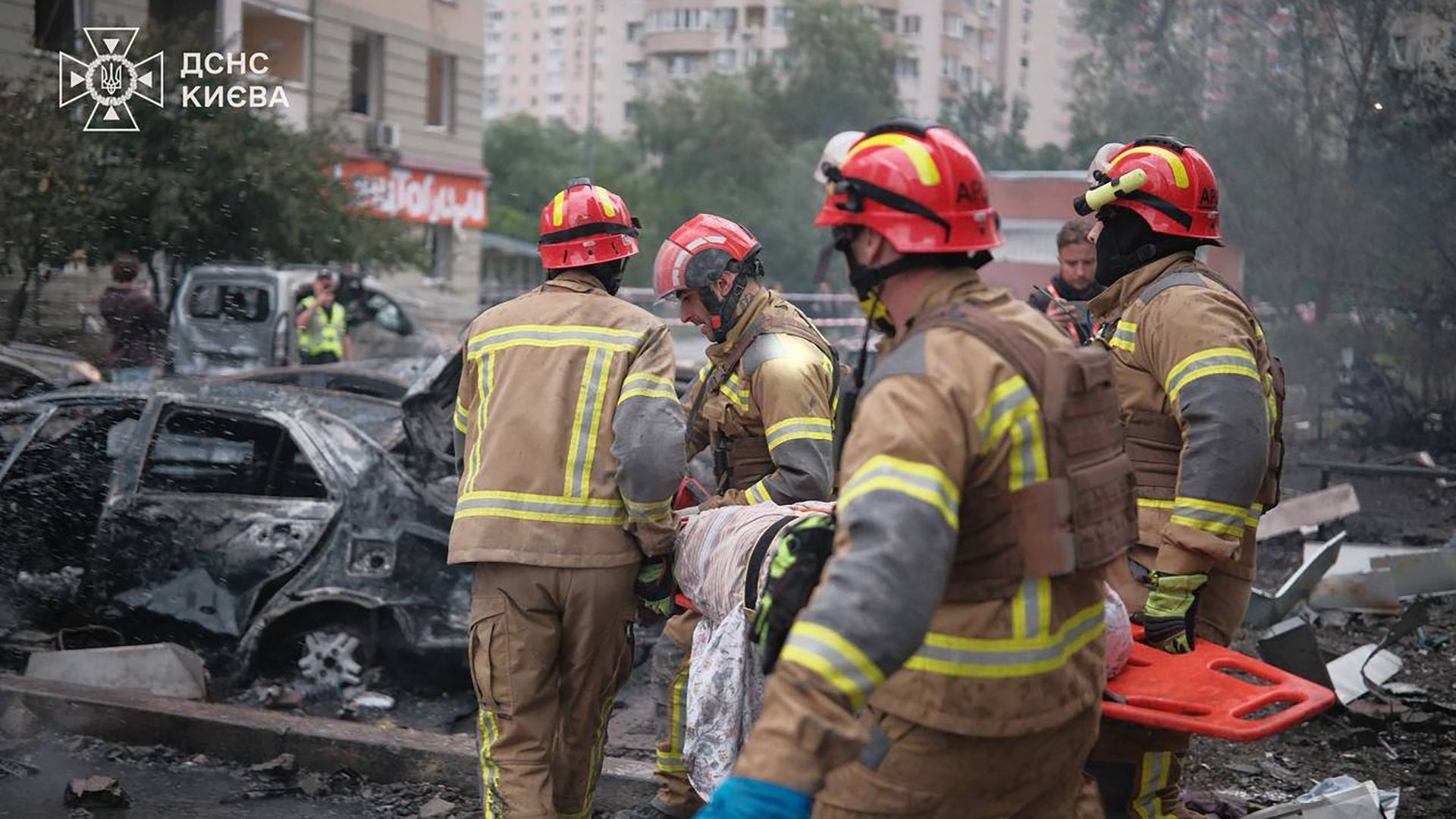
Mykola Kalashnyk, the Kyiv regional governor, confirmed injuries across the region. “Sadly, we have injuries as a result of another enemy attack on Kyiv region,” he said on Telegram, as reported by France 24.
Analysis & Implications
The attack on the eve of the NATO summit sends a clear strategic signal from Moscow. By launching a major strike on Kyiv just before high-stakes diplomatic meetings, Russia demonstrates its military capabilities and potentially seeks to influence negotiations from a position of strength. This follows a pattern of escalation before key diplomatic engagements observed throughout the conflict.
The back-to-back attacks on July 2 and July 6 suggest a deliberate strategy to maintain intense pressure on the capital and its civilian population. The use of ballistic missiles — which are difficult to intercept and cause devastating damage — against residential areas in a densely populated city raises serious concerns about the targeting of civilian infrastructure.
Casualty figures have evolved as rescue operations continue. The most recent update from Ukrainian authorities, reported by Fakty ICTV, confirmed at least 9 dead and 46 wounded, including 5 children. The death toll may rise as search and rescue teams continue sifting through rubble.
What’s Next
The NATO summit in Ankara will proceed against the backdrop of this latest escalation. Trump is expected to meet with Turkish President Recep Tayyip Erdogan and then with Zelensky, while also speaking with Putin. The attack may harden positions on all sides, complicating already difficult diplomatic efforts to find a path toward ending the war, now in its 1,594th day.
Ukraine has increasingly targeted energy facilities inside Russia and Moscow-controlled territory in recent weeks, including a Ukrainian drone strike on a St. Petersburg oil terminal on July 4. The cycle of escalation shows no signs of abating, and the international community will be watching the Ankara summit closely for any signs of progress — or further deterioration.