NASA’s X-59 Supersonic Jet Aims to Transform Commercial Air Travel
NASA’s experimental X-59 supersonic jet has achieved two critical milestones in June 2026 — its first supersonic flight and its first “mission conditions” flight — bringing the agency closer to demonstrating quiet supersonic technology that could reshape commercial air travel. The achievements come as the Federal Aviation Administration (FAA) proposed on June 30 to overturn its 53-year-old ban on overland commercial supersonic flight, replacing it with noise-based certification standards.
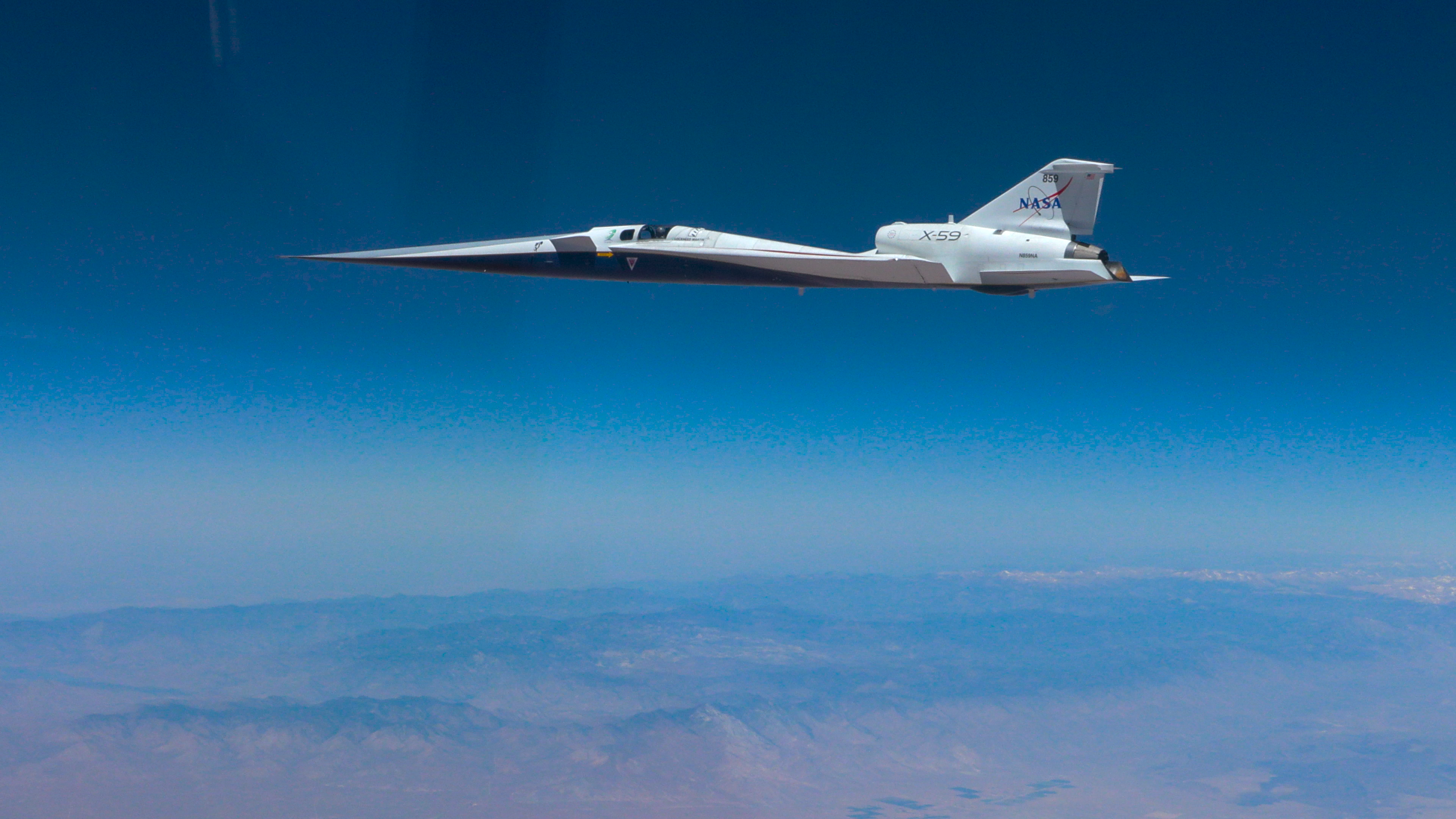
The X-59’s June Milestones
On June 5, 2026, NASA test pilot Jim “Clue” Less took the X-59 supersonic for the first time, reaching Mach 1.077 (713 mph) at an altitude of 43,400 feet during an 81-minute flight from Edwards Air Force Base in California. According to NASA, the aircraft performed as expected, marking a pivotal transition from subsonic envelope expansion into supersonic testing.
Just one week later, on June 12, the X-59 achieved its first “mission conditions” flight, reaching Mach 1.4 (924 mph) at 55,000 feet — the exact speed and altitude at which it will eventually fly over U.S. communities to gather public perception data on its quiet sonic “thump.” As NASA’s Quesst blog reported, this milestone demonstrated the aircraft’s readiness for the conditions required for its core mission.
“These flights not only deepen our confidence in the X-59’s performance, they mark our progression toward the future phases of the mission that will ultimately help shape the future of supersonic travel,” said Cathy Bahm, X-59 Project Manager, in comments reported by the Visalia Times Delta.
The Quiet Supersonic Revolution
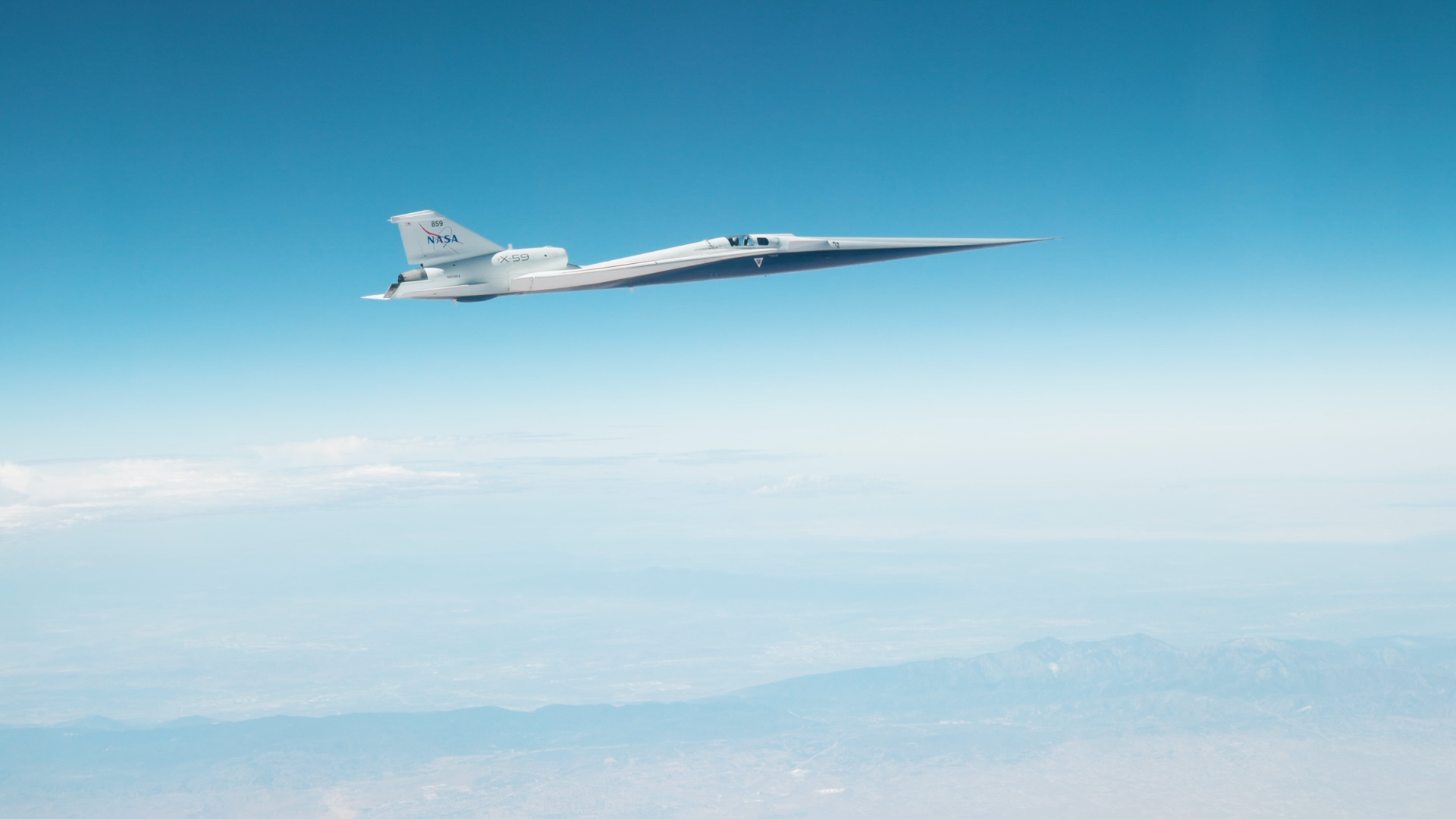
The X-59, built by Lockheed Martin’s Skunk Works in Palmdale, California, is the centerpiece of NASA’s Quesst mission. Its distinctive long, needle-like nose and specialized fuselage are designed to spread shockwaves along the aircraft’s length and direct them upward, preventing the shockwaves from coalescing into the loud sonic boom that characterized aircraft like the Concorde.
NASA estimates the X-59’s sonic signature will measure approximately 75 perceived decibels — comparable to a car door slamming 20 feet away. By contrast, the Concorde’s sonic boom registered around 105 perceived dB, roughly equivalent to a nearby thunderclap. This dramatic reduction is what makes the prospect of supersonic flight over land potentially viable for the first time in decades.
FAA Proposes Historic Regulatory Change
The regulatory landscape shifted dramatically on June 30, 2026, when the FAA proposed a new rule to replace the blanket 1973 ban on civilian supersonic flight over land with a performance-based noise standard. The proposed rule would require sonic boom overpressure to remain below 0.11 pounds per square foot — a standard informed partly by Boom Supersonic’s XB-1 demonstrations of “Mach cutoff” flights.
As New Atlas noted, the FAA’s action follows an executive order issued by President Trump in June 2025 directing the agency to revisit supersonic regulations, as well as the Supersonic Aviation Modernization Act, which passed the U.S. House in March 2026 and awaits a Senate vote.
However, the proposed standard has drawn criticism. Dan Rutherford, senior director at the International Council on Clean Transportation, told Ars Technica that the overpressure metric was discarded by United Nations experts in 2014 because “it doesn’t actually measure loudness or annoyance.” “I’m honestly surprised that the FAA would propose a rule this weak,” Rutherford said.
What Comes Next for the X-59
The X-59 has completed 17 test flights as of mid-June 2026, steadily expanding its flight envelope. Later this year, NASA plans to begin Phase 2 of the Quesst mission: acoustic validation testing to verify the aircraft’s quiet sonic thump. Following that, the X-59 will fly over several U.S. communities to gather data on how people perceive the sound.
NASA Administrator Jared Isaacman emphasized the significance of the progress: “X-59 is getting ready for its quiet supersonic debut. Since the aircraft’s first flight on Oct. 28, 2025, the team has made tremendous progress, flying 16 times in the last 90 days and getting into a steady test rhythm.”
The Commercial Horizon
While the X-59 itself is a research aircraft and will never carry passengers, its technology could directly inform a new generation of commercial supersonic airliners. Boom Supersonic is developing the Overture airliner with a target delivery date of 2029, holding commercial agreements with American Airlines, Japan Airlines, and United Airlines. However, the company has recently pivoted to producing natural gas turbines for AI data centers to fund Overture’s development, and United Airlines CEO Scott Kirby has given Boom a “50/50” chance of success.
The FAA aims to finalize its new noise and operational certification standards by mid-2027, potentially opening the door for commercial supersonic flights over U.S. land for the first time since the Concorde era. If successful, the technology demonstrated by the X-59 could eventually cut travel times dramatically — a New York to London flight could take under three hours instead of the current seven.
The Road Ahead
Critical questions remain. Will communities accept the X-59’s quiet thump during overflight testing? Can the aircraft’s design principles be scaled to commercial airliner size? And can companies like Boom Supersonic overcome the economic challenges that ultimately grounded the Concorde?
For now, the X-59 continues its methodical test campaign from NASA’s Armstrong Flight Research Center in California. Each flight brings the agency closer to answering these questions — and potentially ushering in a new era of faster, quieter air travel.