China Achieves First Controllable Rocket Recovery Milestone
China has successfully achieved its first-ever controlled recovery of a launch vehicle first stage, launching the Long March 10B (CZ-10B) rocket on its maiden flight and capturing the returning booster with a novel net-capture system at sea. The milestone, accomplished on July 10, 2026, makes China the third entity — after SpaceX and Blue Origin — to recover an orbital-class booster and introduces the world’s first operational net-based rocket recovery method.
A Novel Approach to Rocket Reusability
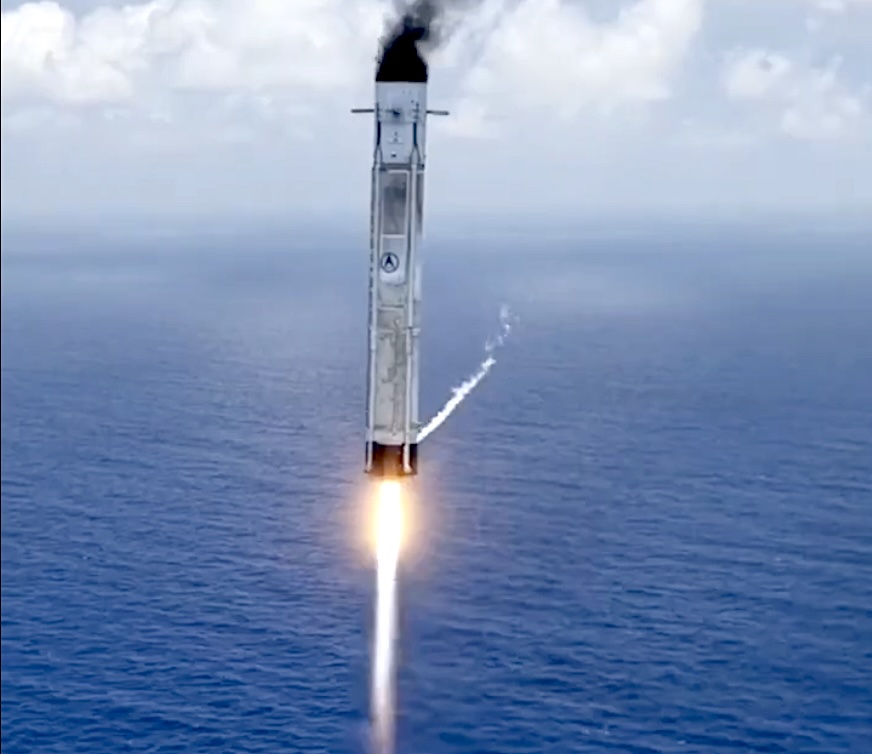
The Long March 10B lifted off at 12:15 p.m. Beijing time (04:15 UTC) from the Hainan Commercial Space Launch Site in Wenchang, powered by seven kerosene-fueled YF-100K engines generating approximately 890 tonnes of thrust. Approximately six minutes after stage separation, the first stage booster descended vertically and was captured by a net system aboard the “Navigator” recovery vessel in the South China Sea, roughly 300 kilometers from Sanya.
Unlike SpaceX’s Falcon 9, which uses landing legs for propulsive landings, or Starship’s tower-catch “chopsticks” method, the Long March 10B employs four hooks positioned next to its grid fins. During descent, these hooks engage with steel cables on the recovery platform’s net system. As CGTN reported, engineer Hao Jinjie of the China Aerospace Science and Technology Corporation (CASC) explained: “The net is a movable mechanism with four steel cables that actively seeks out the rocket’s hooks, providing a cushioned capture.”
Hao likened the challenge to “dropping a pen from the 100th floor into a pencil holder, while keeping its speed and orientation under control.” The “Navigator” vessel — 144 meters long, 50 meters wide, with a 25,000-tonne displacement — features dynamic positioning to hold station in waves during the precision operation.
Technical Specifications and Mission Details
The Long March 10B is a two-stage, 5-meter-diameter liquid-fueled rocket standing approximately 63 meters tall. Its first stage is powered by seven YF-100K kerosene/LOX engines, while the second stage uses a single methane-fueled YF-219 engine. In its reusable configuration, the rocket can deliver 16 tonnes to low-Earth orbit — slightly less than SpaceX’s Falcon 9. The rocket also successfully deployed a classified payload, designated CX-26, to orbit.
According to Xinhua News, this was the 657th launch of the Long March rocket family. CASC Chairman Chen Mingbo declared the result “dead center,” praising the “outstanding” precision control.
Economic Implications and Cost Reduction
The net-capture approach eliminates the need for landing legs, allowing more mass to be devoted to payload. Hao Jinjie stated that with sufficient reuse cycles, costs could drop 20 to 30 percent initially, and potentially 50 to 60 percent as the technology matures. CASC has indicated that the first re-flight of the recovered booster is expected by the end of 2026.
Strategic and Geopolitical Context
The Long March 10B is the commercial variant of China’s next-generation crew-rated Long March 10 rocket family, developed by the China Academy of Launch Vehicle Technology (CALT). A heavier three-core configuration — the Long March 10 — is central to China’s goal of landing astronauts on the Moon by 2030. The successful recovery validates key technologies including engine restart, high-altitude ignition, and precision navigation that will be essential for crewed missions.
US military officials have taken note. As Ars Technica reported, Maj. Gen. Brian Sidari, the Space Force’s deputy chief of space operations for intelligence, remarked at a 2025 conference: “I’m concerned about when the Chinese figure out how to do reusable lift that allows them to put more capability on orbit at a quicker cadence than currently exists.”
Charles Galbreath, a retired US Space Force colonel and senior fellow at the Mitchell Institute, told Ars Technica: “Clearly, they admire the work that’s being done by SpaceX and are trying to replicate it, and at the same time take it away from the United States if it ever came to it.” He noted that reusable rockets could enable China to rapidly deploy large satellite constellations for both commercial and military purposes.
China’s Broader Reusable Rocket Landscape
Multiple Chinese companies are pursuing reusable rocket technology. LandSpace attempted a landing of its Zhuque-3 rocket in December 2025 but crashed near the landing zone. A Long March 12A booster also lost control on descent. The Long March 10B’s success places CASC ahead of these efforts, though several other rockets — including Space Pioneer’s Tianlong-3 and CAS Space’s Kinetica-2 — are expected to attempt recoveries soon.
What’s Next
CASC says the development team will continue optimizing the vehicle’s performance and accelerating iterative upgrades. The first reuse flight test is expected by the end of 2026. With four land-based spaceports and multiple ocean-going launch platforms, China is well-positioned to rapidly increase its launch cadence as reusable technology matures.
Foreign Ministry spokesperson Mao Ning celebrated the achievement on X, calling it “a historic day in China’s space program” and “a major leap toward reusable launch capabilities.” As China moves closer to operational reusability, the global space launch market — long dominated by SpaceX’s Falcon 9 — faces a new and increasingly capable competitor.