Oil Leak from Philippine Boat Endangers Huangyan Island Reef
An oil leak from a Philippine fishing boat near Huangyan Island (Scarborough Shoal) on July 23 has raised serious environmental concerns in one of the South China Sea’s most contested maritime zones, as China and the Philippines traded accusations over a series of escalating confrontations.
The incident occurred when a Philippine fishing vessel — part of a flotilla of more than 30 “octopus boats” organized by Philippine government agencies — leaked fuel during a refueling transfer from Bureau of Fisheries and Aquatic Resources (BFAR) vessels near the disputed shoal, according to Xinhua News. China Coast Guard (CCG) vessels, including the Chuanshan and Hailing, were conducting regular patrols in the area when the spill was detected.
Context: A Long-Standing Maritime Flashpoint
Huangyan Island, known in the Philippines as Scarborough Shoal or Bajo de Masinloc, has been under Chinese control since a tense 2012 standoff. China considers the area inherent Chinese territory and designated it as a National Nature Reserve in 2024-2025. The Philippines asserts that the shoal falls within its exclusive economic zone (EEZ) and that the 2016 Permanent Court of Arbitration ruling — which China rejects — supports its claims. The area is a traditional fishing ground for Filipino fisherfolk.
The oil spill came amid the third China-Philippines confrontation in a single week, coinciding with the ASEAN Foreign Ministers’ Meetings in Manila.
Escalating Confrontations: A Timeline of Tensions
According to Rappler, the week’s tensions began on July 20-21 at Second Thomas Shoal (Ren’ai Jiao), where a Filipino sailor was injured after Chinese coast guard personnel boarded a Philippine vessel. Both countries summoned each other’s ambassadors in protest.
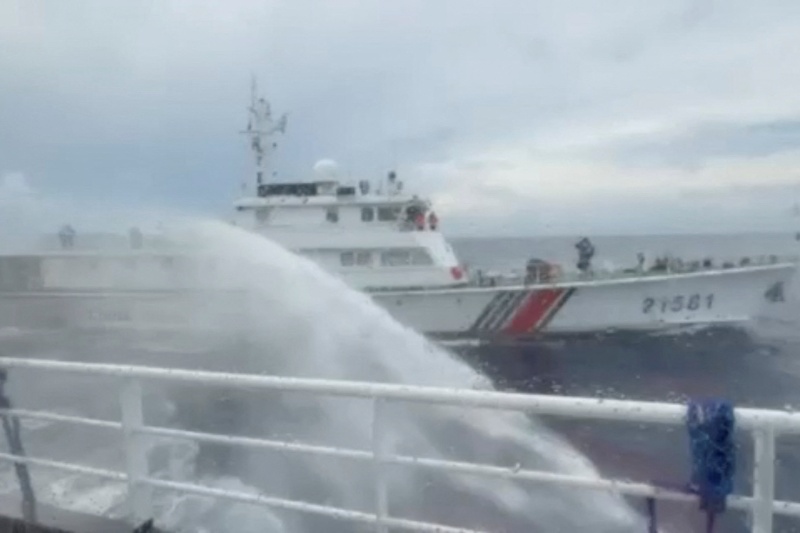
On July 22, Philippine vessels assembled near Huangyan Island as Chinese coast guard conducted warning broadcasts. The main confrontation occurred on July 23 when BFAR vessels attempted to approach the shoal. CCG vessels used water cannons to repel them, and during the operation, fuel leaked from Philippine fishing boats during a refueling transfer.
The Straits Times reported that Philippine Coast Guard spokesperson Jay Tarriela condemned China’s actions as “dangerous and unprofessional,” stating they violated the International Regulations for Preventing Collisions at Sea (COLREGs). China’s CCG called its response “standard, professional and lawful.”
On July 24, a second water cannon incident occurred, with the Philippine Coast Guard stating a Chinese vessel approached within seven meters of a Philippine fisheries boat, creating a “serious risk of collision,” as reported by Al Jazeera.
Environmental Impact: A Threat to Fragile Marine Ecosystems
Dr. Chen Xidi of China’s Marine Development Strategy Institute warned that the oil film from the leak could cause a significant decline in dissolved oxygen levels in the water, while toxic compounds could directly poison fish and plankton populations. The contamination poses a particular risk to coral reefs in the area, potentially causing bleaching and death that would cascade through the marine food chain.
The Huangyan Island area, designated as a National Nature Reserve by China, hosts diverse marine biodiversity. Environmental experts note that even a relatively small fuel spill can have outsized impacts in sensitive reef ecosystems, where the slow recovery of coral communities makes prevention critical.
Broader Geopolitical Implications
The incidents unfolded as Southeast Asian foreign ministers gathered in Manila for the ASEAN Foreign Ministers’ Meetings, which were attended by both Chinese Foreign Minister Wang Yi and United States Secretary of State Marco Rubio. Rubio called Beijing’s maritime actions “disturbing” and reaffirmed the U.S. Mutual Defense Treaty commitment to the Philippines.
Chinese analysts, including Chen Xiangmiao of the China South China Sea Institute, argue that Philippine military and coast guard leadership is increasingly driving South China Sea policy under President Ferdinand Marcos Jr., and that the timing of the operations during ASEAN meetings suggests an attempt to “hijack” the multilateral forum.
Meanwhile, ASEAN Secretary-General Kao Kim Hourn reiterated support for a dual-track approach combining bilateral negotiations with multilateral Code of Conduct (COC) discussions, now in their 25th year since the Declaration on the Conduct of Parties in the South China Sea.
What’s Next
As the oil threatens local marine ecosystems and diplomatic tensions show no signs of abating, three questions remain: What is the full extent of the environmental damage from the oil leak? How will the ASEAN Foreign Ministers’ Meetings address the escalating confrontations? And will international calls for restraint prevail over the cycle of escalation that has defined the South China Sea dispute in 2026?
The coming weeks will test whether environmental stewardship can serve as common ground between the two nations — or whether the oil spill becomes another flashpoint in an increasingly volatile relationship.