SpaceX Starship Aces 13th Flight with First Intact Splashdown
SpaceX achieved its most significant milestone yet in the Starship development program on July 24, when the world’s largest rocket completed a fully successful suborbital test flight, deploying next-generation Starlink satellites, relighting an engine in space, and — for the first time — splashing down intact in the Indian Ocean. The flight brought the 408-foot-tall vehicle closer than ever to operational reality.
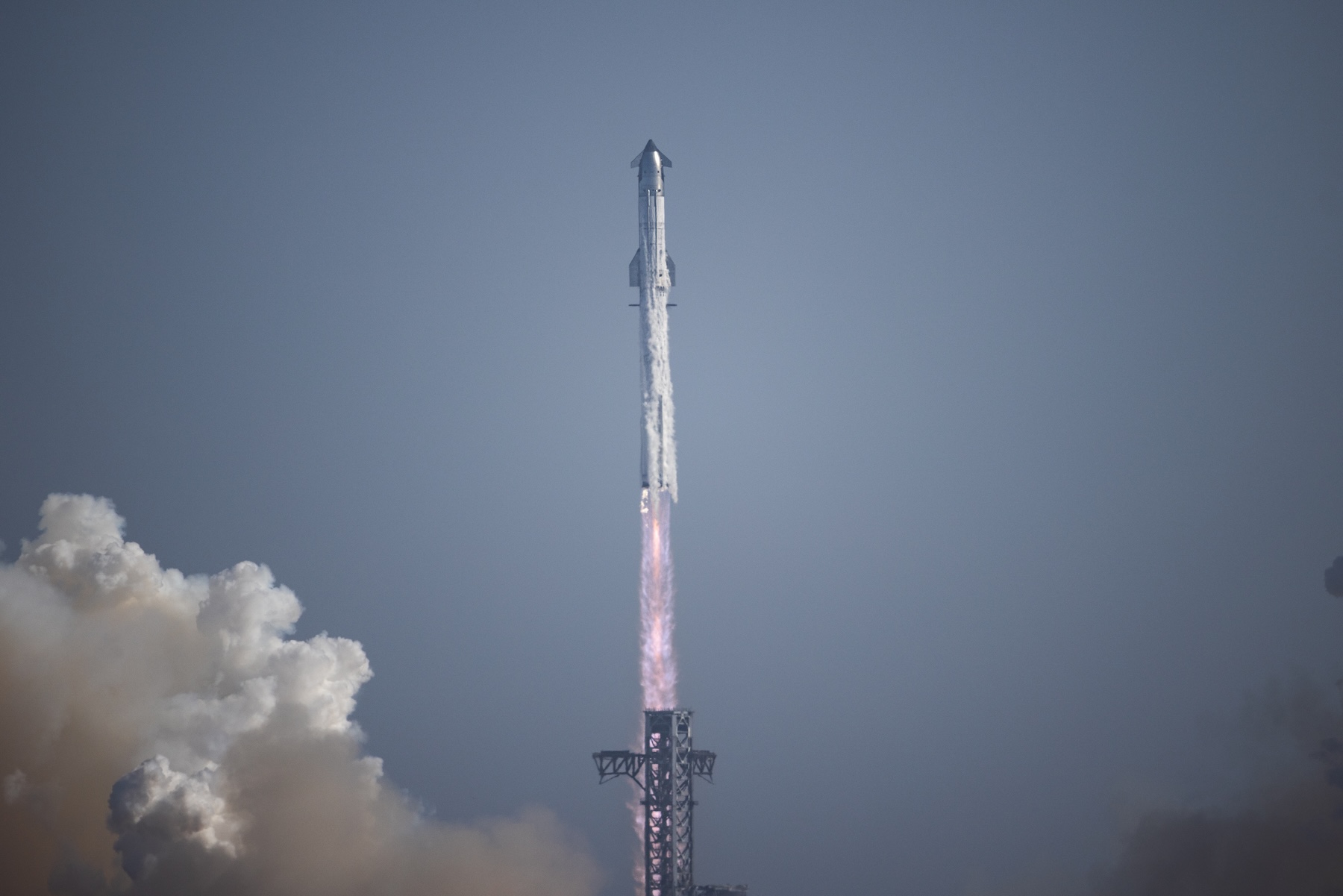
Lifting off at 5:51 p.m. CDT from Starbase, Texas, the 13th integrated test flight of the Starship system marked the second outing for the upgraded Version 3 (V3) design — featuring the powerful Super Heavy booster with 33 Raptor 3 engines and an upper stage with six Raptor engines. According to SpaceX’s official mission description, the vehicle performed a flawless ascent, with the Super Heavy booster executing a full-duration boostback burn using all 33 engines for the first time on a V3 vehicle.
A Near-Perfect Mission
Following stage separation, the Starship upper stage continued its climb to space while the Super Heavy booster attempted a controlled return to the Gulf of Mexico. While the boostback burn succeeded, only a subset of engines ignited during the landing burn, resulting in a hard splashdown — an area SpaceX will need to refine as it pursues full booster reusability.
Space.com reported that the Starship upper stage, meanwhile, executed a near-flawless flight profile. It deployed 20 next-generation Starlink V3 satellites — the first deployment of this upgraded satellite model — through a slit-like payload bay door. SpaceX engineers established both radio frequency and laser communication with every satellite, downloading key telemetry before the satellites were intentionally demised upon reentry approximately 20 minutes later.
In a critical demonstration for future orbital missions, Starship reignited a single Raptor engine in space for approximately 14 seconds — a milestone that had eluded the previous flight. This in-space relight capability is essential for orbital insertion and future missions requiring propulsive maneuvers beyond Earth’s gravity.
The Heat Shield That Worked
Perhaps the most significant achievement of Flight 13 was the survival of Starship’s thermal protection system during reentry. The vehicle, protected by over 18,000 ceramic tiles designed to withstand temperatures up to 2,600°F (1,430°C), navigated a dynamic banking maneuver mimicking the trajectory future missions will use to return to Starbase.
“This is a dream scenario for the team that’s trying to get this heat shield data,” said Dan Huot, SpaceX Communications Manager, as cited by Ars Technica. “You’re looking at a pretty intact-looking heat shield. We were flying at a significantly higher dynamic pressure, so putting way more stress on this vehicle on the way uphill, and it’s sitting there in the water.”
After slowing from hypersonic speeds, Starship executed a precisely choreographed landing flip — igniting three Raptor engines, downshifting to two, then one — before making what Huot called “the softest splashdown we have ever had with Starship in the Indian Ocean.” The vehicle came to rest floating belly-up, intact and transmitting telemetry.
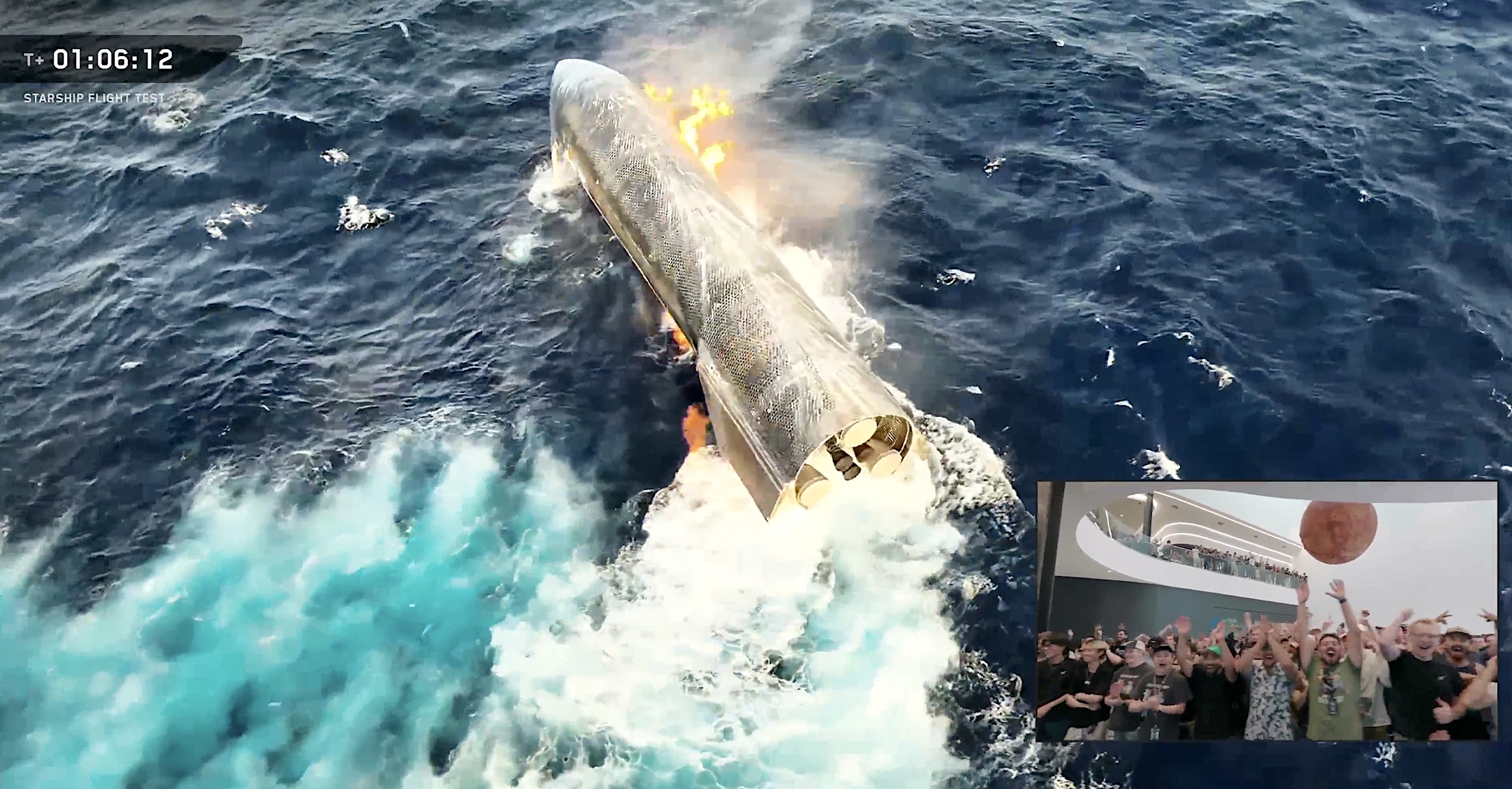
Elon Musk celebrated the achievement on X, posting: “Starship is intact, floating in the ocean and transmitting telemetry!” Musk also indicated the next major goal, stating that “unless we discover problems after mission data review, SpaceX will attempt to catch the ship with the tower on next flight.”
Broader Implications
The success of Flight 13 carries strategic significance well beyond the engineering milestones. The deployment of Starlink V3 satellites — even on a suborbital path — validates both the payload deployment mechanism and the satellite design. Each Starship can carry up to 60 of these larger satellites, which cannot fit on Falcon 9 rockets, meaning operational V3 launches could rapidly upgrade the Starlink constellation and unlock new revenue streams for SpaceX.
NASA Administrator Jared Isaacman, whose agency has selected Starship as the Human Landing System for the Artemis program, congratulated SpaceX on the flight, saying: “When Starship comes online, its capabilities will be game-changing, not least of which will be ensuring we never give up the Moon again!” Starship must still achieve orbital flight, demonstrate in-space refueling, and develop a crewed lander variant to meet NASA’s Artemis IV lunar landing target in 2028.
Shana Diez, SpaceX Director of Starship Flight Reliability, captured the team’s sentiment: “It feels like we are ready to kick into gear on delivering payload to orbit, which I am very excited for. Development vehicles are fun but at the end of the day, we are here to put things into space and I am psyched about this rocket’s game-changing capabilities.”
What’s Next
With 13 test flights over three years, SpaceX has demonstrated steady iterative progress. The next major milestones include the first orbital flight, a potential tower catch of the Starship upper stage, and an orbital refueling demonstration that will require two Starship launches working in tandem. Two new launch pads are under construction at Kennedy Space Center and Cape Canaveral Space Force Station in Florida, signaling SpaceX’s intent to scale operations.
The Super Heavy booster’s landing issues remain a challenge — SpaceX previously demonstrated successful booster landings with V2 vehicles but has yet to achieve it with the more powerful V3. Resolving this will be critical for the economics of rapid reuse that underpin Starship’s business case.
For now, Flight 13 stands as the program’s most convincing demonstration yet that Starship is transitioning from a development project to an operational launch system. The data streaming from an intact vehicle floating in the Indian Ocean may prove to be the turning point.