Philippines, China Clash at Scarborough Shoal for Second Day
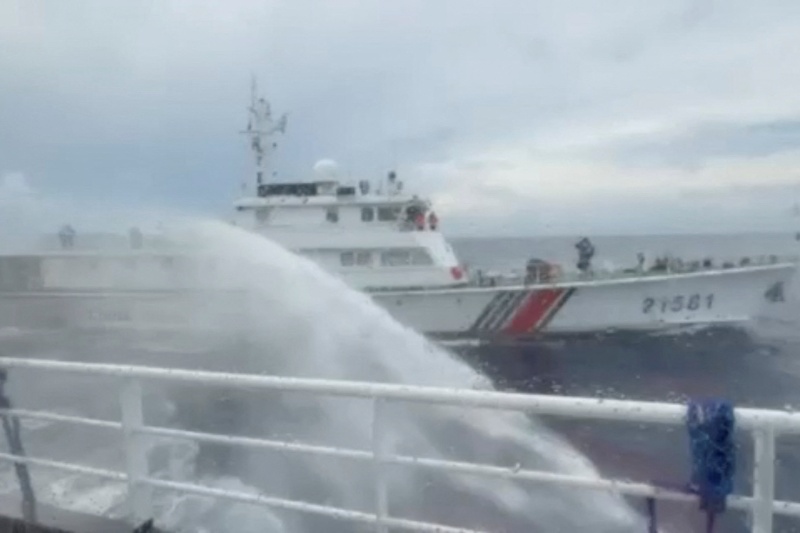
Chinese and Philippine vessels clashed for a second consecutive day at the disputed Scarborough Shoal on July 24, with the China Coast Guard (CCG) deploying water cannon against Philippine government vessels and aircraft attempting to enter waters claimed by Beijing. The confrontation marks the third such encounter between the rival claimants in the South China Sea this week, following a similar water cannon incident on July 23 and a violent clash at Second Thomas Shoal on July 20.
Background of a Longstanding Dispute
Scarborough Shoal — known as Huangyan Island in China and Bajo de Masinloc in the Philippines — is a maritime feature approximately 220 kilometers west of the Philippine island of Luzon. Both nations claim sovereignty over the shoal and its surrounding waters. China has effectively maintained physical control of the feature since a major standoff in 2012, during which it deployed coast guard vessels that have remained in the area ever since.
In 2016, the Permanent Court of Arbitration ruled largely in favor of the Philippines, declaring that China’s blockade of the shoal violated international law and that the feature does not generate its own territorial sea or exclusive economic zone. Beijing does not recognize the ruling, maintaining that it has no binding force. The legal status of the shoal remains contested in practice, as SCMP reported that China has long occupied the feature with an “armada of coast guard ships.”
Tensions have escalated significantly since 2023, with increasing confrontations at both Scarborough Shoal and Second Thomas Shoal. The current crisis was set in motion on July 20, when a Philippine Navy sailor was injured after being struck on the head with a wooden baton by CCG personnel during a confrontation at Second Thomas Shoal.
The July 24 Confrontation
On Friday, multiple vessels from the Philippine Bureau of Fisheries and Aquatic Resources (BFAR), the Philippine Coast Guard (PCG), and fishing boats — accompanied by circling aircraft — gathered near Scarborough Shoal and attempted to enter waters under China’s jurisdiction, according to Chinese authorities. The CCG vessel Chuanshan (川山舰), alongside other CCG vessels, deployed what it described as “control measures,” including warnings, blocking maneuvers, and water cannon.
According to Al Jazeera, the Philippine Coast Guard reported that approximately 12 CCG vessels and three Chinese maritime militia vessels were involved in the standoff — 15 Chinese vessels in total. PCG spokesperson Jay Tarriela stated that a Chinese vessel came within seven meters (23 feet) of a Philippine fisheries boat, creating a “serious risk of collision.”
“The PCG strongly condemns the dangerous and unprofessional actions of the China Coast Guard,” Tarriela said in a statement published by Reuters via Philstar/Interaksyon. He added that the shoal was a traditional fishing ground of Filipinos, “whose rights cannot be lawfully impeded by any foreign power.”
As of 9:30 a.m. on July 24, approximately 10 Philippine vessels and 15 Chinese ships remained locked in a standoff in the area. Water cannon from CCG vessels struck two Philippine ships, while two others were forced to take dangerous evasive maneuvers to avoid collisions, the PCG reported. The Philippine vessels were delivering fuel subsidies to local fishermen and conducting routine patrols.
Competing Narratives
Beijing offered a starkly different account of the events. The China Coast Guard stated that its actions were “standardised and lawful,” accusing the Philippines of organizing government vessels, coast guard ships, and a large number of fishing boats to “illegally gather” in the waters. According to the Xinhua News Agency, the CCG said it took legal measures — including warnings, blocking, and water cannon deployment — only after Philippine official vessels ignored repeated warnings and “insisted on intruding.”
China’s Foreign Ministry spokesperson Lin Jian defended the actions at a regular briefing, stating that the coast guard’s response was “reasonable, lawful and beyond reproach.” He called on “the Philippine side should immediately stop the infringement, provocation and hype.”
International and Diplomatic Dimensions
The clashes unfolded against the backdrop of the ASEAN foreign ministers’ meetings in Manila, which were attended by both Chinese Foreign Minister Wang Yi and US Secretary of State Marco Rubio. Rubio called Beijing’s actions in the South China Sea “disturbing” and reaffirmed the US defense treaty commitments to the Philippines under the Mutual Defense Treaty.
China swiftly dismissed the US comments. Lin Jian responded that “the US is not a party to the South China Sea issue,” reflecting Beijing’s longstanding position that the disputes should be handled bilaterally without external interference.
Meanwhile, China launched military drills in other parts of the South China Sea that are expected to run until the end of July 2026, adding further military tension to an already volatile situation.
Analysis and Outlook
The three incidents in a single week — July 20 at Second Thomas Shoal, followed by July 23 and 24 at Scarborough Shoal — represent the most serious escalation in the South China Sea since the current cycle of tensions began in 2023. The use of water cannon and physical violence indicates a shift from passive presence to active confrontation.
The close-quarters nature of these encounters, with vessels coming within seven meters of each other and aircraft involved in the operations, creates significant risks of accidental collision or unintended escalation to a more serious military incident.
With China’s military drills ongoing, the Philippines continuing its resupply and patrol missions, and the US reaffirming its treaty commitments, all sides appear positioned for continued confrontation. The international community will be watching closely to see whether diplomatic channels — including the ASEAN framework — can de-escalate the situation before a miscalculation turns a standoff into a crisis.