Army Rolls Out MAHA-Style Menus, Soldiers Applaud Changes
FORT DRUM, N.Y. — The U.S. Army opened its newest Campus-Style Dining Venue (CSDV) on July 30, unveiling a transformed approach to soldier nutrition that aligns with the Trump administration’s “Make America Healthy Again” (MAHA) initiative. The Belvedere Bistro at Fort Drum, home of the 10th Mountain Division, features five made-from-scratch food stations, touchscreen ordering kiosks, and a “Freedom Dollars” meal card system — replacing the traditional mess hall with an experience modeled after college campus dining.
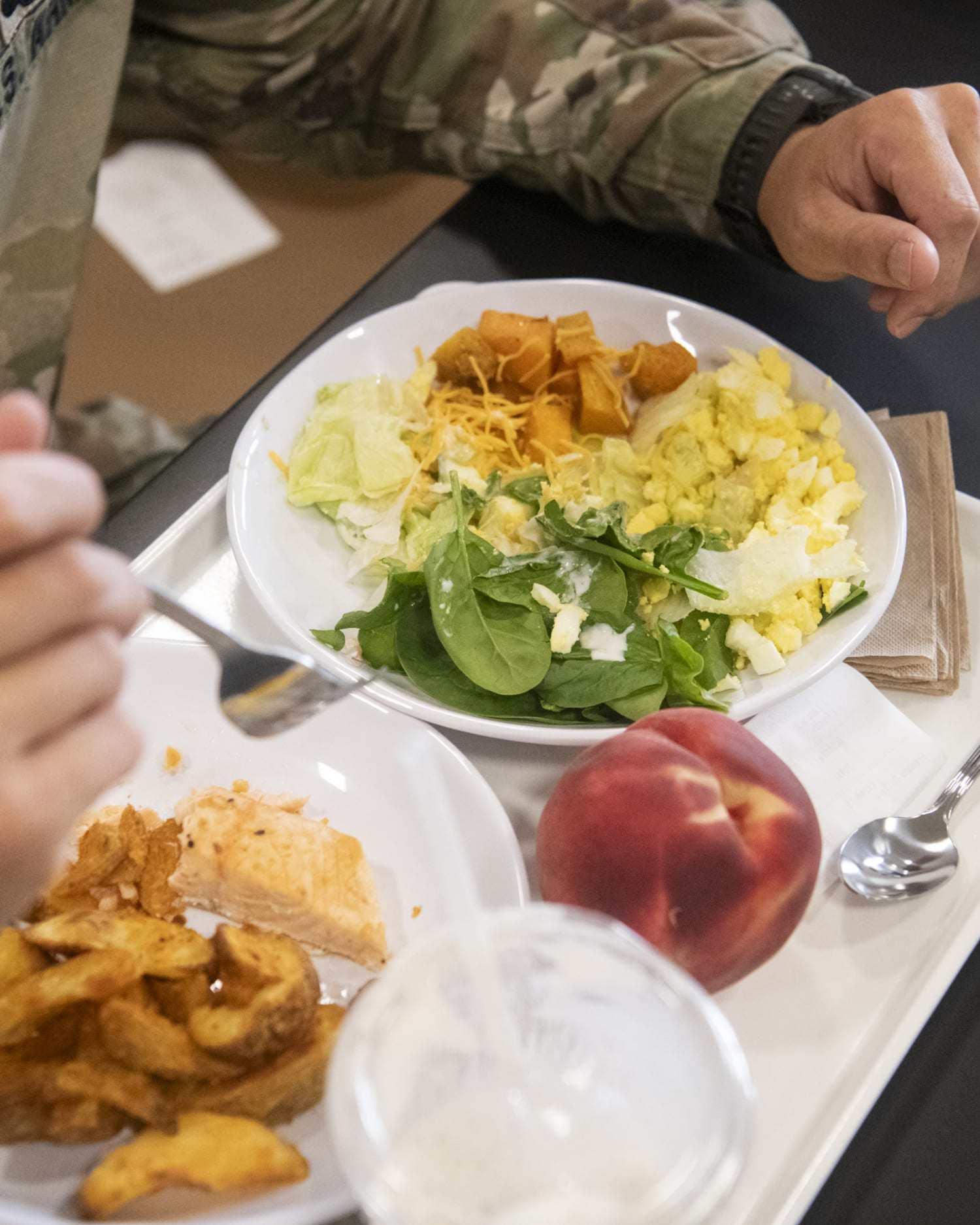
Soldiers who got an early look at the facility praised the upgrade. “When I first walked in today, wow, they really revamped the place,” said 1st Sgt. Tyler Remieres of the 10th Combat Aviation Brigade, as NBC News reported. “It definitely looks a lot nicer now and it feels roomier.”
What Is the MAHA Initiative?
The nutrition overhaul is rooted in the MAHA initiative, a signature policy program of the second Trump administration spearheaded by Health and Human Services Secretary Robert F. Kennedy Jr. The initiative emphasizes whole, nutrient-dense foods — high-quality proteins, healthy fats, fruits, vegetables, and whole grains — while restricting ultra-processed foods, added sugars, and seed oils. The 2025-2030 Dietary Guidelines for Americans, released in January 2026, reflect this shift by inverting the traditional food pyramid to place proteins and healthy fats at the foundation, as Just The News reported. These guidelines influence federal food programs including military dining facilities.
Inside the Belvedere Bistro
The Belvedere Bistro features five distinct food stations: Forged in 1775 (grill station with made-to-order salmon, chicken, and burgers), The Noble Fork (rotating global cuisine), Shake Smart (protein shakes starting at 25 grams of protein), Piccola Italia (pizzas and flatbreads), and Provisions 1951 (handcrafted sandwiches and wraps). Soldiers order via touchscreen kiosks that display nutritional information, allowing them to tailor meals to dietary needs — whether high-protein, low-carb, or vegetarian.
“We like to say our chefs use knives, not scissors,” said Learie Gaitan, Compass Group USA vice president of experience, according to Army.mil. “Nothing we do in here comes pre-made. Everything is cooked from scratch every single day.”
Soldiers on meal cards receive up to $39 in daily “Freedom Dollars” value ($9.57 for breakfast, $15.86 for lunch, $13.57 for dinner), with unused breakfast funds rolling forward — a significant shift from the rigid meal structures of the past.
Capt. Kenneth Englert, a company commander with 1-32 Infantry, said the new approach is a morale booster. “I think it’s going to be huge for morale,” he told Army.mil. “There seems to be a lot of variety, and the attached coffee shop is going to be great.”
A Historic Food Transformation
The Belvedere Bistro is the second CSDV to open, following 42 Bistro at Fort Hood, Texas, in February 2026. The Army is planning to expand the program to at least six more bases including Fort Bliss, Fort Campbell, Fort Irwin, Fort Polk, Fort Riley, and Joint Base Lewis-McChord, as Task & Purpose reported.
The transformation has been years in the making. In 2023, the Army Food Program board of directors was established after soldier feedback revealed widespread dissatisfaction with dining options. Celebrity chef Robert Irvine, known for “Restaurant: Impossible,” was brought in as a Special Consultant to the Army, spending three years studying supply chains and campus dining models to modernize the system.
“The guy on the TV show is the guy that shows up every day for the last three years to modernize Army feeding,” Irvine said, according to Army.mil. “Now we have to change the whole Army at a very fast pace.”
The results have been striking. Commercial food service partnerships have reduced subsistence costs by 35% while improving quality, and the Army invests more than half a billion dollars annually in its food program across 81 installations and 176 dining facilities.
Broader Implications
The food overhaul arrives amid a broader military quality-of-life push. Under the Biden administration, the Army recruited only 45,000 soldiers in 2022 against a 60,000 goal. But under Trump’s second term, FY2025 saw the best recruiting numbers in 15 years, according to Just The News.
Lt. Gen. Chris Mohan, commanding general of Army Materiel Command, acknowledged that the changes came in direct response to soldier feedback. “We were not getting it right, and we heard the soldier feedback,” he said, as Task & Purpose reported.
Maj. Gen. Eric Shirley, commanding general of Army Sustainment Command, captured the scale of the shift: “Going to the mess hall used to be seen as an obligation. We have come light years from those days.”
What’s Next
With demand at 42 Bistro exceeding initial projections — forcing a temporary pause on online ordering — the Army faces the challenge of scaling its new model to dozens more facilities. The program also involves reorganizing 92G culinary specialists to focus on field feeding as industry partners take over garrison dining.
If successful, the Army’s nutrition overhaul could serve as a template for similar reforms across other federal food programs, including schools, prisons, and veterans’ hospitals. For now, soldiers at Fort Drum are simply enjoying the upgrade. As Capt. James Williams of the 10th Combat Aviation Brigade put it: “The Army has done a lot of work improving the dining facilities in general so that Soldiers actually want to eat there.”