China’s Politburo Sets October Plenum, New Economic Push
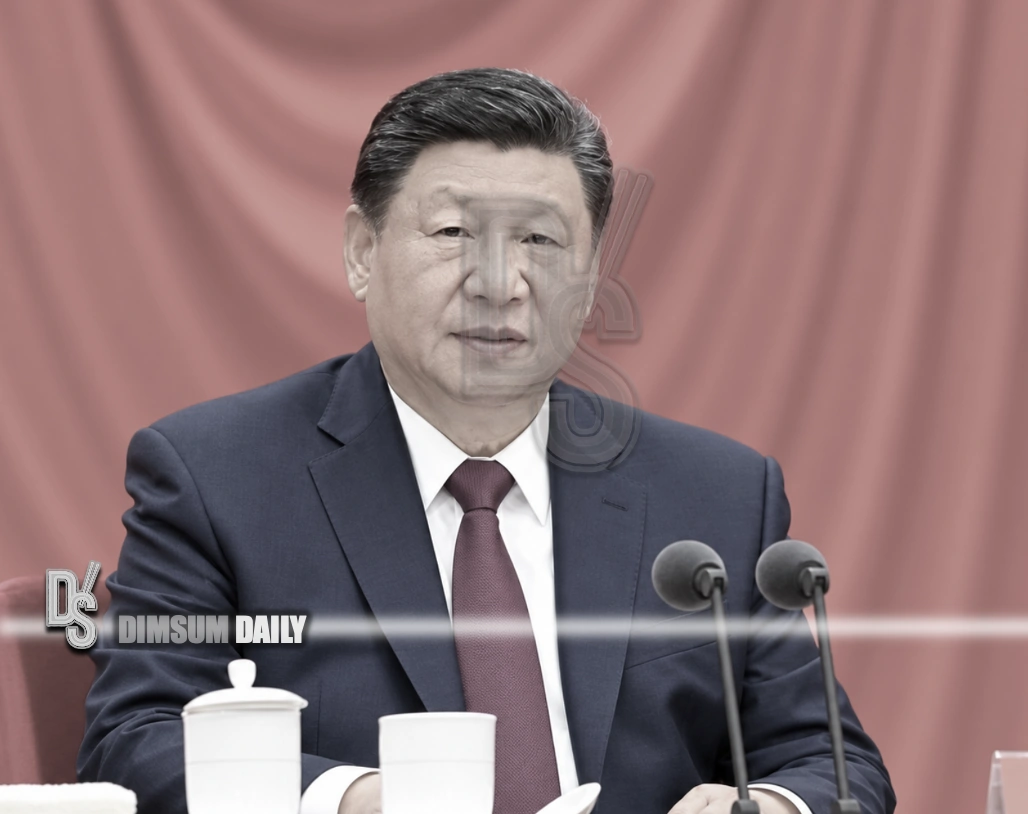
China’s top leadership convened in Beijing on July 30 for a pivotal Politburo meeting that fixed the date for the Communist Party’s 5th Plenary Session and laid out a more forceful economic policy push for the second half of 2026. Chaired by General Secretary Xi Jinping, the meeting announced that the 5th Plenum of the 20th CPC Central Committee will be held in Beijing in October, with a main agenda focused on the unremitting advancement of full and rigorous Party self-governance, according to Xinhua.
Why This Meeting Matters
The late-July Politburo session is China’s traditional economic midyear work conference, where leaders review first-half performance and calibrate policy for the months ahead. This year’s meeting carried added weight: it came as the world’s second-largest economy showed signs of cooling, and it set the stage for a plenum considered the last major party gathering before the 21st Party Congress expected in 2027.
The October plenum will be the 5th of the 20th Central Committee, which previously convened for its 4th plenary session in October 2025 to adopt recommendations for the 15th Five-Year Plan (2026–2030). This time, the agenda shifts to internal party governance — a theme typical of late-term plenums as the leadership consolidates discipline ahead of the party congress.
A Candid Economic Diagnosis
The meeting’s economic assessment was notably direct. While the official readout described China’s economy as showing a development trend of newer growth drivers and improving structure, it also stressed that high importance must be attached to the difficulties and challenges in economic performance. The unusual bluntness did not go unnoticed. Bill Bishop, publisher of the Sinocism newsletter, wrote that the phrase would seem to be an acknowledgement that the economy is not doing well, and that the adjusted diagnosis could open the door to new, incremental policy measures.
The underlying data underscore the concern. China’s economy expanded 4.7% in the first half of 2026 but slowed in the second quarter amid weak domestic demand and deepening structural imbalances, Caixin Global reported. Local government special-purpose bond issuance reached 2.1 trillion yuan, or 47% of the annual quota, below the 49.1% pace in the same period of 2025, while an 800-billion-yuan quota for new policy financial instruments remained undeployed as of July 30.
Policy Signals for the Second Half
In response, the Politburo instructed officials to implement the more proactive fiscal policy and moderately loose monetary policy well, give full play to existing policies, and promptly plan and introduce practical and effective incremental policies. It called for stepping up counter-cyclical adjustment, expanding domestic demand, optimizing supply, and striving for a good start to the 15th Five-Year Plan.
Specific directives included accelerating fiscal expenditure and the use of bond funds, advancing major national strategy and security capacity building programs, promoting large-scale equipment renewal and consumer goods trade-ins, and using monetary policy tools comprehensively with timely adjustments. The meeting also pushed for regulations to build a national unified market, curbing involution-style competition, and regularizing the resolution of enterprise arrears.
Investment and Reform Agenda
On growth drivers, leaders called for accelerating the modern industrial system, providing long-term stable support for basic research, deepening the AI+ action, and developing new forms of intelligent economy. In CCTV’s expert interpretation, Sheng Lei, deputy director of the National Information Center at the National Development and Reform Commission, said AI is no longer just an enabling tool but a systemic force reshaping how the economy operates, while the call to improve AI governance reflects a balance between development and regulation.
The meeting also advanced a major infrastructure framework — the six networks covering water, power grid, computing, communications, urban underground pipelines, and logistics. Sun Xuegong, director of the Decision Consultation Department at the NDRC Academy of Macroeconomic Research, told CCTV that the six networks, together with related infrastructure and public-service facilities, could total 7 trillion yuan in investment this year, providing strong support for annual investment growth.
Fiscal and monetary room remains available, Sun added, noting that the government’s spending and bond issuance pace of about 47% in the first half leaves considerable space for the second half, and that low inflation gives monetary policy more room to operate.
Risk Control and What’s Next
Risk prevention ran through the agenda. Officials pledged to stabilize the real estate market, implement the package of local debt-resolution plans, push local small and medium financial institutions to reform and de-risk, and deepen capital-market investment-financing reform to enhance resilience and confidence. The meeting also ordered thorough inspections of flood risks at reservoirs, river embankments, and urban waterlogging points, with robust emergency response preparations.
For markets, the key question is execution — whether the promised incremental policies will be sizable enough to offset structural headwinds. With inflation low, analysts see room for further easing; Zhang Jun, chief economist at China Galaxy Securities, told Caixin that the third quarter is a key window for possible cuts in interest rates and the reserve requirement ratio after the producer price index peaks in July.
The October plenum will offer the next major signal. Until then, all eyes are on whether Beijing converts its pledge of practical and effective incremental policies into concrete stimulus that stabilizes confidence in the second half. As Bishop noted, the political pressure on cadres will not lessen as personnel positioning intensifies ahead of the 21st Party Congress — a dynamic that may shape both policy and cadre behavior in the months ahead.