Kenya Joins China’s CIPS as RMB Clearing Expands in Africa
Kenya has become the sixth African market to go live on China’s Cross-Border Interbank Payment System (CIPS), following the official launch of RMB clearing services by Stanbic Bank Kenya at a “China Day” event in Nairobi on July 31. The move, co-hosted by Standard Bank and the Industrial and Commercial Bank of China (ICBC), marks a significant expansion of the Chinese yuan’s international reach across the continent and deepens financial cooperation between China and Africa, according to People’s Daily Online.
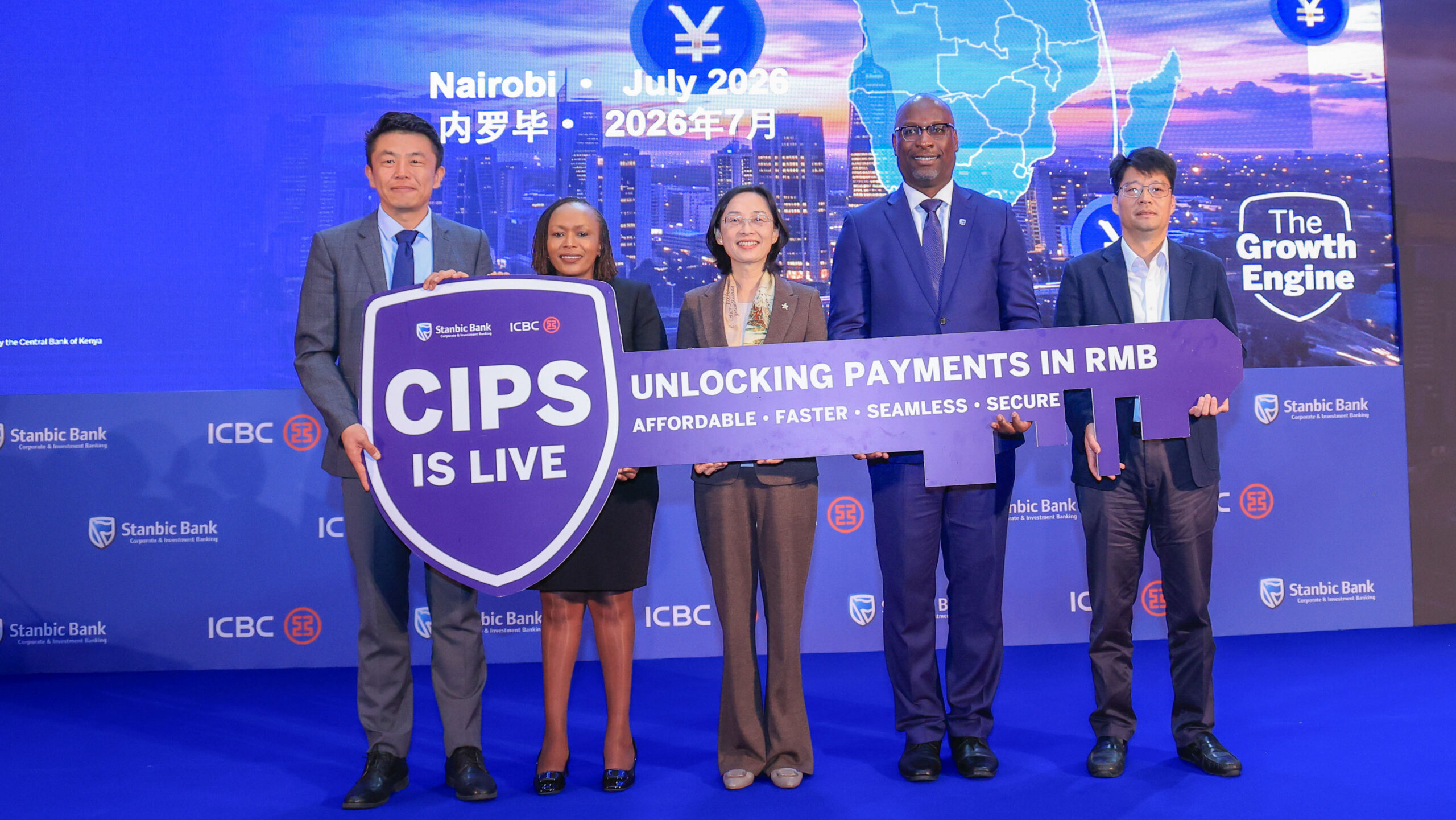
A Milestone in China-Africa Financial Integration
The launch event celebrated the successful completion of Kenya’s first CIPS transaction, a milestone that positions the East African nation alongside South Africa, Angola, Ghana, Lesotho, and Tanzania as markets now live on the system. Standard Bank Group became the first African bank authorized to process transactions through CIPS in June 2025 at the Lujiazui Forum in Shanghai, and has since processed over CNY 8 billion (approximately USD 1.2 billion) through the system in its first year of operation, as Khusoko reported.
CIPS, launched by the People’s Bank of China (PBoC), allows banks to clear and settle payments directly in renminbi, eliminating the US dollar conversion step that traditionally sits between an African exporter and a Chinese buyer. Fewer conversion steps mean fewer fees, faster settlement, and clearer visibility into transaction status—benefits that directly address the needs of businesses operating across the rapidly growing China-Kenya trade corridor.
“China remains one of Kenya’s largest trading partners and we are committed to making cross-border payments more transparent, efficient and effective for our clients,” said Jonathan Muga, Head of Corporate and Investment Banking at Stanbic Bank Kenya, as reported by the Kenya News Agency.
The African RMB Clearing Bank
The Kenya launch builds on a landmark regulatory development from June 2026, when the PBoC authorized Standard Bank and ICBC to jointly operate as the “Renminbi Clearing Bank of Africa.” This designation is historic on two counts: it is the first clearing bank named after a continent rather than a single country, and the first operated jointly by two commercial banks rather than a designated national institution, according to Reframed.co.
The arrangement covers 19 African countries, leveraging Standard Bank’s 21-country footprint across the continent and ICBC’s deep onshore RMB capabilities. The Central Banking publication reported on the designation in late June, noting it followed a memorandum of understanding between PBoC Governor Pan Gongsheng and his counterparts.
Chinese Ambassador to Kenya Guo Haiyan, who delivered the keynote address at the China Day event, emphasized the strategic significance of the expansion. “As China-Kenya economic and trade cooperation continues to expand, enterprises in both countries have a growing demand for efficient cross-border settlement and supporting financing services,” she said, according to the Chinese Embassy in Kenya. “The continued expansion of CIPS across Africa demonstrates China’s firm commitment to deepening China-Africa financial cooperation.”
A Partnership Nearly Two Decades in the Making
The CIPS rollout represents the latest chapter in an 18-year strategic partnership between Standard Bank Group and ICBC. ICBC acquired a 20% stake in Standard Bank in 2007—one of the largest single China-Africa investment deals to date—and remains the bank’s largest shareholder with approximately 19.7% ownership. The clearing bank structure extends this relationship into formal regulatory recognition, as The Asian Banker noted in its analysis.
Liu Jia, Deputy Chief Representative of ICBC’s Africa Representative Office, said the joint effort has “further improved the RMB payment and clearing system in East Africa, effectively enhancing the efficiency of RMB cross-border payments between China and Kenya,” providing enterprises with safer and more efficient financial services for trade and investment, as reported by Xinhua.
Trade Data Backs the Expansion
The financial infrastructure build-out is being driven by a trade relationship that has already shifted decisively. China-Africa trade hit a record USD 295 billion in 2024 and reached $400 billion in 2025, up 17.7% year-on-year. Standard Bank’s Africa Trade Barometer found that 35% of surveyed businesses across 10 African markets now name Asian markets as their preferred trading partners, up from 24% in the previous survey round, with 67% citing China as their leading source of imports.
For Kenyan businesses specifically, the benefits are tangible. Caleb Muriuki, Head of Transaction Banking at Stanbic Bank Kenya, said clients would benefit from “faster settlement, improved payment visibility, enhanced transaction traceability and reduced reliance on traditional correspondent banking systems,” while noting there would be no disruption to existing banking processes. “Payments will continue through current digital platforms while being seamlessly routed through CIPS,” he told the Kenya News Agency.
De-dollarization: Arithmetic, Not Ideology
The Kenya launch is part of a broader shift toward RMB settlement across Africa that is being driven less by political ideology than by economic arithmetic. Kenya converted $3.5 billion in Chinese-denominated loans to RMB to take advantage of lower interest rates—RMB-denominated financing carries rates in the 3-4% range, while dollar-linked debt has been expensive since the US Federal Reserve’s rate cycle began. Zambia became the first African country to officially accept RMB for mining taxes and royalties in late 2025, and Ethiopia is reportedly in discussions about a similar conversion on part of its Chinese debt.
However, the scale of RMB clearing infrastructure remains modest relative to dollar-based systems. CIPS processed $26 trillion in transactions in 2025, against $526 trillion for the US-based Clearing House Interbank Payments System (CHIPS), a reminder that the yuan’s internationalization remains in its early stages even as it accelerates.
What to Watch
Standard Bank has indicated plans to extend CIPS access to more African countries before the end of 2026, building on what Ontiretse Modise, Head of Payments for Corporate and Investment Banking at Standard Bank, called the system’s “rapid scale.” As the payments landscape evolves, CIPS is positioned as a “critical enabler” of Africa’s connectivity to global markets, Modise told Khusoko.
The key question for observers will be whether the infrastructure translates into sustained commercial adoption beyond existing China-linked trade flows. With six African markets now live on CIPS and more planned, the groundwork is being laid for a financial corridor that could reshape how Africa’s largest trading relationship is settled—one transaction at a time.