Peru’s Forest Governance Model Gains Global Recognition
Peru is advancing a pioneering approach to sustainable forest governance that pairs economic incentives with indigenous community stewardship, a model that has drawn international attention as the country expands its National Forest Conservation Program across the Amazon region. The initiative, which People’s Daily reported on August 3, represents a significant shift from traditional top-down conservation toward a collaborative framework that treats indigenous communities as both guardians and beneficiaries of the rainforest.
A Country Defined by Its Forests
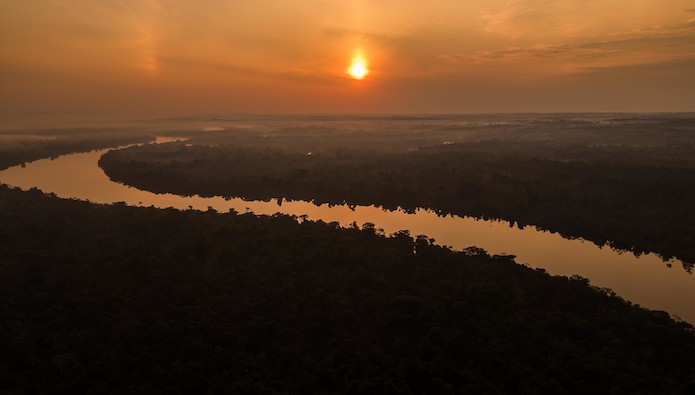
Approximately 57 percent of Peru’s national territory is covered by forest, making it one of the largest Amazon rainforest countries in the world. Yet for decades, illegal mining, unregulated logging, and uncontrolled agricultural expansion have steadily degraded this vital ecosystem, according to People’s Daily. The challenge of protecting the rainforest while supporting local livelihoods has become a defining policy question for the Andean nation.
The Conditional Direct Transfer Model
In 2010, Peru’s Ministry of Environment (Minam) launched the National Forest Conservation Program, known as Programa Bosques, integrating forest management, climate governance, and sustainable development into a single framework. At its core is the “Conditional Direct Transfer” (TDC) mechanism, under which the government signs forest protection agreements with indigenous communities, delegating daily patrol, resource monitoring, and ecological management duties to local residents in exchange for payments based on the area of forest they protect.
As of July 2026, the program has incorporated 379 native communities across 10 regions, benefiting more than 32,000 families and contributing to the conservation of over 5 million hectares of Amazon forest through an investment exceeding S/134 million in economic incentives, the Ministry of Environment reported.
In March 2026, Minam announced that more than 85 native and peasant communities would receive over S/13.5 million in incentives through the TDC mechanism, benefiting approximately 4,400 families across eight regions—Loreto, Amazonas, San Martin, Cajamarca, Ucayali, Pasco, Junin, and Cusco—while protecting around 800,000 hectares of forest, as Caretas reported.
The Palma Real Success Story
The Palma Real community in Madre de Dios, southeastern Peru, exemplifies how the model works in practice. The community manages over 8,000 hectares of forest in partnership with the government and has implemented 71 business plans, 49 of which focus on sustainable Brazil nut (castana) development. The Peruvian government invested approximately S/370,000 to build the Brazil nut value chain, including post-harvest processing, warehousing, logistics, and end-market sales, according to Andina.
The investment enabled the community to build a 70-ton capacity storage facility with professional drying equipment, transport vehicles, and boats—solving long-standing problems of harvest loss and inconsistent quality. Before the initiative, the community lost up to one-fifth of its production due to inadequate post-harvest practices, the Ministry of Environment noted.
“Before, we struggled to get the Brazil nuts out of the forest and didn’t have proper dryers. Today we send a clean, well-dried, higher-quality product,” said Jose Sehua, community leader of Palma Real, as quoted by Andina. Minam projects the community’s Brazil nut production will exceed 80 tons in 2026.
Evidence That Conservation Works
Data from the program shows that after formal land management rights were granted to indigenous communities, deforestation rates in their territories dropped significantly, with forest disturbance frequency reduced by approximately two-thirds. Ecologist Greg Asner, who specializes in Amazon rainforest monitoring, noted that “indigenous residents are among the best guardians of Peru’s Amazon rainforest,” as reported by People’s Daily.
International Recognition and the REDD+ Program
Peru’s forest conservation model, developed jointly by Minam and the Grupo Peru de Pueblos Indigenas (GPPI), received the 2025 Climate Impact Award from the American Carbon Registry (ACR) in Los Angeles, USA. This distinction recognizes the first Indigenous Jurisdictional REDD+ Program (RIJ) in the world, according to Andina. The program operates in native communities and communal reserves in Loreto, Amazonas, and Ucayali, covering approximately 7 million hectares—about 11 percent of Peru’s forests.
The program also receives financial backing from the Inter-American Development Bank (IDB) and the World Bank, as ProActivo reported. The GeoBosques platform, celebrating 10 years in 2026, provides timely information on forest cover changes, strengthening the state’s capacity to prevent deforestation.
The Challenge of Scaling Up
Despite these achievements, significant challenges remain. According to a report by Rainforest Foundation US and Aidesep published in June 2026, approximately 20 million hectares of indigenous territories in the Peruvian Amazon still lack legal recognition or full legal security, as Mongabay Latam reported. The report notes that where indigenous territories are formally recognized, communities have better tools to respond to invasions, illegal logging, and unauthorized extractive activities.
Efforts are underway to address this gap. The SI-TIERRA model in Loreto has reduced titling times from years to 8-18 months and has titled or strengthened territorial security for more than 40 indigenous communities covering approximately 77,265 hectares since 2023, Mongabay Latam reported.
A Model for the Region
Claudia Suarez, Secretary General of Minam, articulated the program’s broader vision: “Peru has demonstrated that forest conservation and sustainable development can advance hand in hand when the State works in alliance with communities and indigenous peoples,” she said at the program’s 16th anniversary celebration, as reported by the Ministry of Environment.
“The real challenge is to scale this model to make it an engine of sustainable development for the Peruvian Amazon, integrating financing, innovation, quality information, and greater coordination between the State, international cooperation, the private sector, and above all, the communities that protect our forests,” Suarez added.
What to Watch For
As Peru continues to expand its forest governance model, several questions will shape its trajectory: How will the program scale to address the 20 million hectares of indigenous territories still lacking legal recognition? What are the long-term economic sustainability prospects for communities dependent on Brazil nut production? And how will the program respond to ongoing threats from illegal mining and deforestation?
For other Amazon countries and nations with significant forest coverage, Peru’s experience offers a compelling template—one that demonstrates how conservation and economic development can reinforce rather than undermine each other when communities are placed at the center of the solution.