Gene-Edited Beagle Lets Allergy Sufferer Finally Own a Dog
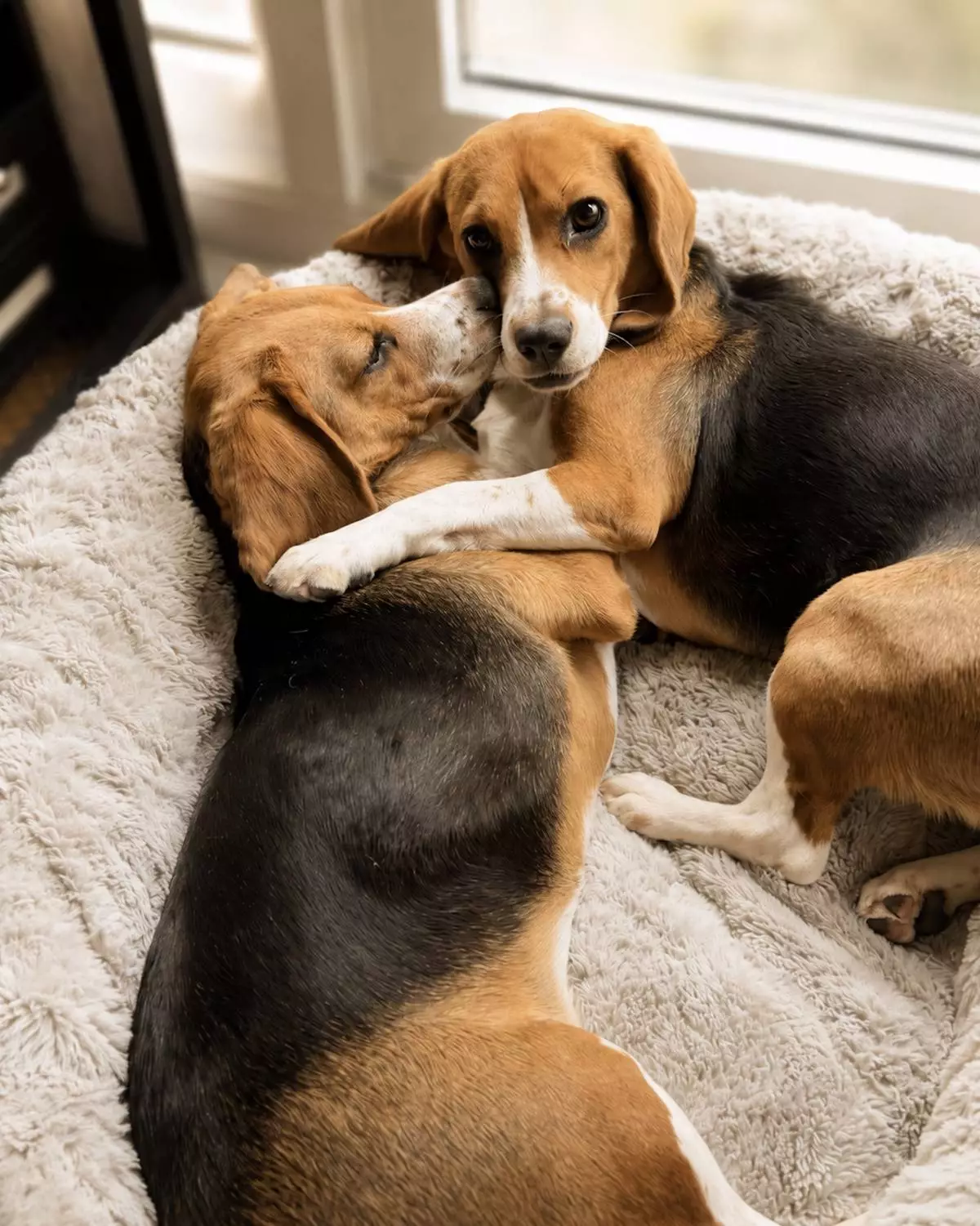
Matt Walker couldn’t pet a dog without sneezing — until he and other scientists used a gene editing technique to produce a hypoallergenic beagle named Bailey. Now, the geneticist can feed Bailey spoons of peanut butter while she lies on his lap and play fetch with her in Central Park. His allergies didn’t go away: Bailey’s saliva and hair no longer contain a key allergy-causing protein.
“The feeling right now is sort of a mix of relief and awe and gratitude that it worked,” said Walker, whose company, Kindred Companion Sciences, created Bailey and her twin Alfie using the Nobel Prize-winning technique called CRISPR, according to AP News.
A Breakthrough in Hypoallergenic Pets
The research, published Wednesday in The CRISPR Journal, is the first time such an approach has been tried successfully in dogs. It represents a potential turning point for the millions of Americans who suffer from dog allergies — about one in seven people worldwide, or 15 percent of the global population, according to GEN. Dog allergies are linked to more than 1 million asthma attacks annually, and about 25% of rehomed pets are linked to allergies.
The main allergen that triggers reactions to dogs is a protein called Can f 1, secreted by the tongue and by glands in the skin, present in fur, saliva, and dander. It is the most common dog allergen, causing reactions in more than half of people with dog allergies. While breeds that shed less, like poodles and goldendoodles, are often thought of as hypoallergenic, they still produce allergy-causing proteins and can still make people sniffly.
How Alfie and Bailey Were Created
The Kindred team took skin cells from a female beagle and used CRISPR-Cas9 to introduce a single-base insertion in exon 1 of the Can f 1 gene, creating a frameshift mutation that disrupted protein production. No foreign DNA was introduced. The edit made to their genes is rare but does occur naturally in some dogs.
Once the team confirmed they had made the desired change without introducing unwanted mutations, they cloned the cells using somatic cell nuclear transfer. Altogether, the team transferred 25 embryos to a surrogate beagle, of which two implanted and developed to term. Alfie and Bailey were born in September 2024, genetically identical twins with normal birth weights and no congenital abnormalities.
Western blot analysis of saliva and dander extracts from the two pups failed to detect any residual Can f 1 protein, while high levels were present in poodle and goldendoodle controls. Whole-genome sequencing confirmed no off-target mutations or large-scale chromosomal rearrangements, as New Scientist reported.
The Personal Test
Walker, who has lived with allergies his whole life, served as the guinea pig for a skin prick test. His skin reacted to samples from a poodle and goldendoodle but showed no reaction to extracts from Alfie and Bailey’s saliva and dander.
“When I had no reaction to Bailey after she came home with us, my immediate reaction was skepticism,” Walker recalled in an interview with GEN. “What if my allergies have just gone away? What if I’m not allergic to puppies? So, I called some friends in Brooklyn and spent some time with their dog and confirmed that my allergies were still roaring.”
Bailey lives with Walker in New York, and Alfie lives in Florida with co-founder Nick Gavin. At almost two years old, both dogs have shown normal physical development, steady growth, and no apparent health or behavioral abnormalities.
Expert Perspectives and Ethical Considerations
The breakthrough has drawn both enthusiasm and caution from experts. Fyodor Urnov, a gene editing expert at UC Berkeley, endorsed the approach. “Editing can, and should, be applied to solving legitimate problems that humanity has,” he told Wired. “Dogs are a human’s best friend, now potentially more so because of one tiny gene edit.”
However, bioethicist Arthur Caplan with New York University’s Grossman School of Medicine raised concerns about the potential impact on shelter animals. “It opens the door to a lot more people being able to own pets,” he said. “On the negative side, it may discourage people from trying to use strays and unwanted animals that are not engineered to be allergy-free.”
Dr. Jeff SoRelle, a pathologist at University of Texas Southwestern Medical Center who had no role in the study, cautioned that since the switched-off gene is the main — but not the only — allergy-causing culprit in dogs, “we don’t exactly know just how effective or broadly useful this could be for stopping dog allergy in humans.”
Walker counters that the work is not for novelty or cosmetic reasons. “Allergies are a real health problem,” he told New Scientist. “They affect a significant portion of the population, and lead to serious conditions such as asthma triggering asthmatic attacks.” He also notes that people discovering they are allergic to dogs is a leading reason for animals having to be rehomed.
Regulatory Path and Future Plans
Kindred dogs are not commercially available today. The genomic alteration is investigational and has not been approved by the FDA, which regulates genome-edited organisms. It will take years before the millions who suffer from dog-related allergies can walk into a pet store and buy a pooch like Alfie or Bailey.
Kindred Companion Sciences hopes to test the technique on other dogs and service animals to see if they can breed an allergy-free line of pups beyond beagles. For each dog breed, the company will need to create a genetically diverse set of “founder” dogs that can then be bred normally.
Previous attempts to create hypoallergenic pets mostly relied on cloning, which led to sicker pups that were too genetically similar. Two years ago, researchers used CRISPR to reduce levels of an allergy-causing protein in a cat named Alsik, but it’s not yet clear whether that technique is safe for broader feline application.
A Lifelong Dream Realized
Despite being a lifelong dog lover, Walker’s allergies kept him away from pups growing up. Even breeds that were supposed to be more hypoallergenic, like his family’s goldendoodle, gave him itchy eyes and painful rashes. He previously worked in the Columbia University lab of the late Nobel laureate Martin Chalfie, studying neuron development in worms using CRISPR gene editing.
Now, he and Bailey can play tug-of-war together in his living room, and she snuggles at his feet to comfort him when he’s sick.
“It feels just amazing to get to have a dog,” Walker said. “She’s just brought so much joy and activity and community into my life.”
Future research should test the gene-edited hypoallergenic dogs on more people with pet allergies to be sure they can soothe symptoms across a broader swath of the human population, experts say. As the dogs continue to receive regular veterinary exams and monitoring, the scientific community will be watching closely to see whether this first-of-its-kind breakthrough can fulfill its promise of making dog ownership possible for millions of allergy sufferers.