Eclipse Glasses Nearly Sold Out as Belgian Hunters Prepare for August 12
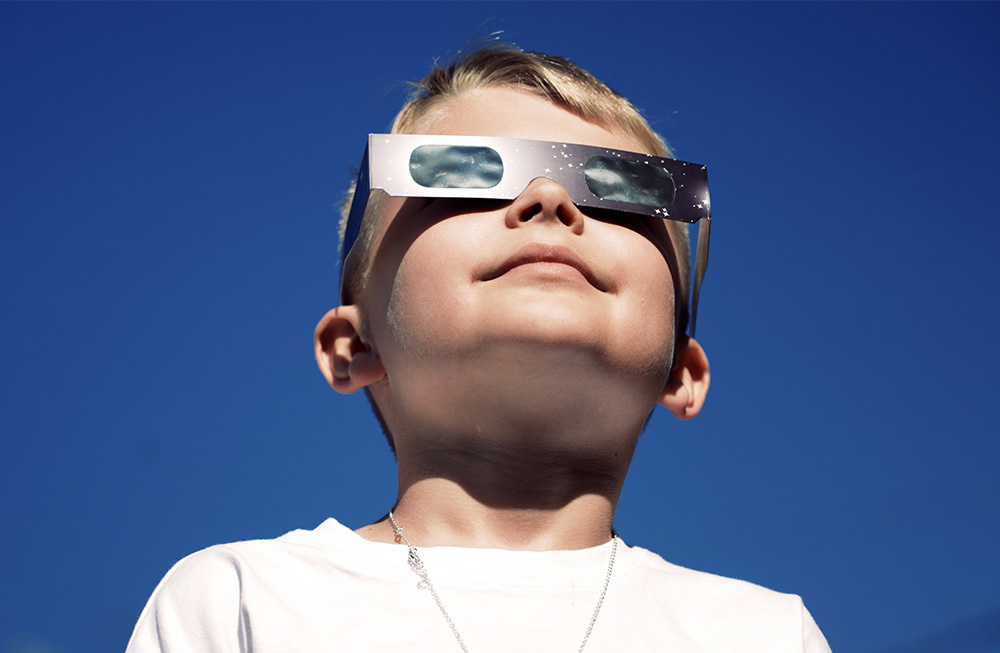
With the total solar eclipse of August 12 just days away, eclipse glasses are nearly sold out across Belgium, prompting a now-or-never warning for skywatchers. The moon will cover approximately 90 percent of the sun shortly before sunset, making this the largest eclipse visible from Belgium since 1999, according to VRT NWS.
A Race Against Time for Eclipse Glasses
The demand for certified eclipse glasses has overwhelmed suppliers. Volkssterrenwacht Urania, the country’s largest supplier, has closed its webshop because orders can no longer be processed in time, while Volkssterrenwacht Mira’s stock is completely depleted. Carrefour has distributed 10,000 glasses across its 40 Belgian hypermarkets.
“It’s now or never,” said Charles Bruninx, optician and spokesperson for the APOOB opticians association, which expects most opticians to be out of stock by the end of the week. “We were a bit shocked by the popularity. A few years ago there was also a solar eclipse. There wasn’t such a rush then. This eclipse is of course more beautiful — the largest since 1999 — and during the holidays.”
According to VRT NWS, more than 80,000 people had already purchased eclipse glasses by late July. The eclipse begins at 19:18 Belgian time, reaches maximum coverage at 20:13, and ends at 21:05 — just before sunset.
Belgian Eclipse Hunters Travel to Spain
While Belgians at home will witness a partial eclipse, dedicated eclipse enthusiasts are traveling thousands of kilometers to experience the few minutes of totality along the path crossing northern Spain. Cities including Valencia, Zaragoza, Palma, Bilbao, Burgos, and Oviedo lie within the totality zone, according to RTBF.
Dieter Verstrynge, a 42-year-old from Maldegem, is cycling 1,500 kilometers to Burgos, Spain, to witness the total eclipse. He departed on August 2, planning 11 stages averaging 180 kilometers per day, and is combining the journey with fundraising for brain disease research. “I’ve been crazy about natural phenomena since childhood,” he told VRT NWS. “For a total eclipse you had to go back to Virton years ago (in 1999). During the corona period, the idea grew to catch the next solar eclipse. Since then, August 12, 2026 has been in my calendar.”
The influx of eclipse tourists has driven up accommodation prices dramatically. According to AirDNA data cited by RTBF, demand is up 120 percent in Zaragoza and 140 percent in Valencia compared to last year. Valentine, a Belgian tourist in Asturias, booked her accommodation in February — six months in advance — and noted that “you can clearly feel that accommodations are more expensive than usual.” Céline, a Belgian astronomy enthusiast traveling to Spain, was more blunt: “Prices are prohibitive. You can feel they’re taking advantage.”
Safety First: Protecting Your Eyes
Authorities are emphasizing that proper eye protection is non-negotiable. The Federal Public Service Economy has issued official safety guidelines, warning that only glasses specifically designed for direct solar observation and bearing the CE marking and ISO number 12312-2 offer effective protection.
“Never look directly at the sun, not even at a setting sun that seems less bright,” warned ophthalmologist Liselotte Aerts. “You can suffer permanent eye damage.” Regular sunglasses, CDs, DVDs, and other improvised methods do not provide adequate protection.
A Scientific and Human Moment
The eclipse also offers significant scientific opportunities. ESA astrophysicist Miho Janvier noted that multiple systems have been set up for eclipse studies, including the Solar Orbiter, Proba-3, and SOHO satellites, as RTBF reported. The Proba-3 satellites can get closer to the sun to capture the beginning of solar wind propagation.
“It’s not just a scientific moment,” said Carole Mundell, ESA’s chief scientist. “It’s also a very human moment. There’s a real connection with the Cosmos.”
What to Watch For
For those staying in Belgium, the eclipse will be visible from 19:18 to 21:05, with maximum coverage at 20:13. A clear western horizon is essential, as the sun will be low in the sky. RTBF will broadcast special coverage on La Une and VivaCité, as detailed in their coverage plans.
An eclipse of this magnitude will not be visible again from Belgium until 2081, making August 12 a once-in-a-lifetime event for most skywatchers. For those traveling to Spain, the total eclipse — lasting up to two minutes — will be the first visible from mainland Europe since 1999.