Naples Quake: Strongest in 40 Years Leaves 26 Injured and Hundreds Displaced
A magnitude 4.7 earthquake struck the Campi Flegrei volcanic area near Naples on the evening of 31 July, marking the strongest seismic event recorded in the region in four decades. At least 26 people were injured, two seriously, and more than 700 residents have been displaced as authorities grapple with the aftermath of a crisis that continues to unfold.
The quake, which struck at 19:46 local time with its epicenter in the Solfatara di Pozzuoli area at a depth of approximately 3 kilometers, was felt across Naples, Pozzuoli, Bacoli, and on the islands of Ischia and Procida. According to VRT NWS, it was the strongest earthquake in the region in about 40 years, surpassing the previous record of magnitude 4.6 recorded in June 2025.
A Region Under Pressure
The Campi Flegrei, or Phlegraean Fields, is one of Europe’s most dangerous volcanic areas—a vast caldera west of Naples that has been experiencing a phenomenon known as bradyseism, the periodic raising and lowering of the ground due to volcanic activity beneath the surface. The current phase of ground uplift has been ongoing for approximately 20 years, with activity intensifying significantly over the last three years.
According to the Italian Civil Protection Department, ten people were initially reported injured, with several uninhabited buildings collapsing and a partial collapse of a high-voltage electricity pylon in the Agnano area causing power outages across parts of Naples. The port of Pozzuoli was closed after deep cracks appeared on the access lanes to the docks, suspending over 40 daily ferry connections to the islands of Ischia and Procida during the peak August tourist season.
Escalating Damage and Displacement
As the seismic swarm continued—with 189 shocks recorded before it concluded—the scale of the damage became clearer. Two uninhabited buildings collapsed in Pozzuoli, and the Comune di Napoli activated reception areas to accommodate displaced residents. By 4 August, the situation had deteriorated significantly: 57 buildings had been declared uninhabitable, 395 housing units evacuated, and over 700 people displaced.
The earthquake also disrupted critical infrastructure. Railway circulation was temporarily suspended on the Cumana and Circumflegrea lines as well as the entire Naples railway node, while 13 school buildings were declared unusable and 14 religious buildings closed to the public. Water supply disruptions compounded the suffering in parts of Pozzuoli, with authorities deploying tanker trucks to deliver water to affected areas.
Government Response and Emergency Funding
The Italian government moved swiftly to address the crisis. Prime Minister Giorgia Meloni followed developments from the Crisis Unit, and on 4 August the Council of Ministers approved 100 million euros for initial emergency interventions. Civil Protection Minister Nello Musumeci described the situation as a “national case,” calling it “an endless ordeal for the populations involved.”
“The 100 million euros cover a first summary estimate of the damages, to allow local authorities to act immediately,” Musumeci explained following the emergency summit chaired by Meloni at Palazzo Chigi.
Local officials have been working around the clock. Pozzuoli Mayor Luigi Manzoni said his administration had “immediately activated the Municipal Operations Center to coordinate all monitoring and population assistance activities,” while Naples Mayor Gaetano Manfredi assured residents that the situation was “constantly monitored.” Bacoli Mayor Josi della Ragione described it as “the strongest shock ever,” noting that while people were clearly frightened, no injuries or property damage had been reported in his municipality.
Growing Public Frustration
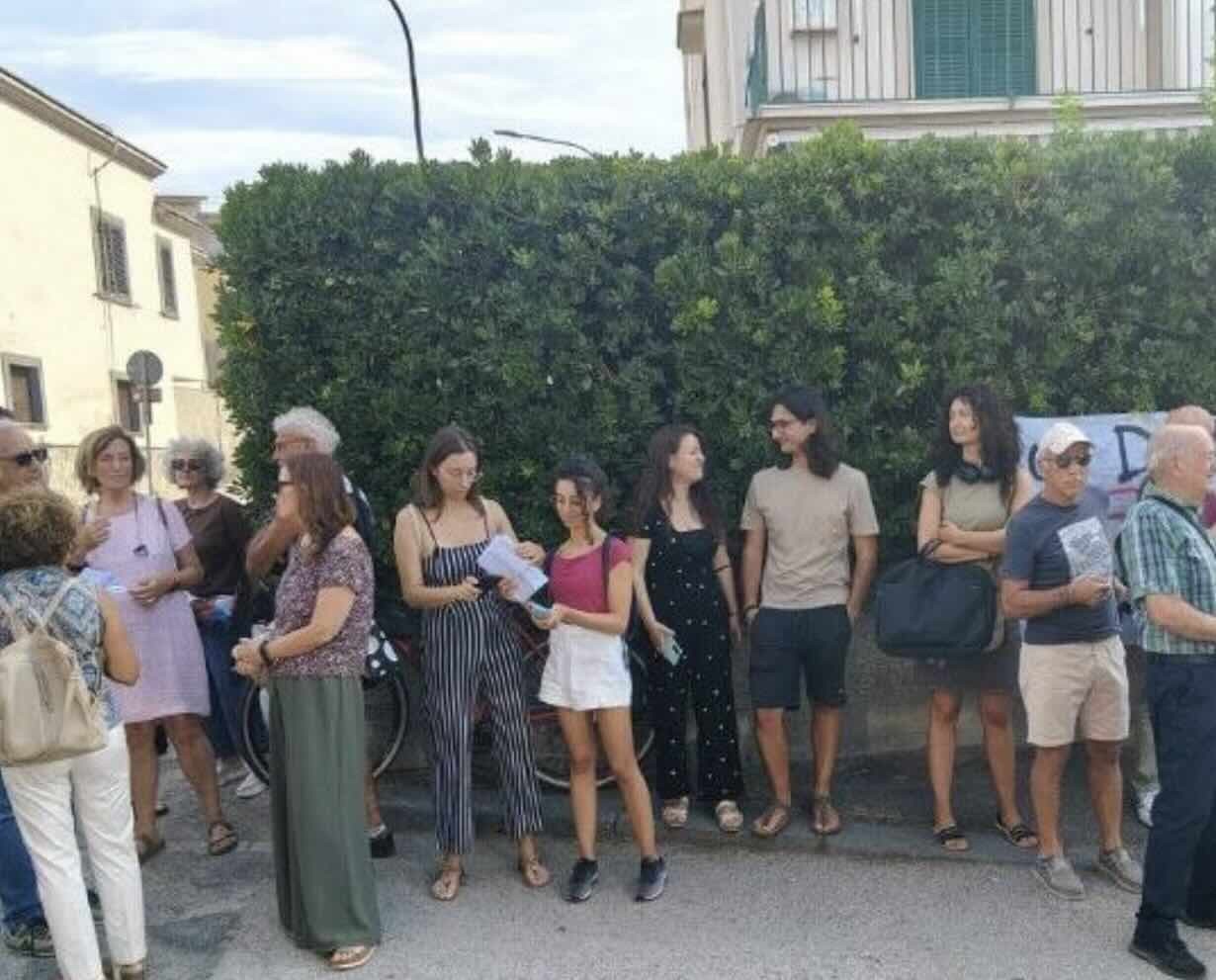
Despite the government’s response, frustration among residents has been mounting. On 4 August, over 1,000 people gathered in Pozzuoli’s Piazza della Repubblica under the slogan “La terra trema, le istituzioni dormono” (“The earth trembles, the institutions sleep”), blocking the port for about an hour. As Cronache della Campania reported, protesters demanded immediate answers for families forced from their homes, restoration of electricity and drinking water in the city center, and faster building inspections—only 227 of 1,182 requests had been completed.
The protest ended after Interior Minister Matteo Piantedosi agreed to meet a citizen delegation at the Prefecture. Trade unions have also called for an emergency package including suspension of tax obligations, a moratorium on mortgage payments for damaged homes, and a dedicated fund for securing the area’s building stock.
Scientific Perspective: A Long-Term Challenge
Scientists at the Vesuvius Observatory of the National Institute of Geophysics and Volcanology (INGV) emphasize that the current seismic activity is part of an ongoing bradyseismic crisis that has been intensifying over the past three years. Observatory Director Lucia Pappalardo warned that “the tremors will continue in the coming days,” noting that “this is the state of the Phlegraean caldera over the last 20 years, activity has grown over the last three years, we can expect events of this kind.”
The 31 July event was the 11th earthquake above magnitude 4 in the current crisis, with acceleration at the epicenter reaching 80-90 percent—higher than the March 2025 event. According to Il Fatto Quotidiano, the cause is attributed to “decassamento”—decompression and uplift dynamics within the caldera.
Monitoring data from the INGV shows the caldera continues to rise at approximately 10 millimeters per month, with total uplift since 2005 reaching 167.5 centimeters at the Rione Terra station—surpassing the peak of the 1980s crisis by over 75 centimeters. Despite this, the volcanic framework remains stable, with no elements suggesting significant short-term evolution.
What’s Next
As the region enters the peak summer season, the challenges ahead are substantial. The port of Pozzuoli has since reopened, but the long-term implications of the bradyseismic crisis remain. Lorenzo Benedetto, president of the Order of Geologists of Campania, argues that “seismic risk mitigation cannot be limited exclusively to the structural vulnerability of buildings,” calling for integrated approaches that address geological and geomorphological risks alongside structural ones.
The government’s 100 million euro package represents an initial response, but officials acknowledge that a full damage assessment will take weeks. With the caldera continuing to rise and seismic activity expected to persist, the Campi Flegrei region faces a prolonged period of uncertainty—one that will require sustained investment in infrastructure resilience, building safety, and community support.
For the more than 700 displaced residents and the thousands living in uncertainty, the question is not just when the next quake will come, but whether the institutions can keep pace with a crisis that shows no signs of abating. As Euronews reported, the full extent of the damage is still being assessed, and the region’s recovery will be measured in months and years, not days.