Pentagon Drafts New Nuclear Strategy with Tactical Weapons Focus
The Pentagon is quietly drafting a classified nuclear strategy that would give President Donald Trump new short-range tactical nuclear options for potential regional conflicts with China or Russia, according to NBC News, which first reported the story citing five people familiar with the plans.
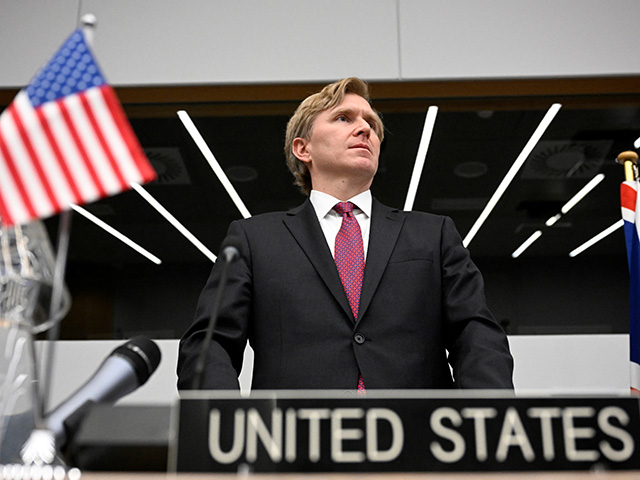
The effort, led by Under Secretary of War for Policy Elbridge Colby, represents a potential shift in U.S. nuclear posture that has remained largely unchanged for decades. The strategy is designed for scenarios in which China or Russia attacks a U.S. ally, providing the president with more credible limited-response options short of an all-out strategic nuclear exchange.
A Shift in Nuclear Doctrine
The proposed strategy would de-emphasize - but not necessarily eliminate - the long-standing “damage limitation” requirement that calls for massive strategic nuclear attacks against adversary nuclear forces. Instead, it would place greater emphasis on shorter-range tactical weapons designed for battlefield use against military targets in a regional conflict.
“Our view is that we need credible nuclear options,” a senior War Department official told NBC News. The strategy would “expand the President’s option space by providing him with realistic and credible options and therefore strengthen deterrence.”
Colby, who was scheduled to present his ideas at a private military event at U.S. Strategic Command headquarters in Nebraska, has long advocated for tactical nuclear weapons. In a 2018 Foreign Affairs article, he argued that the U.S. needed “the right strategy and weapons to fight a limited nuclear war and come out on top.”
At the National War College in May, Colby signaled the shift, arguing that the era of U.S. “escalation dominance” has passed. “We assumed escalation dominance and outright military superiority, and many believed achieving desired political outcomes was simply a matter of applying sufficient resolve to exercise our overwhelming military strength,” he said. “The era in which such assumptions possessed credibility has, however, passed.”
Why Now: A Two-Peer Nuclear Challenge
The review comes at a moment of unprecedented nuclear uncertainty. The New START treaty, the last agreement limiting U.S. and Russian strategic nuclear arsenals, expired on February 5, 2026, without a replacement - leaving Washington and Moscow without binding limits or inspections for the first time in decades.
The U.S. now confronts two nuclear-armed adversaries with increasingly capable arsenals. Russia is estimated to possess up to 2,000 theater nuclear warheads, according to U.S. Strategic Command estimates. The Federation of American Scientists puts Russia’s non-strategic warhead count at roughly 1,900 against about 200 American ones, of which some 100 are deployed at bases in five European countries.
China, meanwhile, is rapidly expanding its nuclear forces. The Pentagon’s China Military Power Report, released in December 2025, put China’s operational nuclear stockpile in the low 600s, projecting more than 1,000 warheads by 2030.
A senior Defense Department official told Türkiye Today that extended deterrence - the promise to defend allies - only holds if the weapons on offer are ones a leader could realistically use. “If you actually want extended deterrence to be credible, you have to provide the nation’s political leadership with nuclear capabilities that common sense indicates you could actually use,” the official said. “Otherwise you’re reducing our leadership’s options to extreme choices that the adversary won’t find credible, and that is not going to fare well for deterrence.”
The U.S. already maintains at least two types of tactical nuclear weapons: the B61-12 gravity bomb and the W76-2 low-yield warhead for the Trident II submarine-launched ballistic missile. A new long-range standoff weapon (LRSO) and a nuclear-armed sea-launched cruise missile (SLCM-N) are also in development.
Critics Warn of Escalation Risks
The proposed shift has reignited Cold War-era debates about U.S. nuclear policy. Critics argue that putting greater emphasis on tactical nuclear weapons could lower the threshold for nuclear employment and increase the risk that a limited conflict spirals into a broader nuclear war.
“Once nuclear weapons are used in a conflict involving another nuclear-armed state, there is no guarantee that any use of nuclear weapons, even on the smallest scale, could reliably be expected to remain limited,” Daryl G. Kimball, executive director of the Arms Control Association, told NBC News.
Some congressional aides have also expressed concern. “It’s hard to imagine a study that is more out of line with President Trump’s stated position of making our nuclear deterrent great again,” one senior congressional aide told NBC News. “He clearly wants more options and capabilities, not less. This study is big-time low-T.”
Others worry the shift could affect military preparedness by moving training away from long-range strategic scenarios. A former official familiar with the plans noted that “allies are the ones that are going to get most nervous here,” as the shift could affect confidence in the U.S. nuclear umbrella.
International Reactions
The proposed strategy has drawn sharp criticism from Russia and China. Dmitry Trenin, president of the Russian International Affairs Council, warned that if Colby’s ideas lead to deployment of additional U.S. tactical nuclear weapons in Europe and Asia, “tensions between Washington and its adversaries would significantly escalate. As a result, US security itself would be seriously undermined. The conflicts in question would cease to be regional and would instead become global.”
Chinese military affairs expert Zhang Junshe told Global Times that the move is “highly dangerous.” “The effectiveness of nuclear deterrence lies in the extremely high threshold for use and the devastating consequences involved,” Zhang said. “By deliberately lowering the nuclear threshold, the US will only undermine global nuclear stability and fuel a new arms race.”
Russian expert Konstantin Bogdanov of the Russian Academy of Sciences characterized Colby as “a longtime and firm supporter of the concept of controlled nuclear escalation, which is viewed as a structured and reversible process,” according to TASS.
What’s Next
The War Department has not publicly announced a change in nuclear employment policy or a new tactical nuclear weapons program. No formal decisions have been made, and the strategy remains in draft form.
The review comes amid broader nuclear modernization efforts. Trump instructed the department in October 2025 to begin testing nuclear weapons “on an equal basis” with other countries, though Energy Secretary Chris Wright said testing would not involve nuclear explosions. The 2026 National Defense Strategy calls for modernizing and adapting U.S. nuclear forces with emphasis on deterrence and escalation management.
The strategy was last updated in November 2024 by the Biden administration, which called for preparing for a scenario where the U.S. might fight more than one nuclear-armed state simultaneously.
As TFIGlobal News noted, the draft is a study, not policy. The signal to watch is whether Colby’s arguments become concrete changes to the options in front of the president, and how Moscow and Beijing read them. Neither has commented publicly on the draft.
What remains clear is that the U.S. nuclear posture is at a crossroads. With the New START treaty expired, China’s arsenal growing, and Russia maintaining a substantial tactical advantage, the decisions made in the coming months could reshape the global nuclear balance for years to come.