Stanford Uses AI to Design First Functional Viruses
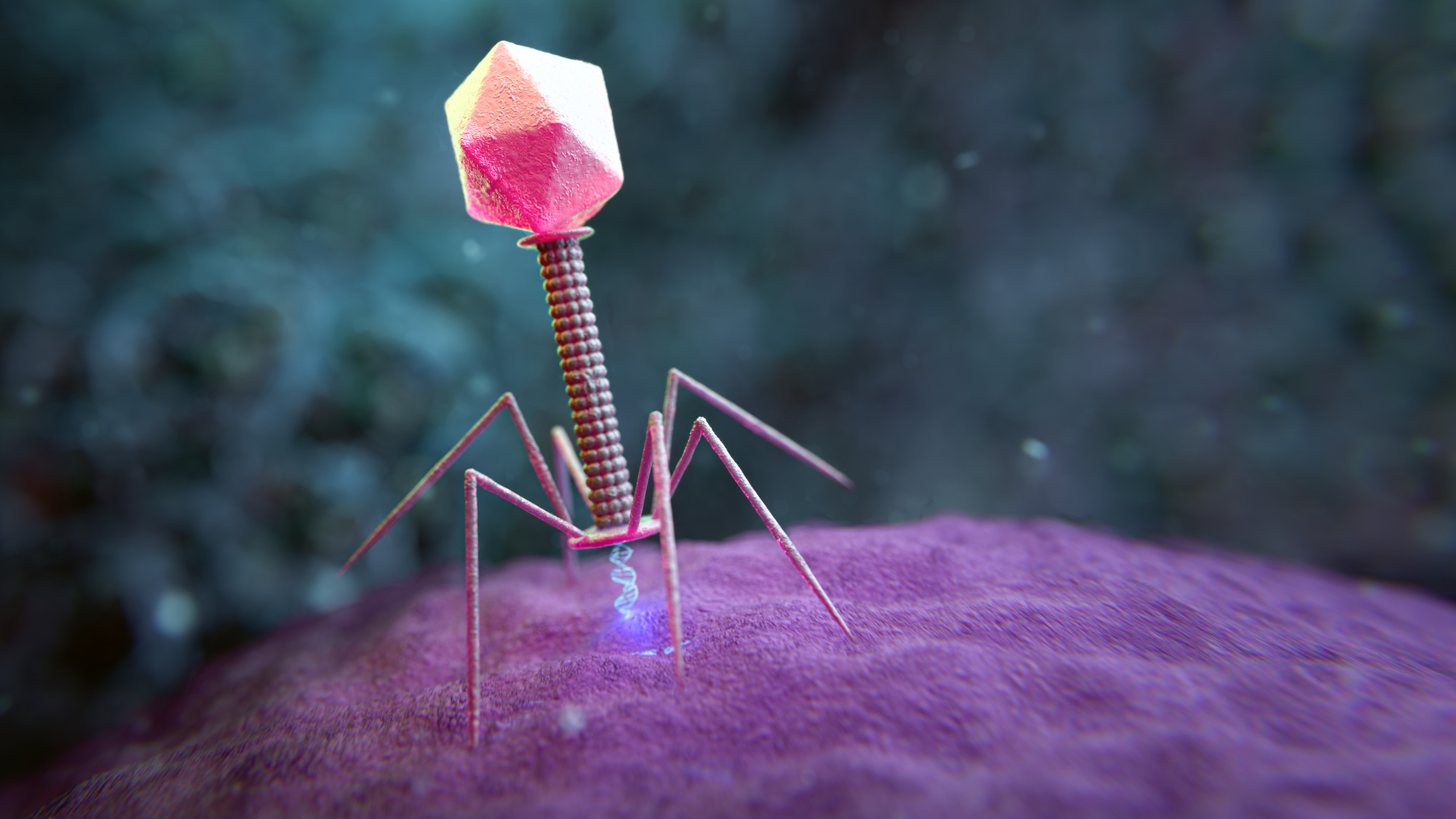
Researchers at Stanford University have for the first time used artificial intelligence to design complete, functional viral genomes that were then synthesized in the laboratory, marking a major milestone in synthetic biology. The 16 new viruses created are bacteriophages—viruses that infect and kill bacteria—and pose no threat to humans, according to findings published in the journal Science.
A Breakthrough in AI-Driven Biology
The research, led by Assistant Professor Brian Hie of Stanford’s Department of Chemical Engineering in collaboration with the Arc Institute, a California-based non-profit, represents the first time generative AI has been used to design an entire genome end-to-end. The AI models, known as Evo 1 and Evo 2, operate similarly to large language models like ChatGPT—but instead of predicting sequences of text, they predict the language of life.
“This is the first time generative AI has been used to design a complete genome, something that can replicate and have other functions inside cells… this was new territory for us,” Hie told BBC News.
The models were trained on genetic data from approximately 2 million bacteriophages. Viruses that can infect humans, plants, or animals were intentionally excluded from the training data as a safety precaution.
Using the well-studied phiX174 bacteriophage—which infects E. coli bacteria and has a genome of approximately 5,400 base pairs—as a template, the AI generated approximately 700,000 potential genome designs. Researchers selected 285 of the most promising sequences to synthesize in the laboratory, and 16 produced viable bacteriophages that could replicate and kill bacteria.
The Moment of Discovery
Samuel King, a PhD student in Hie’s lab and lead author of the paper, described the moment the team realized the AI-designed viruses were working. The phages were placed on petri dishes growing layers of bacteria, and the scientists waited for signs their new viruses were feasting.
“We were starting to see these clear spots and it was just extremely exciting,” King told the BBC. When the results were shared with the wider team, “the room spontaneously burst into applause,” Hie recalled.
Some of the AI-designed viruses proved more effective at killing E. coli than the natural phiX174 bacteriophage. In laboratory tests, a cocktail of the AI-designed viruses successfully killed E. coli strains that had become resistant to natural bacteriophages—a significant finding given the growing global crisis of antibiotic-resistant bacteria.
Medical Promise and Scientific Significance
Experts have hailed the research as a turning point in synthetic biology. Prof. Marc Güell of Pompeu Fabra University in Spain called it a “very significant turning point” because for the “first time in history, we are beginning to design biology on a computer,” according to BBC News.
Prof. Patrick Cai, chair of synthetic genomics at the Manchester Institute of Biotechnology, said the significance “extends far beyond phages—it suggests that genome language models are beginning to learn the design principles encoded by evolution, opening the door to AI-assisted genome writing.”
The technology could lead to significant medical advances. Phage therapy—using bacteriophages to treat bacterial infections—has long been seen as a potential solution to antibiotic resistance, which is a growing global health crisis. AI-designed phages could potentially overcome the resistance that some bacterial strains have evolved against natural phages.
Belgian virologist Marc Van Ranst of KU Leuven described the work as “super revolutionary” in an interview with VRT NWS, the Belgian public broadcaster. “This offers good possibilities, but also has dangerous sides,” he said. “It shows us that we are learning the design principles of biology and evolution.”
Van Ranst compared the AI’s learning process to mastering grammar: “When you only have vocabulary and an idea, you get letters and sentences one after another, but not a book. When you also learn the grammar, you can write a novel. In this case, AI teaches us the grammar of genetic material.”
Biosecurity Concerns
The breakthrough has also raised urgent questions about the potential misuse of AI for biological weapons. In an accompanying commentary in Science, Prof. Tom Inglesby and Dr. Moritz Hanke of Johns Hopkins University’s Center for Health Security warned that while the research is promising for life sciences applications, “it also raises urgent biosafety and biosecurity questions.”
“The ability to compose viral genomes using generative AI now exists; the governance to safely steer it does not,” they wrote, as reported by The Guardian. “Such genomes might encode new pathogens that… cannot be contained by existing countermeasures.”
Van Ranst echoed these concerns, noting that the technology is widely accessible. “The technology is available. You can find that AI model in 5 minutes and get it working if you know something about AI,” he told VRT NWS. He noted that while the research was approved by all ethical committees at Stanford and the viruses cannot escape the laboratory, the potential for misuse exists.
The researchers took multiple safety precautions: they excluded viruses that could infect complex organisms from the training data, conducted the work in a secure laboratory, and selected a bacteriophage that can only attack E. coli. However, as Dr. Hanke pointed out, there is no legal requirement for others to follow the same precautions.
Divergent Expert Views
Not all experts agree on the severity of the threat. Tom Ellis, professor of synthetic genome engineering at Imperial College London, told The Guardian that “the threat from full AI design and writing of a genome of a virus or bacteria is very overblown when we consider that just taking existing pathogens and making gain-of-function changes to their genomes is so much easier and much more likely to be a real pathogenic threat.”
Dr. Filippa Lentzos of King’s College London called for a broader governance approach. “It’s important to see the bigger governance picture and not focus regulation solely on the AI model,” she said. “A layered approach makes more sense: safeguards around model development and access, responsible research review, synthesis screening, and established laboratory biosafety and biosecurity.”
What’s Next
The Stanford researchers have made the Evo 2 model freely available to the public, and they say they are interested in working toward designing more complex organisms. However, as Van Ranst cautioned, “this is super revolutionary, but don’t expect major applications from this tomorrow. This is actually just proof that it’s possible.”
The research was initially published as a preprint in September 2025 and underwent peer review before appearing in Science on August 6, 2026. As AI capabilities continue to advance rapidly, the gap between scientific progress and regulatory frameworks remains a pressing concern for the scientific community.
