Perseid Meteor Shower Peaks Aug. 12-13 With Ideal Viewing
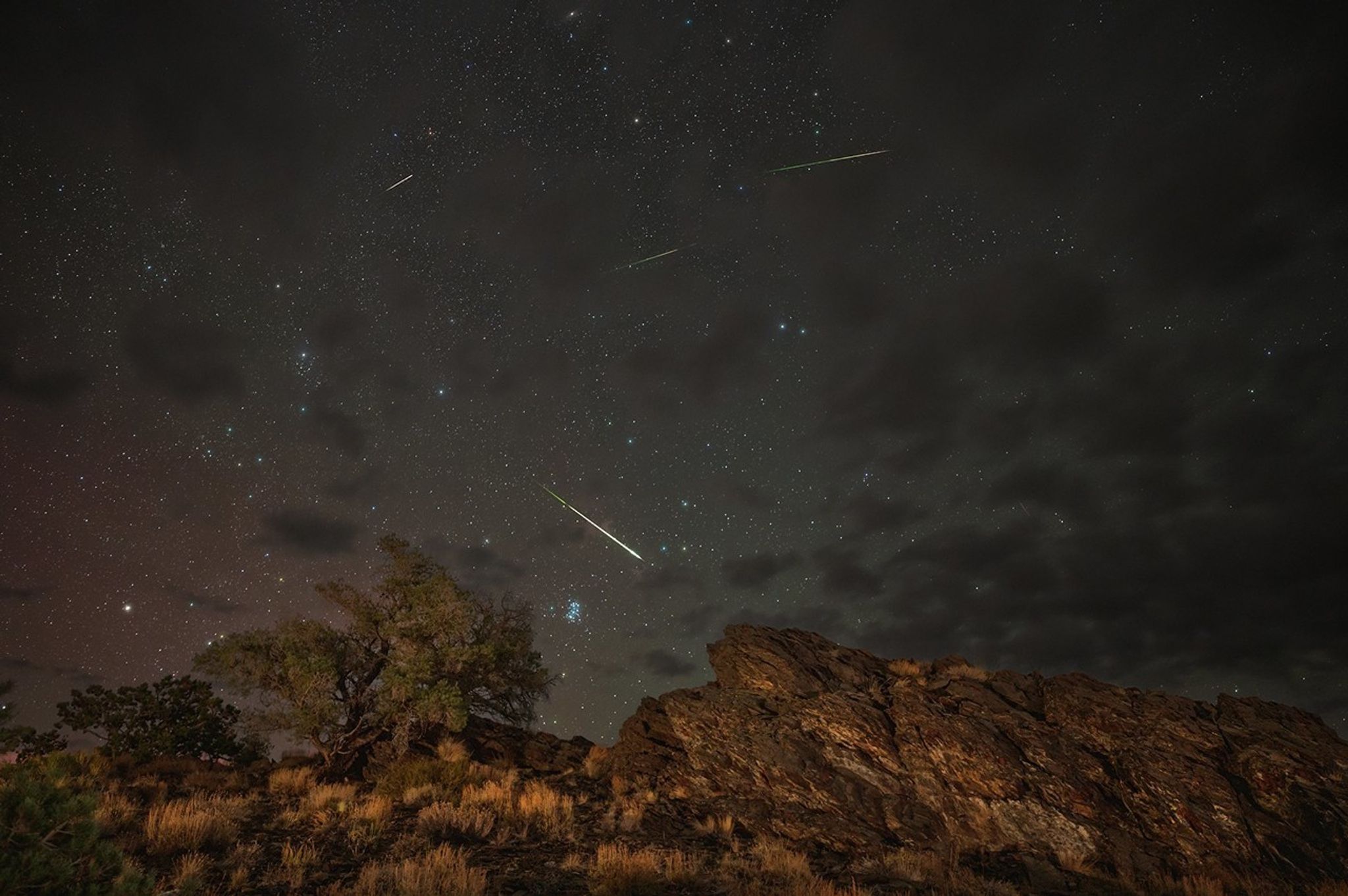
The Perseid meteor shower, one of the most anticipated celestial events of the summer, is set to dazzle skywatchers this week with peak viewing on the night of August 12-13. Under ideal conditions, observers in the Northern Hemisphere could see as many as 50 to 100 meteors per hour, according to NASA.
This year’s peak coincides with a total solar eclipse across Spain, Iceland, and Greenland, as well as a six-planet parade in the pre-dawn sky — making August 12 one of the most remarkable celestial days in recent memory. However, the best time to view the fireballs will come after totality, between midnight and dawn when the constellation Perseus rises high in the northern sky.
Why This Year Is Special
The moon will be in its new moon phase during the Perseids’ peak, meaning no moonlight will wash out fainter meteors. This makes viewing conditions especially favorable, according to the American Meteor Society, which lists the shower’s Zenithal Hourly Rate at 100 for 2026.
“The moon is beautiful, but it’s such a diva,” said astronomer Aparna Venkatesan with the University of San Francisco, speaking to AP News. “New moon means we don’t have moonlight flooding the sky, and you tend to see way more meteors as a result.”
The Perseids are active from July 17 to August 24, with the peak predicted for 14:53 UTC on August 13. The American Meteor Society estimates that 30 to 50 meteors per hour could be seen from rural regions, while the new moon ensures optimal darkness for the display.
The Source of the Show
The Perseids are debris from comet 109P/Swift-Tuttle, an icy ball that orbits the sun every 133 years and isn’t scheduled for a return visit until 2125. Observations of this meteor shower date back over 2,000 years.
“Comets typically have orbits that cross the orbit of the Earth,” astrophysicist Neil deGrasse Tyson told AP News. “So as they get near the sun and the sun evaporates the ice, a lot of the dirt and crap that’s frozen into the comet gets released, and continues in orbit around the sun.”
When Earth passes through this debris trail, particles collide with the atmosphere at 37 miles (59 km) per second, producing brilliant streaks of light. The Perseids are known for producing bright fireballs and frequent persistent trains — glowing trails that linger after the meteor has passed.
The shower’s radiant is in the constellation Perseus, which rises late in the evening and is highest at dawn. The meteors appear to radiate from this point in the northern sky, which is why the shower is best viewed in the Northern Hemisphere.
How to Watch
Experts recommend heading outside after dark, away from clouds and city lights. Give your eyes about 30 minutes to adjust to the darkness, and avoid looking at your phone.
“We don’t have to suffer through a cold winter night to get a good view of meteors,” said astronomer Zach Vanderbosch with McDonald Observatory in Texas, as quoted by The Guardian. “There’s just something magical about it.”
Vanderbosch recommends picking a patch of sky to focus on until a quick, bright streak passes by — even in your peripheral vision. No telescopes or binoculars are needed; the secret is to take in as much sky as possible.
A Day of Celestial Wonders
August 12 will be a remarkable day for skywatchers. The day begins with a six-planet parade — Saturn, Mars, Mercury, Jupiter, Uranus, and Neptune forming an arc in the pre-dawn sky — followed by a total solar eclipse sweeping across Spain, Iceland, and Greenland. Some lucky viewers of the eclipse may even spot Perseids during totality, as EarthSky notes.
The AP News reports that totality will last up to 2 minutes and 18 seconds, with the partial eclipse visible as far away as Alaska and Siberia, enveloping Canada, the northern U.S., and much of Europe and West Africa.
What to Watch For
After the peak nights of August 12-13, the Perseids will continue at reduced rates until August 24. Skywatchers who miss the peak can still catch a respectable show on subsequent nights, though rates will decline rapidly after the maximum.
For those planning to observe, Space.com advises starting around 11 p.m. local time when rates begin to increase, and continuing until dawn for the best results. The combination of a new moon, warm summer nights, and a rich meteor stream makes this year’s Perseid display one not to be missed.