NASA Images Reveal Crater From SpaceX Rocket Moon Crash
NASA has released striking before-and-after images showing the crater carved by a SpaceX Falcon 9 rocket upper stage that slammed into the moon on August 5, providing the sharpest views yet of the impact site. The fresh crater measures approximately 60 feet (18 meters) across and less than 10 feet (3 meters) deep, according to scientists analyzing the new photos captured by NASA’s Lunar Reconnaissance Orbiter (LRO).
The images, released Tuesday, document the aftermath of an unintentional collision that occurred when the discarded rocket stage plowed into the lunar surface at 5,400 mph (8,700 kph) after drifting through space for more than a year, as AP News reported.
A Collision Years in the Making
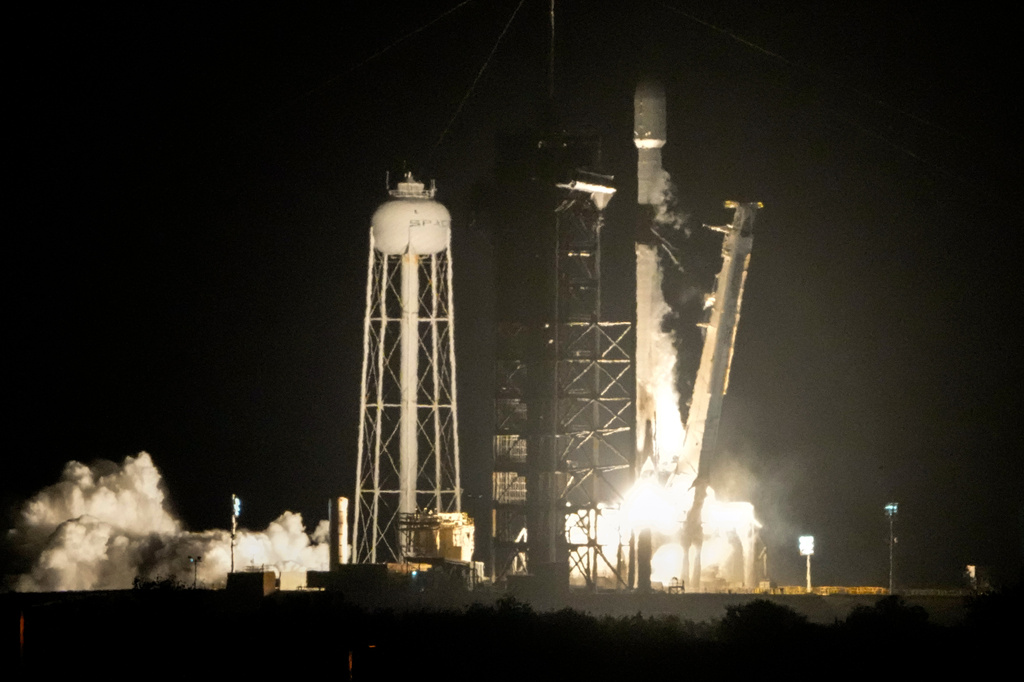
The Falcon 9 upper stage that created the crater launched from NASA’s Kennedy Space Center on January 15, 2025, carrying two private lunar landers — Firefly Aerospace’s Blue Ghost and ispace’s Resilience — as part of NASA’s push to commercialize lunar exploration, according to AP News.
The upper stage used nearly all of its fuel to get its payloads to their distant, moon-crossing orbit. Normally, SpaceX disposes of upper stages in Earth’s atmosphere, but this one remained stranded in space after dumping its remaining fuel. A combination of solar activity and gravitational forces gradually pushed it onto a collision course with the moon, as SpaceX’s director of NASA science, Julianna Scheiman, explained to The Guardian.
Blue Ghost went on to achieve a fully successful lunar touchdown on March 2, 2025, becoming the first private spacecraft to do so. Resilience, however, crashed during its landing attempt.
Capturing the Impact
The crash packed the equivalent energy of three tons of TNT and occurred near Einstein Crater on the moon’s sunlit western limb. While no one directly observed the collision itself, a telescope in Chile spotted what astronomers identified as the debris plume resulting from the crash. Boston University’s Carl Schmidt said he is “100 percent certain” that his team’s observations revealed signs of the lunar crash, with the European Southern Observatory’s Very Large Telescope detecting a stream of sodium and lithium stretching for miles into space for at least 5-10 minutes following impact, as AP News reported.
South Korea’s Danuri spacecraft (Korea Pathfinder Lunar Orbiter) was the first to capture images of the crash site, releasing before-and-after photos on August 6. The spacecraft conducted eight imaging sessions, beginning observations about 30 minutes before the collision, according to Space.com.
NASA’s Lunar Reconnaissance Orbiter captured its detailed images between August 11 and 12 from approximately 60 miles (96 kilometers) above the lunar surface. The spacecraft had to be tilted so its cameras pointed toward the impact scene while zooming along at one mile per second. The LRO completes a lunar polar orbit every two hours, and it took six days before the crash scene came into view.
“If the camera snapped even 10 seconds too early or too late, the target would drift off-center by 10 miles,” NASA said in a statement, as France 24 reported.
What the Images Reveal
The new photographs show dark and bright streaks emanating like butterfly wings from the crater. Darker lines represent excavated material that was close to the surface and shaped by eons of solar wind, cosmic rays, and micrometeorite strikes. Brighter rays indicate fresh rocks and dirt hurled from deeper underground, as AP News detailed.
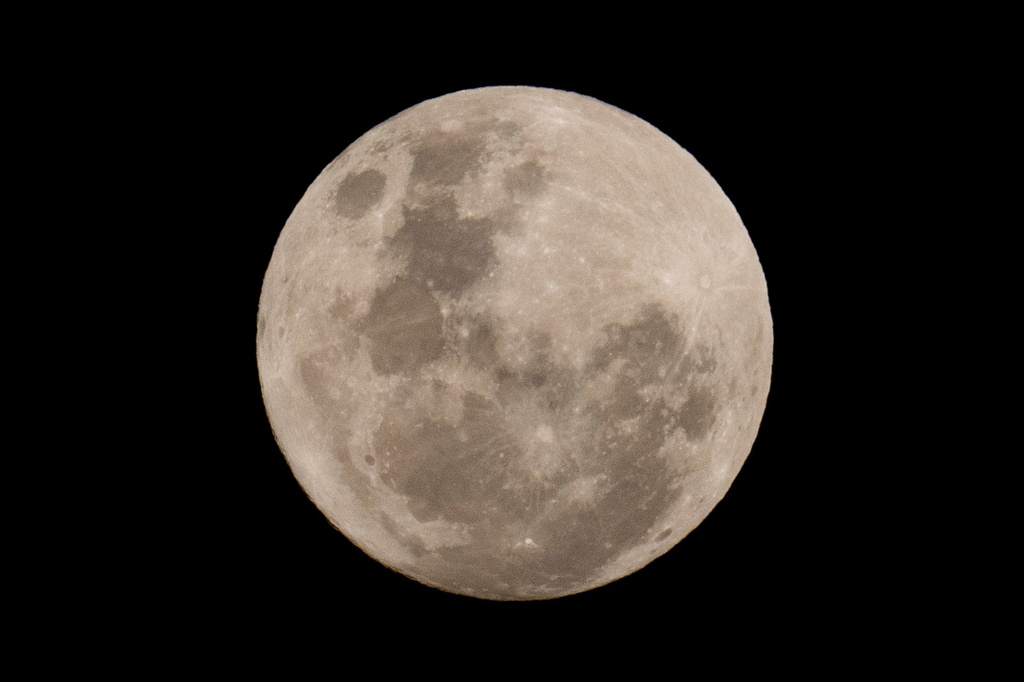
The rocket body, weighing approximately 8,800-10,000 pounds (4,000-4,500 kilograms) and measuring about 40 feet (12 meters) long, was the second known dead rocket to crash into the moon accidentally. A Chinese Long March 3C rocket stage created a double crater roughly 95 feet (29 meters) wide near Hertzsprung Crater in March 2022.
Implications for Lunar Exploration
The event highlights growing concerns about space debris as the moon becomes an increasingly active destination. The United States and China are racing to land astronauts on the moon, with NASA’s Artemis program targeting lunar touchdowns as soon as 2028. Elon Musk’s SpaceX and Jeff Bezos’ Blue Origin are competing to provide landers for NASA’s Artemis missions.
“This impact will not be a problem,” retired astrophysicist Jonathan McDowell told AP News. “But in a future where there are long-term bases on the moon, similar impacts would be an issue and we need not to leave rocket stages in chaotic orbits of this kind.”
McDowell warned that as lunar activity intensifies, such impacts could become unacceptable. “Things are going to get a lot busier near the moon,” he said. “At that point an impact like this on the lunar surface plowing up huge amounts of dust going for hundreds of miles around is not going to be acceptable.”
Benjamin Fernando of Los Alamos National Laboratory noted that the low gravity and lack of wind on the moon mean debris from impacts lingers far longer than on Earth. “Part of the reason for our interest in this event is to figure out how much of a hazard debris impacts pose to future astronauts,” he said.
Space tracking expert Bill Gray, who predicted the impact trajectory, highlighted the broader issue of space junk management. “Things are getting crowded up there,” he said, noting that the crash “does highlight a certain carelessness about how leftover space hardware is disposed of.”
A Scientific Opportunity
Despite the unintended nature of the crash, scientists say the event provides valuable data for studying lunar geology and the effects of human-made objects on the moon’s surface. The finding of the crash site was a global effort involving NASA’s Center for Near Earth Object Studies, South Korea’s KARI, and the Danuri spacecraft team.
The LRO, which has been orbiting the moon since 2009, continues to serve as NASA’s up-close eyes as the space agency works to return astronauts to the lunar surface. The detailed images of the impact site will help scientists refine their understanding of how debris impacts affect the lunar environment and inform future debris monitoring and traffic control strategies.
What’s Next
As NASA and international partners continue to analyze the images and data from the impact, the event serves as a reminder of the challenges ahead in managing the growing traffic around the moon. With robotic missions and crewed expeditions on the horizon, scientists emphasize the need for improved debris tracking and responsible disposal of space hardware before the lunar environment becomes dangerously cluttered.
The crater near Einstein Crater will remain as a lasting marker of this unintended collision — and a cautionary tale for the next era of lunar exploration.