Chinese Space Firm Delivers First Satellite to SE Asia
A Chinese commercial space enterprise has completed its first full satellite development, launch, and in-orbit delivery project for a Southeast Asian client, marking a significant expansion of China’s private space industry into the regional market.
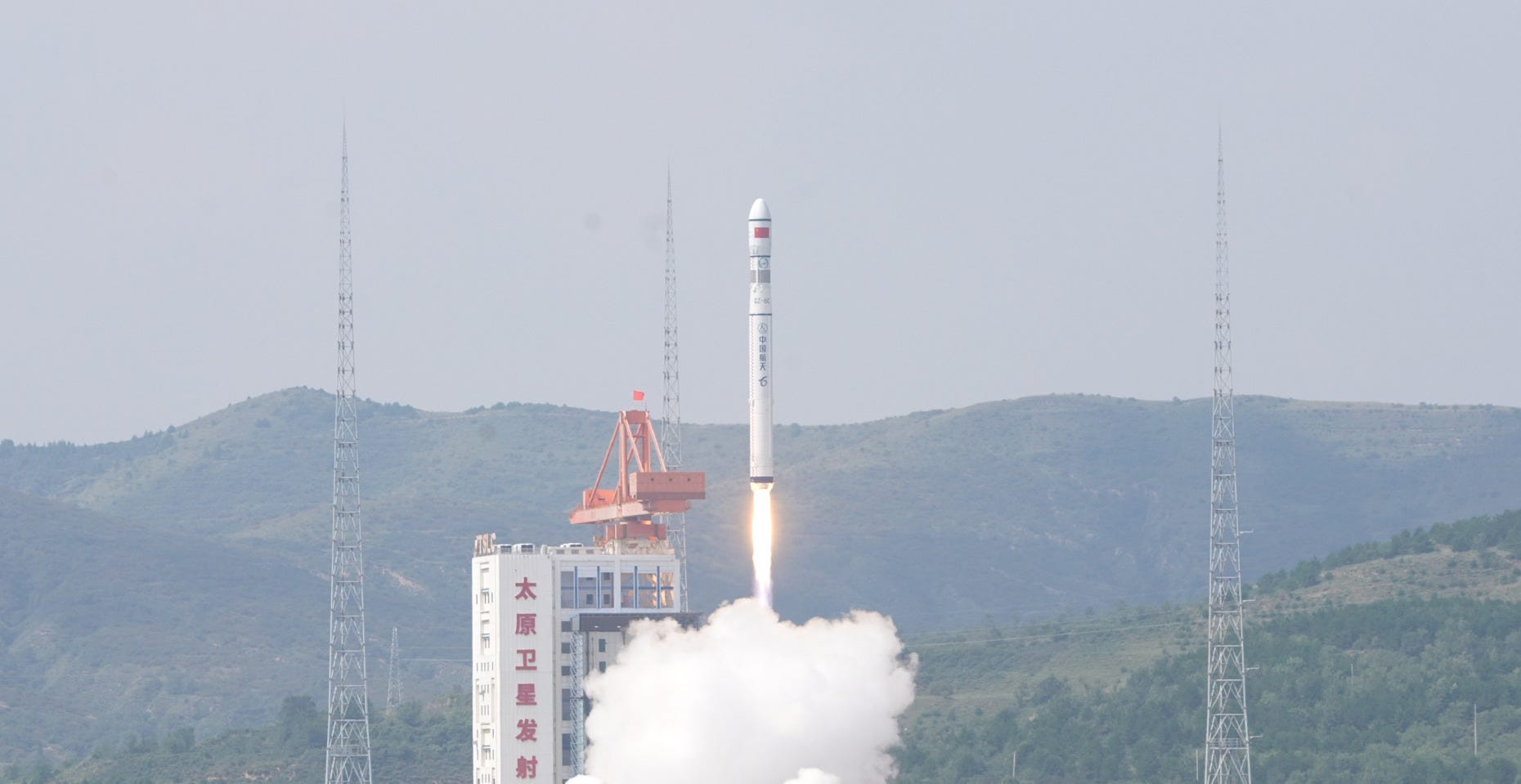
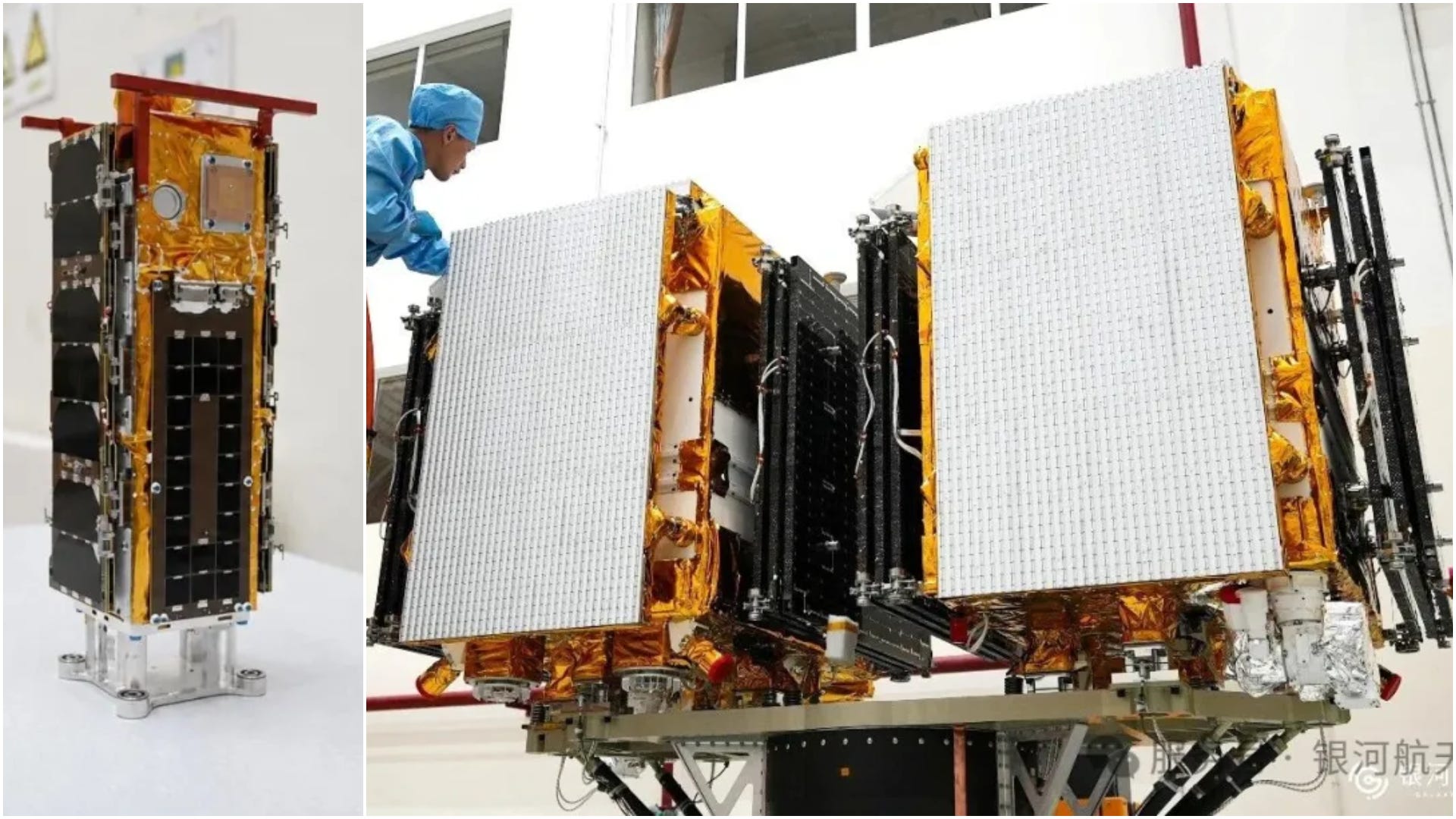
On August 25, a Long March 6C carrier rocket lifted off from the Taiyuan Satellite Launch Center in Shanxi Province at 11:21 a.m. Beijing Time, successfully placing seven satellites into sun-synchronous orbit. Among them was the GalaxySpace Lingzhi-09 Thailand CubeSat (GISTDA CubeSat 1), built by Beijing-based commercial satellite company GalaxySpace for Thailand’s Geo-Informatics and Space Technology Development Agency (GISTDA). The mission marked the first time a Chinese commercial space enterprise has completed whole-satellite development, launch, and in-orbit delivery for a Southeast Asian country, according to Xinhua News.
A Milestone for China’s Commercial Space Sector
The GISTDA CubeSat 1 is designed to provide land-use, agricultural, and ecological surface data for Thailand while supporting Thai universities in satellite design, telemetry, and remote-sensing education. The delivery represents what Pandaily describes as an integrated “satellite plus ground system plus capability-building” package, with Thai technicians trained in China and teams scheduled to follow for on-site commissioning.
GalaxySpace co-founder Liu Chang said the project validates the company’s full-chain delivery capability for overseas markets, adding that the firm will focus on expanding into Belt and Road partner countries and regions in the future. The company has now successfully launched 49 self-developed satellites as of August 25, according to 21st Century Business Herald.
GISTDA’s Space Technology Deputy Executive Director Phee Choosri framed the collaboration as a practical exercise in China-Thailand space cooperation. “The satellite is not only a technological product but also a vehicle for talent development, technology research, and knowledge exchange between the two sides,” Choosri said.
From Technology Verification to Commercial Delivery
The Thailand delivery represents a strategic evolution for GalaxySpace, which first established a presence in the country in May 2024. At that time, the company set up a ground test station at Mahanakorn University of Technology (MUT) in Bangkok—the first overseas deployment of China’s low-orbit broadband satellite internet. The “Mini-Spider” project tested Q/V band satellite communications, achieving maximum download speeds of approximately 250 Mbps and minimum latency of about 32 ms, as The Nation Thailand reported.
Assoc. Prof. Dr. Panavy Pookaiyaudom, President of MUT, said at the time that the collaboration would contribute to curriculum development and that trained personnel would play a crucial role in enhancing Thailand’s readiness in space technology, “driving the country towards leadership in the space economy and genuinely establishing a hub for the space industry in the region.”
Two years later, the GISTDA CubeSat 1 represents the transition from technology verification to commercial delivery—a shift that China News Service reports marks the first time a Chinese commercial space satellite enterprise has completed whole-satellite development, launch, and in-orbit delivery for a Southeast Asian nation.
Advanced SAR Satellites on the Same Mission
The same launch also carried two advanced synthetic aperture radar (SAR) satellites built by GalaxySpace for China Science and Technology Satellite. The Zhongke Sat-14 and Zhongke Sat-15 each weigh 360 kilograms and are capable of sub-meter resolution imaging with repeat-pass interferometry capabilities.
According to GalaxySpace SAR Satellite Chief Engineer Duan Xiao, these satellites represent a significant advancement in space-based computing. “Traditional remote sensing satellites are mostly limited to observation and collection, lacking onboard intelligent processing and analysis capabilities,” Duan said. “In contrast, the two satellites launched this time have integrated onboard data reception, computing, and analysis capabilities, opening the full chain from space sensing to intelligent information output.”
This onboard processing capability enables minute-level image processing and interpretation in emergency scenarios such as floods and earthquakes, significantly reducing response times compared with traditional models that rely on ground-based data processing.
Strategic Implications for China’s Space Diplomacy
The satellite delivery aligns with China’s broader Belt and Road space-information corridor strategy, positioning commercial space as a new vector for technological influence in Southeast Asia. The deal validates China’s policy push to enable private companies to export satellites, following a November 2023 pilot program proposal and a 2025-2027 action plan calling for companies to participate in international rulemaking and expand overseas.
China’s first satellite export was to Nigeria in 2007, led by state-backed entities. The GalaxySpace-Thailand deal marks a departure from that model, demonstrating that private Chinese space firms can now deliver complete end-to-end satellite solutions—from development through launch to in-orbit delivery and ground system support.
This shift from single-product exports to systemic capability output could have significant implications for the global commercial space market. With Southeast Asia, the Middle East, and Africa showing real demand for remote sensing and satellite internet services, Chinese commercial space firms are now positioned to compete with Western providers in emerging markets, potentially offering more accessible pricing and integrated capacity-building packages.
A Regional Perspective
For Thailand, the satellite supports the country’s educational goals in space technology and its ambition to become a leader in the ASEAN space economy. Southeast Asia’s island-heavy geography makes ground networks expensive, giving satellite services clear advantages in remote, maritime, and emergency communications.
The mission was China’s 60th launch of 2026 and the 7th of the year to carry a foreign-owned satellite. It was also the 665th flight of the Long March rocket series and the second flight of the Long March 6C, a new-generation two-stage liquid-fuel rocket developed by the Shanghai Academy of Spaceflight Technology.
What to Watch For
As GalaxySpace prepares for a potential IPO—having filed for IPO tutoring with Beijing regulators in March 2026—the company’s successful Southeast Asian delivery could serve as a template for other Chinese commercial space firms eyeing international markets. Questions remain about the commercial value of the GISTDA deal, the specific Thai universities that will receive satellite education support, and whether similar whole-satellite export agreements will follow with other Southeast Asian nations.
The coming months will also reveal how international regulators and competitors respond to China’s expanding commercial space exports. As Beijing deepens satellite-export pilot zones and optimizes cross-border data-outflow assessment, the GalaxySpace-Thailand model may well become the standard pathway for Chinese commercial space firms seeking to go global.