High Fens Fire: Minister Demands Accountability as New Evidence Points to Mowing Operations
Belgian Interior Minister Bernard Quintin has called for accountability in the investigation into the devastating High Fens nature fire that destroyed over 3,300 hectares of protected Natura 2000 territory, stating that “those who bear responsibility must accept it.” The demand comes as a new RTBF investigation using satellite imagery and evidence of forest machinery suggests the fire may have started during mowing operations commissioned by the Walloon Region’s Department of Nature and Forests (DNF).
A Historic Disaster
The fire broke out on Friday, 14 August 2026, around 13:00 local time, when skydivers spotted flames from their aircraft near the High Fens. Within days, more than 3,366 hectares—approximately 75 percent of the 4,500-hectare nature reserve—had been consumed by what became one of the largest nature fires in Belgian history. The fire took five days to bring under control, requiring international assistance from Norway, Germany, the Netherlands, Czech Republic, and Sweden.
The High Fens, one of Belgium’s most important nature reserves spanning protected peatland and heathland in the country’s eastern Ardennes region, has a history of devastating fires. The largest occurred in 1911, when a blaze burned for nearly two months and destroyed almost 4,000 hectares, as VRT NWS reported. The area’s deep peat layers—up to 6-8 meters in some places—make fires particularly dangerous, as they can smolder underground for weeks and re-ignite later.
The RTBF Investigation
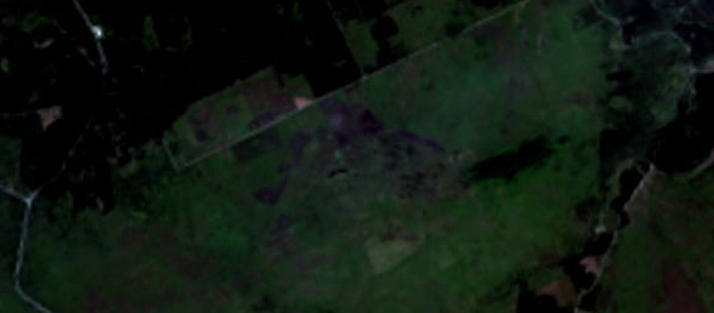
Using Copernicus Sentinel-2 satellite imagery, amateur video from skydivers, and on-the-ground investigation, RTBF identified the precise origin point of the fire: a rectangular parcel about 300 meters west of the Croix Mockel, along a path called “Allee du Grand Fosse.” Satellite images show mowing works were undertaken on the parcel between 10 and 14 August. The DNF confirmed a forest machine was working at that location.
Nicolas Yernaux, spokesperson for the Service Public de Wallonie (SPW), confirmed that mowing operations were underway at the identified site. “Mowing is a technique that has been carried out by the DNF for many years on the High Fens plateau to restore biodiversity,” Yernaux told RTBF. “It will indeed be up to the investigation to determine whether this hypothesis of the agricultural machine (at the origin of the fire) is confirmed or disproved, but there was indeed an agricultural machine working at that location.”
Mowing works, previously performed by the DNF itself, have been outsourced to private companies for the past two years. The company contracted for the work on the day of the fire declined to comment. However, Jean-Luc Evrard, director general of a company that sells and repairs mowing machines used in the Fagnes, explained how these gyrobroyeurs—rotary mowers with sharpened hammers rotating at approximately 2,000 revolutions per minute—can generate sparks when they strike stones. “It’s scandalous to have commissioned a contractor with such a machine in well-known drought conditions,” Evrard said. “Activity with mechanized machines on such dry sites was not at all recommended.”
Questions Over Missing Mowing Ban
A critical question has emerged: why was there no mowing ban in the Province of Liege, where the High Fens are located? The neighboring Province of Luxembourg had issued a circular prohibiting mowing works until 14 August due to fire risk, but Liege did not follow suit.
The Celex (expertise cell for fire risk in natural areas) issued a press release on 10 August warning of “high” fire risk in open environments until 15 August. The Celex drought assessment on 13 August—the day before the fire—still estimated fire risk as moderate to high in forest environments and high to very high in open environments.
Liege Governor Herve Jamar (MR) maintains he took all measures within his authority, including a police order published on 2 July regarding fire risk prevention. “We took a clear and unambiguous order regarding risks and fires for the entire province of Liege,” Jamar said. “I don’t see what more I could have done. There, I’m not going to prohibit a combine harvester from operating.”
Minister’s Demand for Accountability
Speaking on RTBF’s La Premiere, Quintin stated: “Once the investigation has determined who bears responsibility, those who carry these responsibilities will have to take them.” He added, according to La Libre: “The investigation will determine the facts, what happened, and we will need to do a retroactive analysis to see if the measures that should have been taken were taken.”
The Liege public prosecutor’s office has opened a judicial investigation for involuntary arson. Two experts have been appointed—one specialized in fire investigation and one in vehicles and transport expertise. Their final reports are expected to take several months.
Broader Questions of Vigilance
The disaster has sparked a wider political debate about whether Belgium was adequately prepared for such an event. On RTBF’s “QR le debat” program, climatologist Xavier Fettweis of the University of Liege argued that the High Fens had been identified as a risk zone for years. “99% of fires are caused by humans involuntarily,” Fettweis said. “If there’s no human, there’s no fire. We should have raised the red flag on the High Fens and other forests. We need to get into the habit now of closing forests to both forestry workers and tourists and walkers.”
PTB group leader Sofie Merckx criticized the lack of aerial firefighting resources, noting that more than 24 hours elapsed between the fire’s start and the arrival of foreign aid with significant water-dropping capabilities. Quintin defended the government’s response, stating: “We have aerial resources that we deployed one hour after the start of the fire. They have a capacity of 800 liters each. That same evening, we also activated the European mechanism that allows us to have other resources. I wouldn’t say everything was perfect. But if we hadn’t been ready to respond to this crisis, the fire would not be under control today.”
Walloon Minister-President Adrien Dolimont has committed to a full evaluation, telling the Walloon Parliament that “the evaluation will indeed take place, it is in fact a legal obligation, but once the situation is restored.” The Walloon Region also plans to request aid from the EU Solidarity Fund.
What’s Next
As of 27 August, 95 percent of the High Fens are accessible again, though the burned area itself remains closed. The Vennbahn cycling route has reopened. But the investigation into the fire’s cause is expected to take months, and the political fallout is only beginning. The government will debate the Walloon adaptation strategy to climate change on 27 August, and Quintin has announced the development of a “national resilience plan.”
For the High Fens, the path to recovery will be long. As geographer Gert Verstraeten of KU Leuven noted regarding the 1911 fire, the peat layers that have accumulated over thousands of years cannot be replaced. But vegetation and wildlife can return if the area is allowed to recover. The question now is whether the lessons of this disaster—about prevention, vigilance, and accountability—will take root as firmly as the heathland that once covered these hills.