US Secures Control of 65B Barrels of Venezuela Oil
President Donald Trump announced Friday that the United States has reached a landmark agreement with Venezuela to secure majority control of more than 65 billion barrels of the South American nation’s proven oil reserves, in what he called “THE BIGGEST OIL DEAL IN WORLD HISTORY.” The agreement, announced via a post on Trump’s Truth Social platform, represents a dramatic expansion of Washington’s role in Venezuela’s energy sector and could reshape global oil markets.
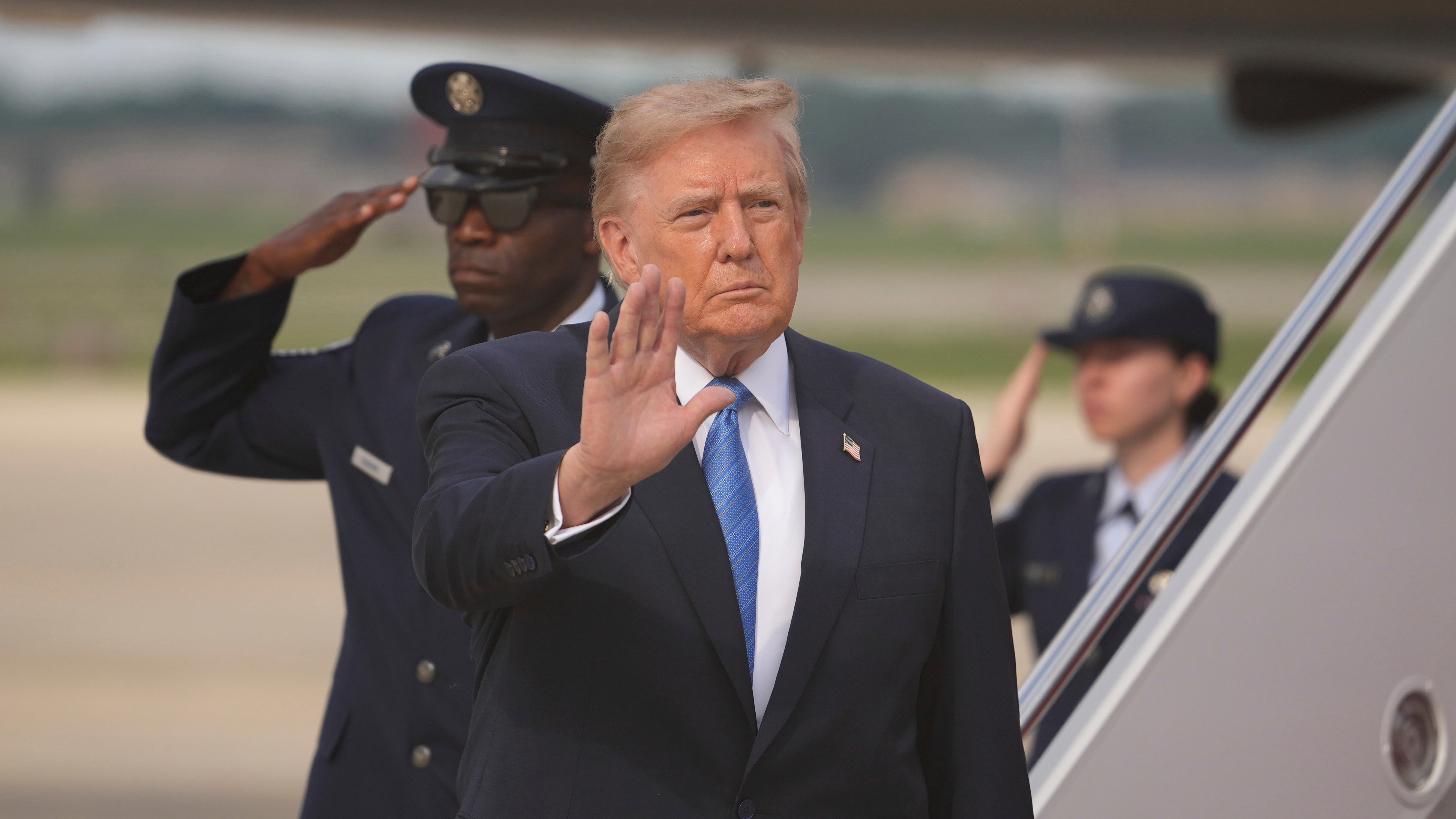
“At my direction, Secretary of State Marco Rubio, and Secretary of War Pete Hegseth, working closely with Highly Respected Interim President of Venezuela, Delcy Rodriguez, and, through a partnership with private business, have secured majority U.S. control of more than 65 BILLION BARRELS of proven Oil Reserves in Venezuela, at no cost to the American Taxpayer,” Trump wrote.
The Deal Structure
According to a U.S. official familiar with the contours of the agreement, the deal allows the United States to partner with an unnamed private operator in Venezuela to create a new private company to take hold of the reserves. The arrangement gives the U.S. 55% effective output of the new company, including an ownership stake and rights to buy oil at cost. Interim Venezuelan President Delcy Rodríguez granted the company 100-year rights to develop the oil fields, according to BBC News.
The new company would become the second-largest corporate holder of proven reserves after Saudi Aramco, the U.S. official said. The deal involves the development of 17 strategic oil fields with a proven potential of 65 billion barrels.
Rodríguez’s government said the agreement could draw $100 billion in investment into Venezuela’s oil industry and yield over $209 billion in taxes for Caracas. In a statement on Telegram, Rodríguez predicted the deal “will have a significant impact on our nation’s revival,” adding that the investments would contribute to “the energy security of our hemisphere and greater balance in international markets.”
Secretary of State Marco Rubio called the agreement “a huge win for both the American and Venezuelan people,” saying it would “bring nearly $100 billion in private investment, support thousands of high-paying jobs and drive the reconstruction of Venezuela’s economy,” as The Guardian reported.
A Deal Forged in Unprecedented Circumstances
The announcement comes nearly nine months after U.S. special forces captured Venezuela’s then-President Nicolás Maduro in a raid on Caracas on January 3, 2026. Maduro remains jailed in the U.S., facing federal narcoterrorism and drug trafficking charges. His capture and removal marked the most dramatic play in Trump’s push to reassert Washington’s influence over Latin America, part of what analysts call the “Donroe Doctrine” — a 21st-century adaptation of the 19th-century Monroe Doctrine aimed at countering China’s growing footprint in the region.
The deal also comes amid the U.S.-Israel war against Iran, which has led to a dramatic slowdown of Gulf oil moving through the Strait of Hormuz. The average price of gas in the U.S. stood at about $4.09 a gallon on Friday, compared to $3.21 at the same time last year, according to NPR Illinois. Trump faces mounting pressure to address high gas prices ahead of November midterm elections.
The oil bought from the new company would go toward filling the U.S. strategic petroleum reserve, which fell below 300 million barrels in early August, and toward military use, according to the U.S. official.
Key Players and Controversies
The key Venezuelan partner in the deal is Alejandro Betancourt, who controls North American Blue Energy Partners (NABEP), the second-largest private oil company in the country. Betancourt has been the subject of investigations in multiple countries into alleged money laundering and faces a Swiss warrant for his arrest, according to USA Today.
The Defense Department, through its Office of Strategic Capital, would oversee and help fund the oil field licenses. Venezuela is also weighing withdrawing from OPEC following the deal, a move the Trump administration would welcome as it seeks to exert more influence over international oil trade.
Opposition and Legal Concerns
The deal has sparked fierce criticism from Venezuela’s opposition and raised significant legal questions. Ricardo Hausmann, a Harvard University economist and former Venezuelan minister of planning, called the agreement “an illegitimate interim government with an illegitimate hydrocarbons law” having “no legitimacy to strike this unconstitutional deal,” saying it “will be a fiasco for all involved.”
One anonymous Venezuelan opposition figure told The Guardian: “It’s a land grab – a massive land grab. It’s revolting because this is not the United States one would have [expected]. This is not the United States of the Marshall plan. This is a rapacious, mafioso United States.”
The official text of the agreement between Washington and Caracas has not been published, and experts have raised questions about whether the deal violates Venezuela’s constitution or its hydrocarbons law. David Goldwyn, president of Goldwyn Global Strategies, said there was “no precedent” for the U.S. government entering into a lease to operate Venezuelan oil fields, adding: “It is hard to see how this kind of arrangement would accelerate investment at any material scale.”
Skepticism About Impact
Many experts remain skeptical about the deal’s immediate impact on oil markets. Venezuela has the world’s largest proven oil reserves — an estimated 303 billion barrels, about 17% of the world’s supply — but produces only about 1.25 million barrels per day due to dilapidated infrastructure and decades of mismanagement.
Alexander Kuiper, an oil, gas and mineral lawyer, told Al Jazeera that while the deal is “definitely a headline to help with oil prices,” the question remains “whether or not those reserves turn into actual investment, and how long that investment takes to produce results.” He added: “There isn’t a switch that you can flip - contracts and agreements have to be put in place… this could take a long time, but it’s an important first step.”
Gregory Brew, an energy historian and Eurasia Group analyst, noted the deal’s colonial undertones, comparing it to how the Anglo-Persian Oil Company controlled the oil resources of Iraq and Iran at the start of the last century. “From Trump’s point of view, the control over oil is something of an end in and of itself,” Brew said. “US dominance over Venezuelan oil reserves allows the US to regard Venezuelan reserves as its own reserves… It sounds colonial, because it is.”
What’s Next
The deal represents a significant shift in U.S. energy policy and international relations, but major hurdles remain. Venezuela’s oil reserves are made up of so-called “heavy, sour” oil, which is harder to refine and used for making diesel and asphalt, while the U.S. typically produces “light, sweet” oil useful for making petrol. Major oil companies have mostly seen investment in Venezuela as too risky — ExxonMobil CEO Darren Woods called the country “un-investable” at a White House meeting after Maduro’s ouster.
The Trump administration has announced other major deals — including plans for a stake in Ukraine’s critical minerals and funding for Westinghouse nuclear reactors — that have not led to the breakthrough developments forecast. Oil production in Venezuela has increased only about 200,000 barrels over the past year since Maduro’s removal.
Whether this agreement can overcome the legal, political, and infrastructure challenges to deliver on its promise remains to be seen. What is clear is that the deal marks an unprecedented assertion of U.S. control over another nation’s sovereign natural resources — with implications that will reverberate across global energy markets and international relations for years to come.