Xi, Putin Reaffirm Strategic Ties at SCO Summit in Bishkek
Chinese President Xi Jinping met with Russian President Vladimir Putin on Monday on the sidelines of the 2026 Shanghai Cooperation Organization (SCO) Summit in Bishkek, Kyrgyzstan, in their second face-to-face meeting of the year. The encounter underscored the continued strategic coordination between the two nations amid what Xi described as an increasingly uncertain international landscape.
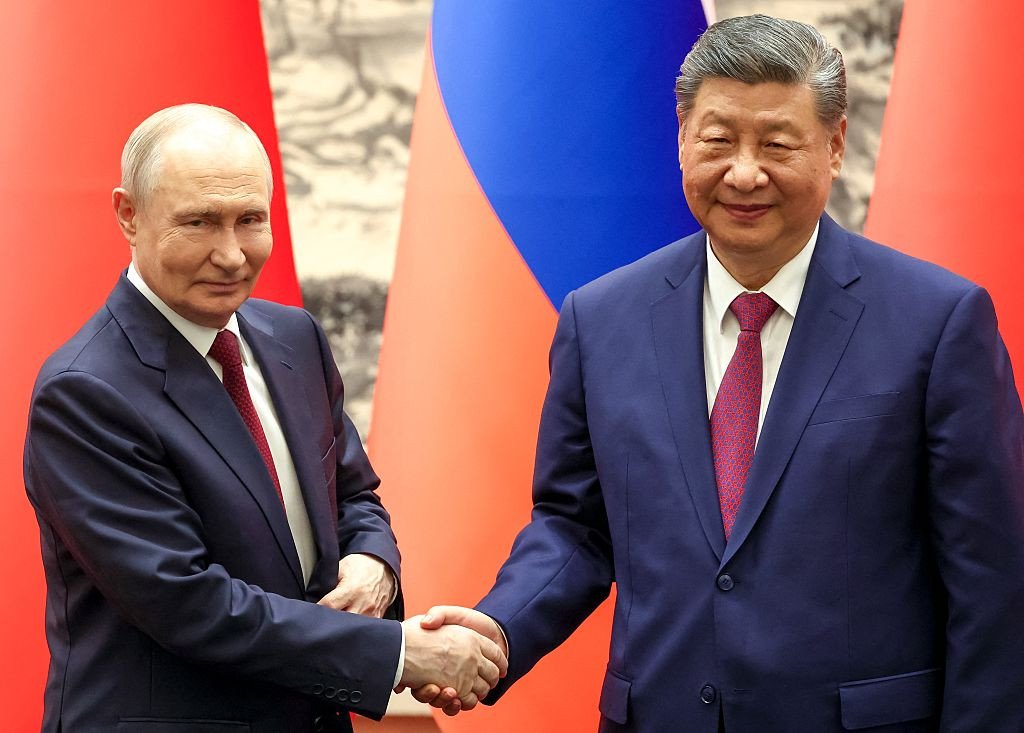
A Partnership Deepened
According to Xinhua News Agency, Xi told Putin that under their strategic guidance, “the foundation of China-Russia relations will become ever stronger, their progress ever steadier, and their future ever brighter.” The Chinese leader referenced Putin’s successful state visit to China in May, noting that the two sides had made arrangements to steer bilateral relations toward higher-quality development.
The meeting, held at the Harmony Palace in Bishkek, came as the two-day summit marks the 25th anniversary of the SCO. Over a dozen heads of state attended, including Indian Prime Minister Narendra Modi, Iranian President Masoud Pezeshkian, Pakistani Prime Minister Shehbaz Sharif, and Turkish President Recep Tayyip Erdogan as a dialogue partner.
Strategic Coordination and Multilateral Alignment
Xi emphasized that “the amount of uncertainty and unpredictability in the international order has obviously increased, but the pursuit of people across the world of peace, development, cooperation and win-win outcomes remains unchanged,” as reported by Al Jazeera. He stressed China’s readiness to work with Russia and other parties to strengthen the SCO and “strengthen the driving force for reform of global governance and the advancement of an equal and orderly multipolar world.”
Putin, for his part, declared that Russia-China relations have become “a model for relations between countries,” with cooperation developing rapidly across trade, energy, industry, transportation, science and technology, and people-to-people exchanges, according to the Chinese government’s English website. The Russian president also expressed willingness to strengthen coordination with China within the United Nations, the BRICS mechanism, and the G20, and voiced support for China hosting the APEC Economic Leaders’ Meeting.
Kremlin spokesman Dmitry Peskov told Russian media that the two leaders “largely discussed economic relations,” and only touched on the Ukraine war “in passing,” Al Jazeera reported.
Visa-Free Travel and Deeper People-to-People Ties
In a notable development, Putin proposed making the visa-free travel arrangement between Russia and China permanent, noting that people-to-people exchanges increased by 43% in the first half of 2026. The proposal signals a deepening of bilateral ties beyond high-level political cooperation into broader societal engagement.
The Power of Siberia 2 Question
The long-delayed Power of Siberia 2 natural gas pipeline project was expected to be a key topic of discussion, according to The Moscow Times. The proposed infrastructure would carry natural gas from Russia’s Yamal Peninsula through Mongolia to China, supplying up to 50 billion cubic meters annually. However, disagreements over pricing and supply terms have stalled a final agreement for over a decade.
Beijing has demanded rates close to Russia’s heavily subsidized domestic market at roughly $50 per thousand cubic meters—five times lower than current prices for the existing Power of Siberia-1 pipeline. As UNITED24 Media reported, during Putin’s May visit to Beijing, Chinese officials reportedly instructed the Russian delegation to stop raising the pipeline project until Moscow adjusts its financial terms.
A Summit Amid Global Turmoil
The summit takes place four-and-a-half years into Russia’s invasion of Ukraine and six months into the US-Iran war. The SCO, which now has 10 members, 15 dialogue partners, and 2 observer states, claims to represent approximately 40% of the world’s population and 25% of global GDP.
Analysts note that the gathering showcases Xi’s growing influence as a counterweight to the US-led international order. Julian Gewirtz, former NSC Senior Director for China and Taiwan Affairs under the Biden administration, told the New York Times that “over the past year, Trump has faced a fundamental credibility problem in front of Xi Jinping. As another world leader put it, whether it’s his threats or his promises, they look like they’re written in pencil in Beijing.”
Broader Diplomatic Engagements
Beyond the Xi-Putin meeting, Xi also held bilateral talks with Uzbek President Shavkat Mirziyoyev and Mongolian President Ukhnaagiin Khurelsukh on the same day. Earlier, Xi and Kyrgyz President Sadyr Japarov signed a Joint Declaration on the Comprehensive Strategic Partnership in the New Era and a Treaty on Permanent Good-Neighborliness and Friendly Cooperation, as detailed by the Chinese Foreign Ministry.
What to Watch
Xi is scheduled to visit Washington in late September for talks with US President Donald Trump, following planned visits to Egypt and India. The outcome of those engagements, along with whether the Power of Siberia 2 pipeline agreement can be finalized, will be key indicators of the trajectory of both China-Russia relations and the broader geopolitical landscape in the months ahead.
As the SCO summit continues into its second day, the plenary session chaired by President Japarov will bring together all participating leaders. Putin is scheduled to fly to Vladivostok for the Eastern Economic Forum after the summit concludes.