China Unveils National Teacher Development Action Plan
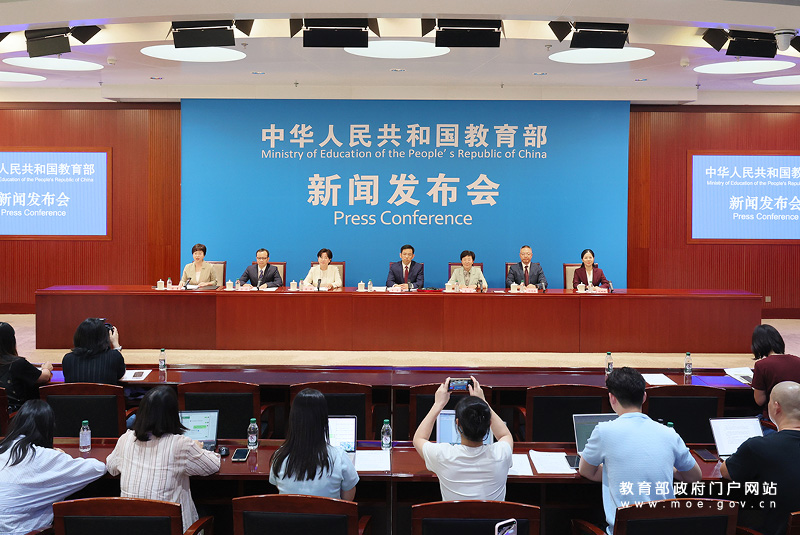
China’s Ministry of Education (MOE) announced plans to implement a comprehensive National Teacher Development Action, reaffirming a “zero tolerance” policy toward ethical misconduct among educators while rolling out new measures to improve training quality, promote equitable distribution of teaching resources, and enhance teacher welfare. The announcement came during a press conference held on September 4, ahead of the country’s 42nd Teachers’ Day on September 10.
A Strategic Priority for an Education Powerhouse
The initiative, first proposed by MOE Minister Huai Jinpeng at the 2026 National Two Sessions and the World Digital Education Conference, targets China’s 18.7 million teachers. Wang Lei, Director of the MOE Teacher Work Department, emphasized the strategic importance of the teaching profession during the briefing.
“A strong country must first have strong education; strong education must first have strong teachers,” Wang said. “Teachers are the primary resource for educational development and the foundational, strategic support for building an education powerhouse.”
The action plan focuses on four key areas: spiritual guidance, training quality, equitable development, and care and support for teachers. The full press conference transcript is available on the MOE website.
Zero Tolerance for Ethical Misconduct
A central pillar of the announcement is the ministry’s continued commitment to maintaining teacher ethics as the “first standard” of professional conduct. Wang was unequivocal about the ministry’s position on ethical violations.
“Continue to uphold the first standard of teacher ethics and conduct, resolutely adopt zero tolerance toward teacher ethical misconduct,” Wang stated. “This is both the bottom line of professional ethics and the most solemn commitment to every student and every family.”
At the same time, the ministry pledged to protect teachers from false accusations. Wang outlined plans to standardize procedures for handling disputes and complaints involving teachers, open channels for legal consultation and assistance, and promptly clarify the names of teachers against false reports. The ministry will also adopt zero tolerance toward fabricating facts and maliciously defaming teachers, working with relevant departments to hold responsible parties accountable.
Reforming Teacher Training and Embracing AI
The action plan includes sweeping reforms to teacher education. The MOE will deepen reforms across teacher training institutions, push normal universities to maintain their teacher-training focus, and encourage more high-level universities to participate in teacher education. The ministry plans to pilot the construction of National Excellent Teacher Academies and reform the teacher education curriculum to strengthen ideological cultivation, digital and technological literacy, humanities education, innovative thinking, and interdisciplinary competencies.
A notable component is the “AI + Teacher Development” Action, which will strengthen the National Smart Education Platform Teacher Center and launch full-coverage teacher AI literacy training. Wang addressed the intersection of artificial intelligence and education directly.
“AI is reshaping the form of education and the role of teachers, but no matter how powerful AI becomes, it cannot replace teachers,” he said. “No matter how educational forms change, teachers’ educational status and fundamental values will not change.”
Wang emphasized that technology should serve as a tool for teachers rather than a burden. “Let technology fulfill teachers, let technology reduce burdens for teachers,” he said. “Let technology become the wisdom candlestick in teachers’ hands, not a burden weighing on their hearts or shoulders.”
Addressing Rural Education Gaps
To promote equitable development, the MOE will launch the County High School Teacher Consolidation and Quality Improvement Action and the Frontier School Outstanding Young Teacher Training Support Program. The ministry will also reform the Excellent Teacher Program and County High School Teacher Leading Goose Plan while continuing group-style assistance, Silver Age Teaching, and teacher rotation programs.
These measures aim to direct quality resources to central and western regions, remote areas, and border schools. The China Youth Daily reported on the ministry’s commitment to ensuring that “county high school teachers can be attracted, retained, and taught well, and rural teachers can feel secure and settled.”
Teacher Welfare and Burden Reduction
The ministry also announced measures to improve teacher welfare, including continuing the policy that compulsory education teachers’ average salary must not be lower than local civil servants’. Performance pay will be tilted toward frontline teaching, homeroom teachers, and rural teachers. A recently launched “China Teacher” mini-program will allow teachers to apply for electronic teacher certificates and access exclusive services in healthcare, travel, finance, and daily consumption.
Addressing concerns about excessive non-teaching burdens, Wang acknowledged that many teachers are overwhelmed by inspections, evaluations, form-filling, and record-keeping tasks. The ministry will implement a “whitelist” management system for social affairs entering campuses, reducing unnecessary checks and paperwork.
“Return tranquility to campuses, return time to teachers,” Wang said, “let teachers place their hearts in the classroom and pour their love into children.”
Looking Ahead
As China prepares to celebrate its 42nd Teachers’ Day under the theme “Vigorously Promote the Spirit of Educators, Jointly Build a Culture of Respecting Teachers and Valuing Education,” the National Teacher Development Action represents a significant step in the country’s broader education reform agenda. The initiative builds on the Education Powerhouse Construction Plan Outline (2024-2035), which sets the strategic vision for building China into an education powerhouse by 2035.
The People’s Daily published the story on its front pages, underscoring the national significance of the announcement. As the MOE moves from policy announcement to implementation, educators and observers will be watching closely to see how these ambitious measures translate into tangible improvements for China’s 18.7 million teachers and the hundreds of millions of students they serve.
“Respecting teachers and valuing education has never been just a slogan,” Wang said. “It should become a systematic and solid institutional guarantee. This is the direction we must go all out for.”