Mosque Shooter’s Parents Sue Facility Over Ignored FBI Warning
The mother of Caleb Vazquez, one of two teenagers who carried out a mass shooting at the Islamic Center of San Diego in May, has filed a lawsuit alleging that the mental health facility where her son was being treated failed to act on an FBI warning about his dangerous behavior. The lawsuit, filed Aug. 31 in San Diego Superior Court, claims Park Mental Health Treatment of San Diego ignored multiple red flags in the days before the attack that killed three people, according to AP News.
The FBI Warning
According to the lawsuit, the FBI called Vazquez’s mother on the evening of May 14, warning that her 18-year-old son was making concerning comments about school shootings and suicide on the dark web. She immediately left a message with the treatment facility to notify its staff, and she again shared the FBI’s warnings with her son’s therapist on May 15 and with a program director later that night, as KPBS reported.
“He was going on the dark web and looking for people of similar mindset to get involved in shootings of mosques, synagogues, schools,” Norm Finkelstein, attorney for the Vazquez family, told KPBS.
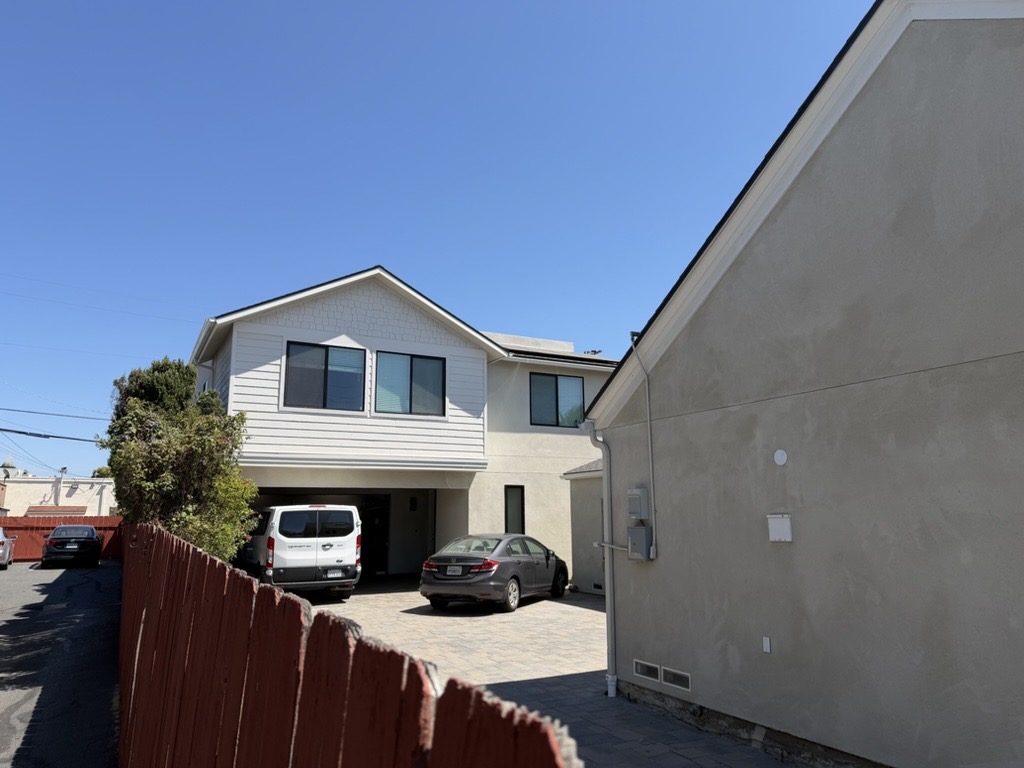
Vazquez was being treated at Park Mental Health for autism, OCD, body dysmorphia, social anxiety and severe depression with psychotic episodes. He had been admitted to the residential facility in Normal Heights on April 28, according to the lawsuit.
The Night Before the Attack
Video surveillance showed Vazquez leaving the Park Mental Health facility at approximately 8:24 p.m. on May 17 — the night before the shooting. It remains unclear whether he was allowed to leave or broke facility rules by doing so, as Times of San Diego reported.
On the morning of May 18, the facility’s program director texted Vazquez’s mother asking if she knew where Caleb was. When she asked, “Are you saying that he’s missing?” the director responded, “Yes.” His parents drove to the facility, watched surveillance footage showing their son leaving the night before, and were told to file a missing persons report. They left around 11:45 a.m.
Just minutes earlier, at approximately 11:42 a.m., San Diego police received their first calls about shots fired at the Islamic Center of San Diego. Vazquez and 17-year-old Cain Clark had carried out a mass shooting at the mosque, killing security guard Amin Abdullah, 51, Nadir Awad, 57, and Mansour Kaziha, 78, before taking their own lives in a white BMW nearby.
A History of Warning Signs
The FBI’s alleged contact with Vazquez’s parents was not the first sign of his mental deterioration. Vazquez had been hospitalized for roughly three days in January 2026 after telling a classmate he wanted to carry out a school shooting. Almost exactly a year earlier, police confiscated 26 guns from his father under a 2014 California law allowing firearms to be taken from people considered dangerous, as USA Today reported.
“Earlier, he was at a different facility where he was under lock and key,” Finkelstein told USA Today. “Then they transferred him to this facility, where he wasn’t. He had a curfew, but they did nothing to enforce that.”
Park Mental Health’s Response
The facility has disputed the lawsuit’s assertions, calling them incorrect and counterfactual. In a statement to KPBS, Park Mental Health said: “While it is understandable that his parents might seek to blame someone in their time of loss, this lawsuit is misguided in that neither Park nor its employees are responsible for Mr. Vazquez’s actions. Only he and his coconspirator bear responsibility for their conduct and, ultimately, his death.”
Chris Saldana, an attorney representing Park Mental Health, told USA Today the facility is an outpatient treatment center that does not hold people in locked rooms. “It’s not a prison,” he said. “It cannot lock people up and doesn’t.” Saldana also questioned the legitimacy of the legal claims set forth in the complaint.
Broader Investigation and Charges
The lawsuit was filed on the same day that North Carolina authorities announced the indictment of Sarah Lindsey Santiago, 17, on three counts of first-degree murder and one count of conspiracy for allegedly helping plan the attack and livestreaming it, as NBC San Diego reported. Authorities said the shooters had also planned to attack the Kehilat Ariel Messianic Synagogue, about 1.5 miles from the Islamic Center, as well as Black students at a local high school.
“Their plan that day was to commit mass murders, not only at the mosque, but to follow-up at a local Jewish temple,” Forsyth County District Attorney Jim O’Neill said.
FBI Special Agent in Charge Reid Davis emphasized the importance of coming forward with credible information about planned violence: “When someone has credible knowledge that a crime is going to be planned or going to be committed, particularly an act of violence, the law requires you to come forward. The failure to do so must have consequences.”
Family’s Statement and Broader Context
In May, Vazquez’s family released a statement condemning the attack and saying their son was on the autism spectrum and had been radicalized online, as the New York Post reported. “We condemn these hateful and violent actions entirely,” the family said. “Our son was on the autism spectrum, and it is painfully clear to us now that he struggled not only with accepting parts of his own identity but also grew to resent them.”
The shooting occurred amid record-high complaints of bias and discrimination against Muslims, according to the Council on American-Islamic Relations, which recorded its highest annual number of complaints in 2025 since beginning reporting in 1996. The attack also highlighted concerns about online radicalization of young people. Peter Simi, a Chapman University professor who studies political violence and extremism, told KPBS that the case reflects a broader culture of violence that “glamorizes violence (and) treats violent perpetrators as heroes.”
What’s Next
The lawsuit seeks damages for negligence, dependent adult neglect, wrongful death, and medical malpractice. The case raises significant questions about the responsibilities of mental health facilities when federal authorities flag a patient as a potential threat — and whether earlier intervention could have prevented one of the deadliest attacks on a U.S. place of worship in recent years. As Finkelstein put it: “This was preventable. This should have never occurred.”