Algeria Severs Diplomatic Ties With UAE
Algeria announced on 10 September 2026 that it was severing diplomatic relations with the United Arab Emirates, ordering the Emirati ambassador to leave within 48 hours and moving to close its airspace to UAE-registered aircraft — one of the most significant ruptures in Middle East and North Africa diplomacy in years.
According to Xinhua, via People’s Daily, Algeria’s Foreign Ministry said the government had “exhausted all means” of preserving the relationship with the Gulf state. The UAE ambassador in Algiers was summoned and formally informed of the decision, and given 48 hours to comply.
A Rupture Years in the Making
The decision did not come out of nowhere. As The New Arab reported, relations had deteriorated considerably over several years amid disagreements over regional affairs and repeated Algerian accusations of Emirati interference.
Algeria’s Foreign Ministry cited “increasing provocative or hostile actions” from the UAE, saying relations had “reached limits where they can no longer be considered acceptable or tolerable within the framework of relations between two sovereign states, nor remain without a response.”
“Faced with the increasing provocative or hostile actions emanating from the United Arab Emirates, Algeria has exercised a great deal of restraint and a high sense of responsibility,” the ministry said. It added that Algiers had repeatedly drawn the Emirati side’s attention to its concerns and warned of “serious consequences” from what it called “regrettable and unjustified behaviour.”
The ministry did not specify which single action had triggered Thursday’s decision, framing it instead as the culmination of a sustained pattern of grievances.
UAE Responds Cautiously — and Sharply
The UAE’s official response was notably measured. Its Foreign Ministry said it hoped the decision would be temporary and stressed its commitment to preserving ties between the two peoples.
“In light of the decision by the People’s Democratic Republic of Algeria to sever relations with the United Arab Emirates, the UAE expresses hope that this decision will be temporary, in a manner that preserves the fraternal ties between the two brotherly peoples,” the ministry said, as Anadolu Agency reported. The UAE reaffirmed the importance it attaches to relations with all countries and highlighted the Algerian community residing in the Emirates.
A sharper note came from Anwar Gargash, diplomatic adviser to UAE President Mohammed bin Zayed. “Relations cannot be hostage to internal tensions or an inability to explain interests and define priorities,” Gargash wrote on X, adding: “Ambiguity is not a policy, and noise does not compensate for the absence of vision.”
The contrast — conciliatory ministry language alongside pointed public criticism — suggests Abu Dhabi wants to keep a diplomatic path open while pushing back on Algiers’ framing.
Airspace Closure Adds Practical Weight
Algeria moved quickly to give the rupture practical force. Its Defence Ministry announced that Algerian airspace would be closed to all UAE-registered civil and military aircraft from midnight on 11 September, per Anadolu Agency.
The measure carves out one exception: Emirati commercial civilian flights to and from Houari Boumediene International Airport in Algiers will continue until the end of 2026, when the relevant contract expires. The closure builds on measures taken earlier in the year, when Algeria halted flights by Emirati airlines and cancelled an air services agreement between the two countries.
Economic frictions had also surfaced, with Algeria reviewing the status of companies in which Emirati entities hold stakes and Abu Dhabi reportedly threatening international arbitration.
Three Grievances Behind the Split
Reporting points to three intertwined grievances driving the rupture.
Alleged support for Kabyle separatists. Algerian media close to the authorities have accused the UAE of links to the Movement for the Self-Determination of Kabylia (MAK), which Algeria designated a terrorist organisation in 2021. Authorities regard separatist movements as a threat to the country’s territorial integrity. The UAE has denied broader accusations that it seeks to destabilise Algeria.
The Western Sahara rivalry. The dispute remains at the heart of Algeria–Morocco tensions. Algiers supports the Polisario Front and the Sahrawi right to self-determination, while Rabat claims sovereignty over the territory. The UAE became the first Arab country to open a consulate in Moroccan-controlled Western Sahara in 2020 — a move welcomed by Rabat and resented in Algiers.
A widening regional footprint. Competing alliances across Libya, Mali, and Niger, and divergent approaches to conflicts in North Africa and the Sahel, have fed growing distrust.
A More Assertive Algeria
The severance is only the second time Algeria has cut ties with an Arab state in recent years — the first being Morocco in August 2021.
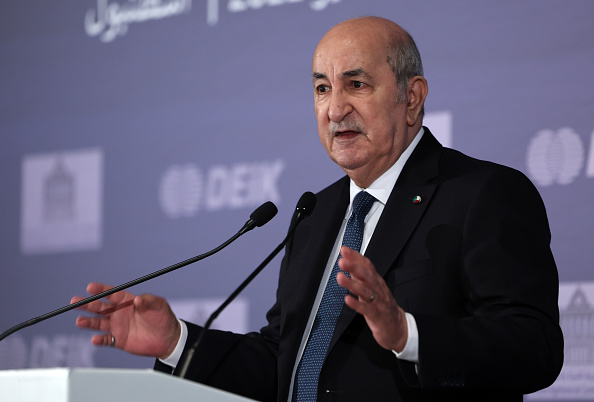
President Abdelmadjid Tebboune had signalled the shift publicly. In a July 2026 televised interview, he referred to the UAE as a “micro-state” and accused it of having a “very negative impact” wherever it became involved. “Wherever they set foot, blood flows,” he said, adding: “We want them to stay away, so that blood does not flow in our country.”
Tebboune also suggested the break had been contemplated for some time. “A diplomatic break would have happened long ago,” he said, explaining that Algeria had held back because it did not want to deepen divisions within the Arab world. Taking the step now signals just how acute Algiers considers the perceived Emirati threat.
Tebboune has drawn a distinction between the UAE and other Gulf states, describing ties with Saudi Arabia, Qatar, Kuwait, and Oman as brotherly while accusing an unnamed Gulf state — widely understood to be the UAE — of interference.
What to Watch
The rupture reshapes regional alignments. It removes Algeria from the UAE’s diplomatic orbit and deepens the split between Algiers and the UAE–Morocco axis, reinforcing Algeria’s alignment against a Gulf state expanding its investments and influence across North Africa and the Sahel.
Several open questions remain. Whether the airspace closure and economic disputes escalate into broader confrontation — or whether the UAE’s hope that the decision proves “temporary” gains any traction — will shape the next phase. Much may depend on whether either side sees a path back, or whether the accumulated grievances that produced this rupture prove durable.
For now, the message from Algiers is unambiguous: after years of warnings, it has chosen rupture over restraint.