One in Ten Workers Permanently Disabled After Speed Pedelec or E-Scooter Accidents
Roughly one in ten workers who suffer a commuting accident on a speed pedelec or an electric scooter is left permanently disabled, according to the Belgian insurers’ federation Assuralia, which has launched a fresh awareness campaign together with the Minister of Work. Soft mobility now accounts for nearly half of all accidents on the commute to and from work.
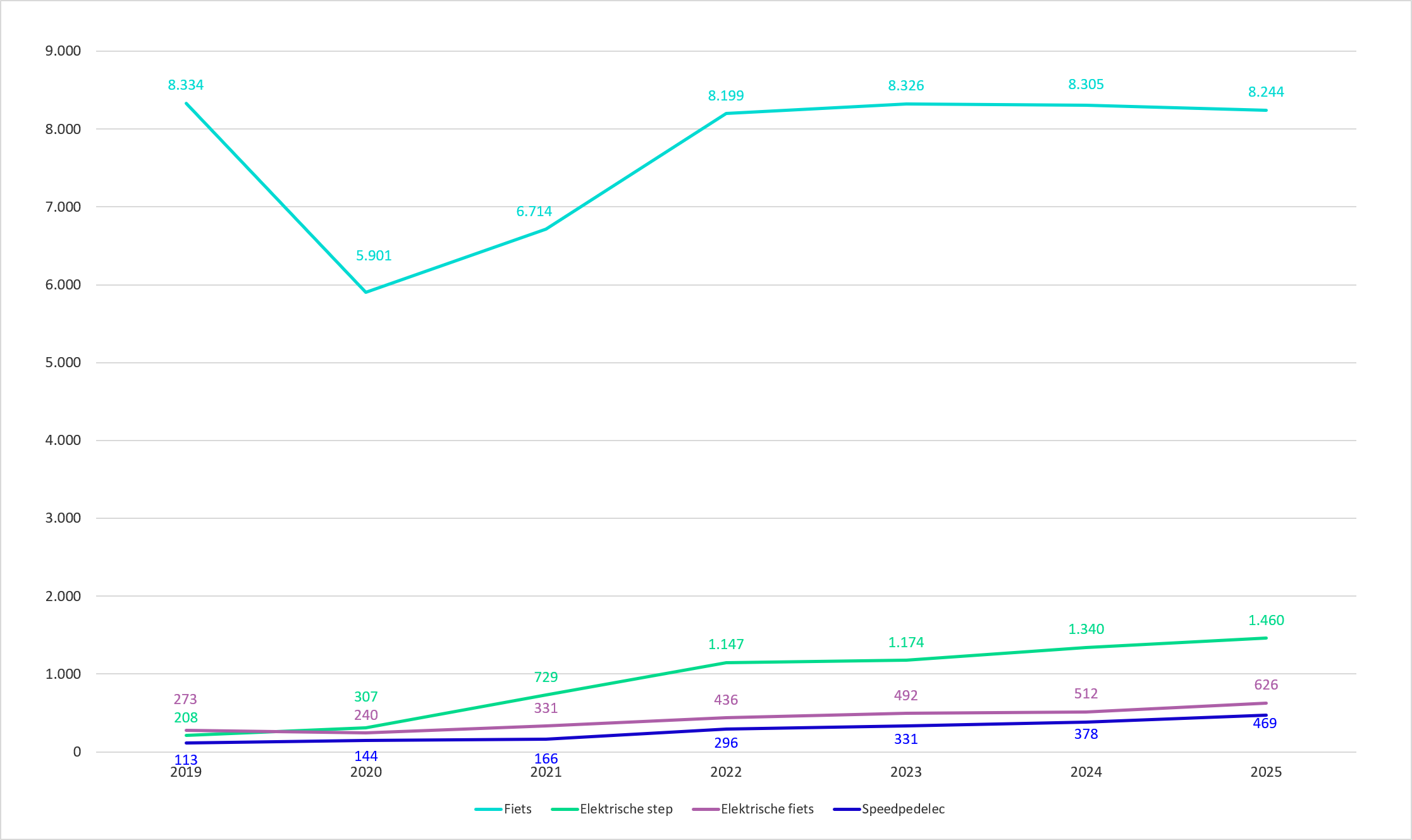
According to VRT NWS, Assuralia estimates that 11,534 commuting accidents involving soft mobility — bicycles, e-bikes, speed pedelecs and e-scooters — occurred in 2025, an increase of 9.3 percent in a single year and nearly a third over six years. Such accidents now make up 45 percent of all commuting accidents, up from 34 percent in 2019.

A Growing, and Costly, Trend
The figures were published in an Assuralia press release marking the start of the Week of Mobility. The federation attributes the surge to the rising popularity of electric bikes, e-scooters and speed pedelecs. In 2019, Assuralia counted 208 commuting accidents involving an e-scooter; by 2025 that figure had grown sevenfold to 1,460. E-bike accidents rose from 273 to 626 over the same period, while speed pedelec accidents climbed from 113 to 469.
Where total workplace accidents dipped slightly — Assuralia estimates 119,280 in 2025, down from 122,624 the year before — accidents during the commute continued to rise. Over roughly a decade, accidents at the workplace have fallen by around 20.8 percent, while commuting accidents have increased by 13.3 percent.
The consequences are significant. An accident on an e-scooter leads to temporary incapacity in 80 percent of cases, and approximately 9 percent result in permanent incapacity. For speed pedelecs, 11 percent of commuting accidents cause some degree of permanent disability. The average cost to an insurer ranges from €2,715 for temporary incapacity to €101,611 when the incapacity is permanent.
”Safety Does Not Stop at the Company Door”
Minister of Work David Clarinval, a French-speaking liberal and Deputy Prime Minister, stressed that employers and the state both have a role to play. “The safety of workers does not stop at the door of the company,” he said in the Assuralia release. “The figures that Assuralia has presented show that the number of accidents involving soft mobility is increasing.”
He added that employers, prevention advisers and insurers “have an important role to play in encouraging the right reflexes and helping to reduce this kind of accident.”
Hein Lannoy, CEO of Assuralia, framed the campaign as a matter of workplace continuity as much as compassion. “Apart from the suffering after an accident that you want to spare your employee, there is also business continuity that is at stake,” he said. “When not only insurers but also all employers regularly share prevention tips, we reach a win-win situation.”
A Structural Limit on Employer Action
A key obstacle, however, is that an employer cannot compel employees to take safety training for their commute, because the home-to-work journey belongs to the private sphere — unlike safety at the workplace, for which the employer is responsible. This legal barrier is why Assuralia relies on awareness campaigns rather than mandatory measures.
The federation recommends that employers collaborate with road-safety agencies such as VIAS, the Flemish Foundation for Traffic Knowledge (VSV), the Walloon Road Safety Agency (AWSR) and the prevention network Prebes. It also offers a set of ten prevention tips for commuters: find the safest route, choose a low-conflict route, check the condition of your two-wheeler, wear visible clothing, ensure good lighting, wear a helmet, respect traffic rules, stay alert, avoid distractions, and stop before calling or texting.
Accidents peak in the autumn and winter months, with the highest share in January (13.3 percent of the annual total for soft mobility). There is a secondary peak in June (8.8 percent), when good weather encourages more people to commute by bike or scooter. Fridays see fewer accidents (16 percent) than other weekdays, a pattern Assuralia attributes to telework and part-time arrangements.
What to Watch
Assuralia cautions that all 2025 figures are provisional, since the consequences of serious injuries can take a long time to be classified as temporary or permanent. The federation says it drew its conclusions on the after-effects of accidents for the period 2019–2023, leaving recent years out because the data are not yet definitive.
For now, the campaign — running during the Week of Mobility and amplified by several insurance companies — places the focus on prevention rather than restriction. Its success will depend on how widely employers adopt it, given that they cannot mandate it. The coming months will also see targeted controls by the FPS Economy on non-compliant e-scooters, a measure Clarinval flagged in an earlier campaign, to curb the sale of unsafe devices.