Belgium Weighs Taxing Mutuals and Unions Like Ordinary Companies
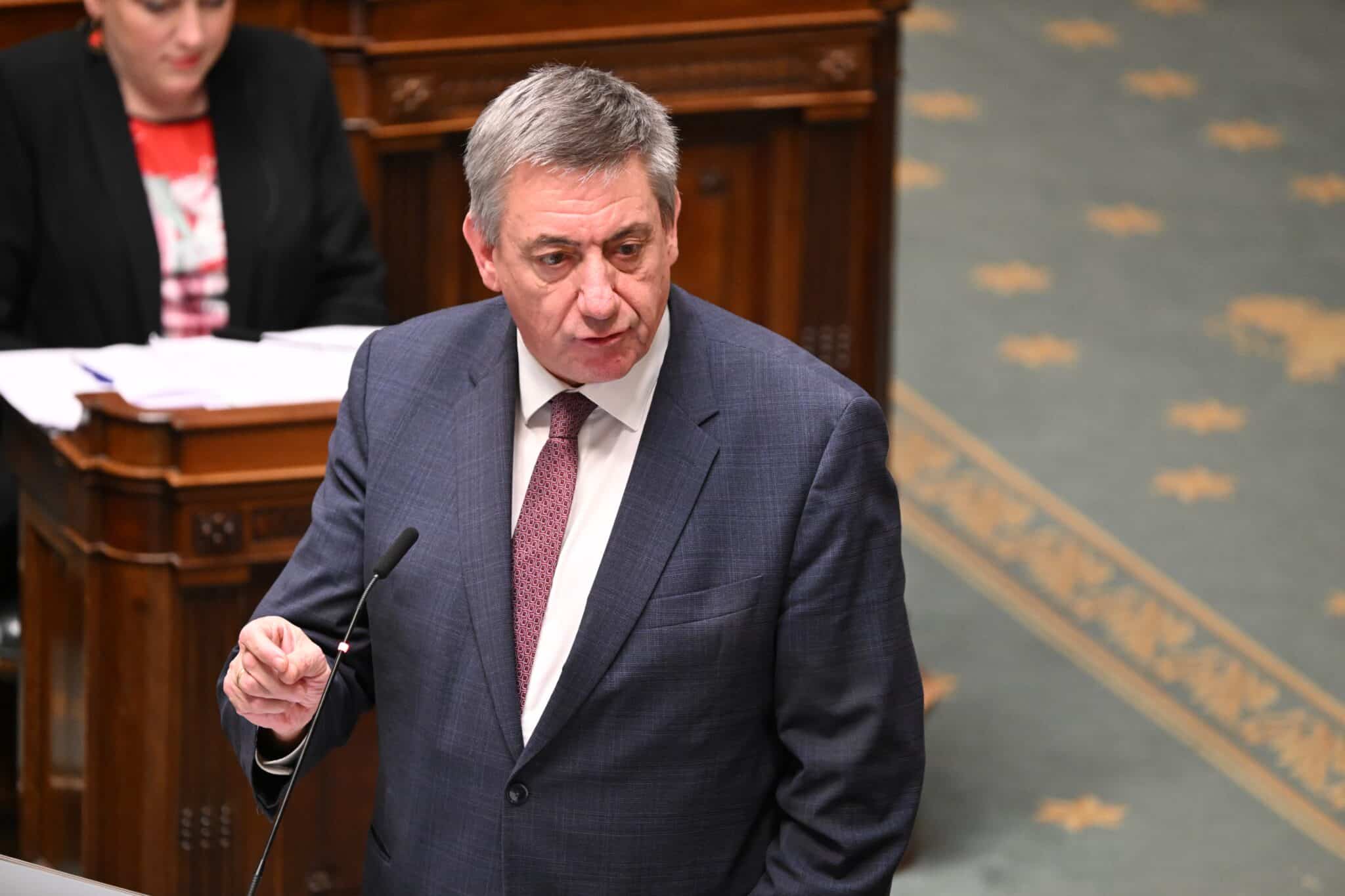
Belgium’s Finance Ministry has proposed subjecting the country’s sprawling non-profit sector - including health insurance funds (mutuals) and trade unions - to the same 25 percent corporate income tax that ordinary companies pay, according to a leaked 28-page note sitting on the desk of Finance Minister Jan Jambon (N-VA). The document, reported by Het Laatste Nieuws, arrives as the government of Prime Minister Bart De Wever searches for roughly 10 billion euros in budget savings and hands the nationalist N-VA ideal political ammunition.
Titled “Proposal for a reform of income tax for the non-profit sector,” the document was recently transmitted by the Federal Public Service Finance to Jambon’s office. It warns of “distortion of competition” against businesses that owe profit tax, and recommends extending corporate taxation to associations, foundations, health insurance funds, unions and sports clubs. No option has been approved by the government.
A Lucrative Exemption
At the heart of the proposal is the mutuals’ hospitalization insurance business. Since 2020, the health funds have generated 1.45 billion euros in profit on 4.84 billion euros of turnover from these policies while paying zero tax, according to an earlier HLN investigation. Because they are structured as non-profits under a special legal personality, they fall under the rechtspersonenbelasting rather than corporate tax and are taxed only on a limited set of income, such as commercial rent or capital gains on property sales. Real profits from activities like hospitalization cover, dental plans, home care and travel go untaxed - more than 362 million euros in forgone revenue since 2020 alone.
The contrast with private insurers is stark. HLN’s analysis found mutuals book 33 euros of profit for every 100 euros they charge on hospitalization cover, compared with just 10 euros for the private insurer DKV, which has paid more than 116 million euros in corporate tax since 2020. Roughly 9 million Belgians hold hospitalization insurance, and an estimated 3.5 million buy it through their mutual under products named Hospitaalplan, Kliniplan or Hospitalia.
Jambon, who is also deputy prime minister, previously told HLN that the funds’ conduct was not illegal, but asked whether a majority could be found to change the law. “If the strongest shoulders must contribute, then everyone must contribute,” he said.
Two Options on the Table
The note offers Jambon two paths, as outlined by Medi-Sfeer. The first and most sweeping would make all associations and foundations liable for the full 25 percent corporate tax, with exceptions - including a 25,000 euro turnover threshold to shield small clubs earning money from their canteen or a spaghetti night, and exemptions for membership fees, subsidies and donations. The second, more targeted approach would tax only income from commercial activities that compete with the market, keeping social-security-related work exempt. It is modeled on the Dutch system.
Lawmakers and experts are divided on the scope. Vincent Van Quickenborne, an opposition MP with Anders, called it a potential windfall. “This could yield hundreds of millions of euros a year for the treasury. Whoever does business must pay taxes like any entrepreneur. The health funds are engaging in pure distortion of competition,” he said, adding that N-VA had “promised high and low” to tax them.
Michel Maus, a tax law professor at the Free University of Brussels (VUB), warned that a blanket levy would be destabilizing. “This would be a bomb under the non-profit sector,” he said, citing the football club KRC Genk and the Dranouter festival as examples of non-profits that have become commercially active. “One would indeed do better to tax only the profits from commercial activities. But even then, the administrative burden is no small matter.”
A Pillarized Battlefield
The politics cut deep into Belgium’s pillarized social fabric. Mutuals and unions are historically tied to ideological camps - the socialist Solidaris and the ABVV union to the socialist family, and the Christian CM-Helan and ACV union to the CD&V world. Coalition partners CD&V and Vooruit retain strong ties to this middenveld, making any assault politically fraught. A tax on mutuals and unions could serve as a counterweight to the left’s demand for a wealth tax on large fortunes, but whether those partners would tolerate a new attack on their own base remains an open question.
The funds reject the comparison to commercial insurers. “We are not ordinary insurance companies,” CM, Helan and Solidaris said jointly. “We pay out no dividends. Everything we build up in reserves with our hospitalization insurance we use to cover our risks and to make our policies better for our members.” Bart Deruysscher, director of CM Flanders, added: “We are not out for more profit. We have no shareholders getting richer thanks to dividends.”
Solidaris general secretary Paul Callewaert has left a narrow door open, however. He argues mutuals are barred by law from offering collective hospitalization policies, an arrangement he attributes to private insurers, and says the funds cannot compete on that market. He offered a conditional tax: “We are prepared to accept a tax on the extra profit we would book” if a ceiling on doctors’ fees lowers hospital bills - “on condition that the money from that tax is used only for compulsory health insurance and does not flow into a general pot.”
Private insurers want a level playing field. “It seems to us only logical that health funds, for their commercial activities, be subject to the same taxation as other players,” said Peter Wiels of the federation Assuralia. “A level playing field is overdue.” Stan Politis, chairman of the medical specialists’ association VBS, was blunter: “Once the health funds were solidarity care players; today they are insurers with a double agenda.”
Jambon’s cabinet declined to comment on the note.
What to Watch
Economist Ivan Van de Cloot has argued the exemption is a structural break in competitive fairness, noting that private insurers pay insurance taxes, patrimony taxes and corporate tax from which mutuals are exempt. He also dismissed the 2011 Constitutional Court ruling that legitimized the mutuals’ status as a snapshot. “That is postponement, not cancellation,” he said.
With budget talks dominating the autumn, the note’s real significance may be as a bargaining chip. A controversial tax on unions and health funds - institutions entwined with the parties the government depends on - offers N-VA a way to reframe the savings debate around “everyone contributing.” Whether it survives contact with the coalition is another matter. The unions are already organizing, with ABVV and ACV planning a protest on 9 October as a “first clear warning” to the government.
The government has approved nothing. The FOD Financien’s two scenarios remain administrative proposals on Jambon’s desk - but in a 10 billion euro budget fight, even a note can become a weapon.