Hong Kong Unveils First-Ever Five-Year Development Plan
The Hong Kong Special Administrative Region officially released its first-ever five-year plan on 16 September 2026, marking a historic departure from the city’s long-standing “small government, big market” tradition. Chief Executive John Lee Ka-chiu unveiled the “First Five-Year Plan for Economic and Social Development of the Hong Kong Special Administrative Region (2026-2030)” at the Legislative Council, according to Xinhua News, immediately following it with the final Policy Address of his current term.
The plan, running over 100 pages across seven chapters and containing 22 key performance indicators, positions Hong Kong’s medium-term development strategy in explicit alignment with China’s national 15th Five-Year Plan, whose opening year is 2026.
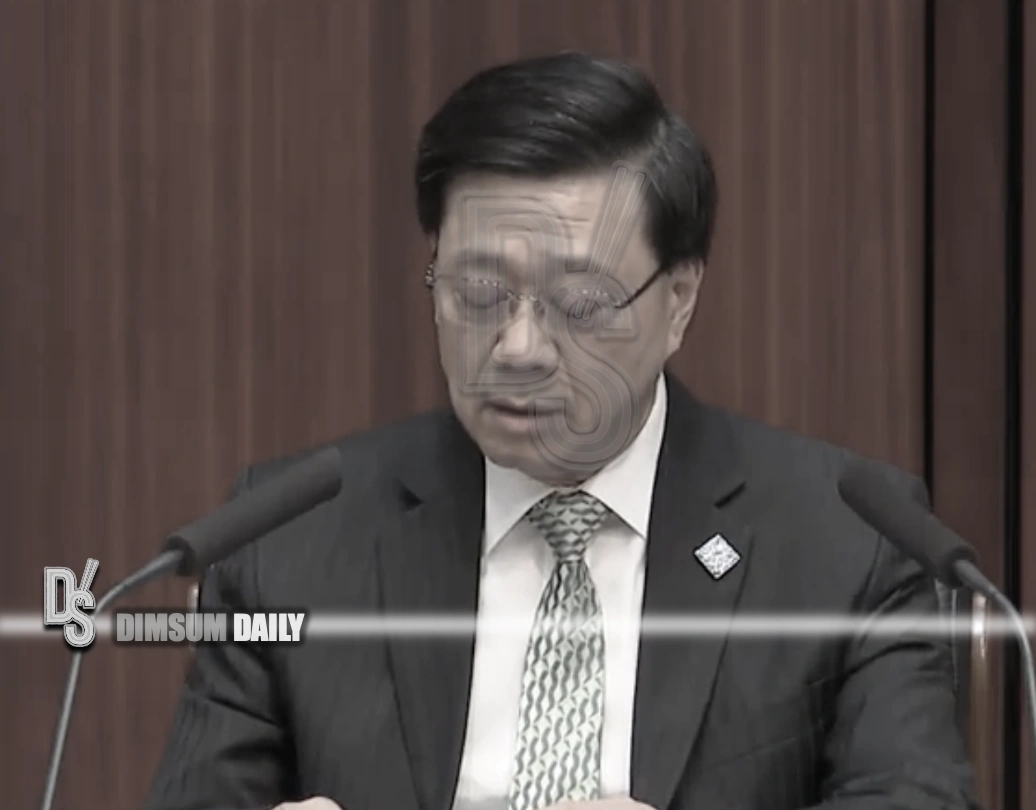
A Governance Milestone
Speaking at LegCo, Lee framed the plan as a defining moment for the SAR’s governance model. “In the opening year of the national 15th Five-Year Plan, the HKSAR has formulated a five-year plan for the first time,” he said, as reported by Xinhua. “This is a major measure by the SAR Government to uphold and improve executive-led governance and enhance governance effectiveness… and an action programme to rally social consensus, unite all sectors, and drive Hong Kong from stability to prosperity and high-quality development.”
Lee also sought to reassure residents that the plan would not alter Hong Kong’s fundamental character. In an op-ed published ahead of the release, he wrote that the plan “will uphold Hong Kong’s rule of law and capitalist system, implement the Basic Law and adhere to ‘One Country, Two Systems’ without distorting Hong Kong.”
The document is the product of an unusually compressed drafting effort. First announced on 4 February 2026, it was completed “from scratch” in less than a year — a timeline that mainland cities typically require one to two years to match. A two-month public consultation launched on 15 June 2026 generated more than 100 sessions, over 30 of which Lee personally hosted, and drew 17,000 submissions, roughly 80 percent from individuals. Officials used artificial intelligence to help process the volume of public opinion.
The Core Targets
The plan’s 22 indicators are divided into “binding” indicators, which government agencies must fulfil, and “anticipatory” indicators, intended to guide market direction.
At the centre of the strategy is the Northern Metropolis, the vast development zone bordering Shenzhen. The plan commits to 900 hectares of “spade-ready” sites by 2030-31, up sharply from the 120 hectares previously identified, alongside approximately 70,000 completed housing units and 1 million square metres of economic floor space within the five-year window.
Economic ambitions are equally explicit. Innovation and technology spending is targeted to approach 3 percent of GDP after 2030, while manufacturing and new industrialisation value-added is set to move toward 5.5 percent of GDP over the same horizon. The plan envisions 100,000 non-local post-secondary students by 2029-30 and tourism value-added of HK$126 billion by 2030, up from HK$86.2 billion in 2024, supporting roughly 203,000 jobs.
On the climate front, the plan targets a 32.5 percent cut in carbon intensity against 2024 levels, a 30 percent zero-carbon share of the electricity fuel mix, and fine particulate matter (PM2.5) concentrations held below 14 micrograms per cubic metre. The airport is to expand from 220 to 240 destinations within five years, with sustainable aviation fuel accounting for 1 to 3 percent of departing flights by 2030.
Finance, Technology and the Greater Bay Area
Structured around Hong Kong’s “four centres and one hub” positioning, the plan details an agenda to deepen the city’s role as an international financial, maritime, trade and aviation centre, alongside its ambition to become a global innovation and technology hub.
Financial provisions include scaling up the offshore renminbi ecosystem, expanding mutual market access schemes, regularising digital government bond issuance, and building out gold storage and refining capacity with mutual access to mainland gold markets. A new “Innovation and Technology Industry-Oriented Fund” seeded with HK$10 billion is expected to reach at least HK$40 billion through market matching.
The spatial vision is captured by the “South-North Dual Engine (Finance-IT)” concept, with the Northern Metropolis serving as a university town, an innovation and industry engine, and Hong Kong’s principal Greater Bay Area platform. Three campuses — at San Tin, Hung Shui Kiu and Ta Kwu Ling — are planned under a “One Town, Five Elements” model spanning over 1,000 hectares, including roughly 300 hectares of campus land.
Greater Bay Area cooperation is treated as a cross-cutting priority, spanning “hard connectivity” such as rail links and extended boundary-crossing hours, “soft connectivity” including professional standards and legal talent recognition, and what officials describe as “connectivity of hearts” — youth employment, cross-boundary healthcare and cultural exchange initiatives.
Analysis: A Strategic Shift With Open Questions
The plan represents a genuine institutional shift. For decades, Hong Kong’s economic philosophy rested on minimal government intervention, with authorities confining themselves largely to infrastructure and market order. A systematic, top-level development blueprint of this scale is without precedent in the city’s history.
That shift carries both opportunity and risk. Proponents argue it gives investors and residents a clearer, more stable set of expectations — precisely the framing Lee used when he said development direction would become “clearer” and resource allocation “more effective.” By tying Hong Kong’s targets to the national 15th Five-Year Plan, Beijing also signals that it views the city’s integration into the broader economy as a settled priority rather than an aspiration.
Critics and analysts, however, are likely to focus on delivery. Binding indicators create accountability, but the gap between announced targets and realised outcomes remains the central test. The Northern Metropolis, in particular, has long been dogged by questions about land assembly, infrastructure sequencing and financing. The plan’s heavy reliance on accelerating spade-ready land — from 120 to 900 hectares — will require execution capacity that Hong Kong’s administrative machinery has not previously been asked to demonstrate at this scale.
There is also the question of political durability. As international coverage has noted, the plan’s 2030 horizon outlasts Lee’s current term, raising the issue of whether successive administrations will maintain the same level of commitment. Officials have sought to address this by framing the annual Policy Address as the plan’s implementation report, embedding the blueprint into the regular governance cycle.
What’s Next
The immediate focus will be on how the government translates the plan’s 22 indicators into concrete annual milestones. The next Policy Address will be the first formal test of the reporting mechanism, and observers will watch for details on Northern Metropolis land disposal, the university town timeline, and the first disbursements from the new innovation fund.
For now, Hong Kong has crossed a threshold. Whether the plan becomes a durable framework for the city’s next decade — or a document whose ambitions outpace its execution — will be determined in the years ahead.