Antwerp Rejects Extra Toilets at Vogelenmarkt
The Antwerp city council has refused to place additional public toilets around the Theaterplein, the square that hosts the weekly Vogelenmarkt (Bird Market) and Saturday exotic market, rejecting an urgent appeal from celebrity chef Wim Ballieu. The decision, confirmed by the two responsible aldermen, leaves one of the city’s busiest weekend destinations without the extra sanitary facilities that had been sought, VRT NWS reported.
A Culinary Destination With No Place to Go
In recent years, the Sunday Vogelenmarkt and Saturday exotic market on the Theaterplein have evolved from traditional markets into full-fledged culinary experiences, drawing crowds for oysters, croquettes, cava and Moroccan pancakes. What they lack is somewhere for those visitors to go to the toilet. According to VRT NWS, there are only about two small urinals on the square, and the toilets inside the neighboring theatre venue ‘hetpaleis’ are not always open.
Many market-goers therefore turn to the restaurants ringing the square. Among them is Balls & Glory, the restaurant run by TV chef Wim Ballieu, who allows anyone—customer or not—to use his toilets free of charge.
The Complaint
That openness has come at a cost. Ballieu went public in a column published on 14 September in the trade magazine Food Inspiration, titled “Toiletten-terreur: de keerzijde van gastvrijheid” (Toilet terror: the flip side of hospitality), in which he described the condition of his restaurant’s facilities.
“How do people manage to tear our doors off their hinges and smear their excrement on the walls?” he wrote. His column, available on Food Inspiration, listed stolen light bulbs, ripped-off toilet seats, broken toilet-roll holders, smashed soap dispensers, a hole punched in a wall, human excrement on the walls, and growing drug use in the toilets.
Ballieu said his team had warned him he was being “naive.” He also described the strain on staff who repeatedly have to clean and repair the facilities, which sometimes forces the restaurant to turn paying customers away from its own toilets. His proposed fix was a mobile toilet unit during market days, along with ideas such as a “madam pipi” attendant, an electronic paid gate, or a toilet concierge.
The City’s Response
Alderman for Public Domain Ken Casier (N-VA) was blunt. “No extra public toilets will come around the Theaterplein,” he said. He explained that no redevelopment is planned for the square and that such facilities would only be considered during major public-domain works.
Casier did offer to sit down with Ballieu and other hospitality operators, acknowledging that the vandalism was unfortunate. He floated the use of the Rubenshuis toilets and suggested that restaurants could charge for toilet access, arguing that a fee “won’t be a barrier for those who genuinely need to go, but will be for people with bad intentions.” He also pointed to a forthcoming “Antwerp Toilet Plan,” due this autumn, aimed at making existing public toilets easier to find. “Where there are too few toilets, we look for partners,” he said, though he conceded that “no budgets are currently earmarked” for building new ones.
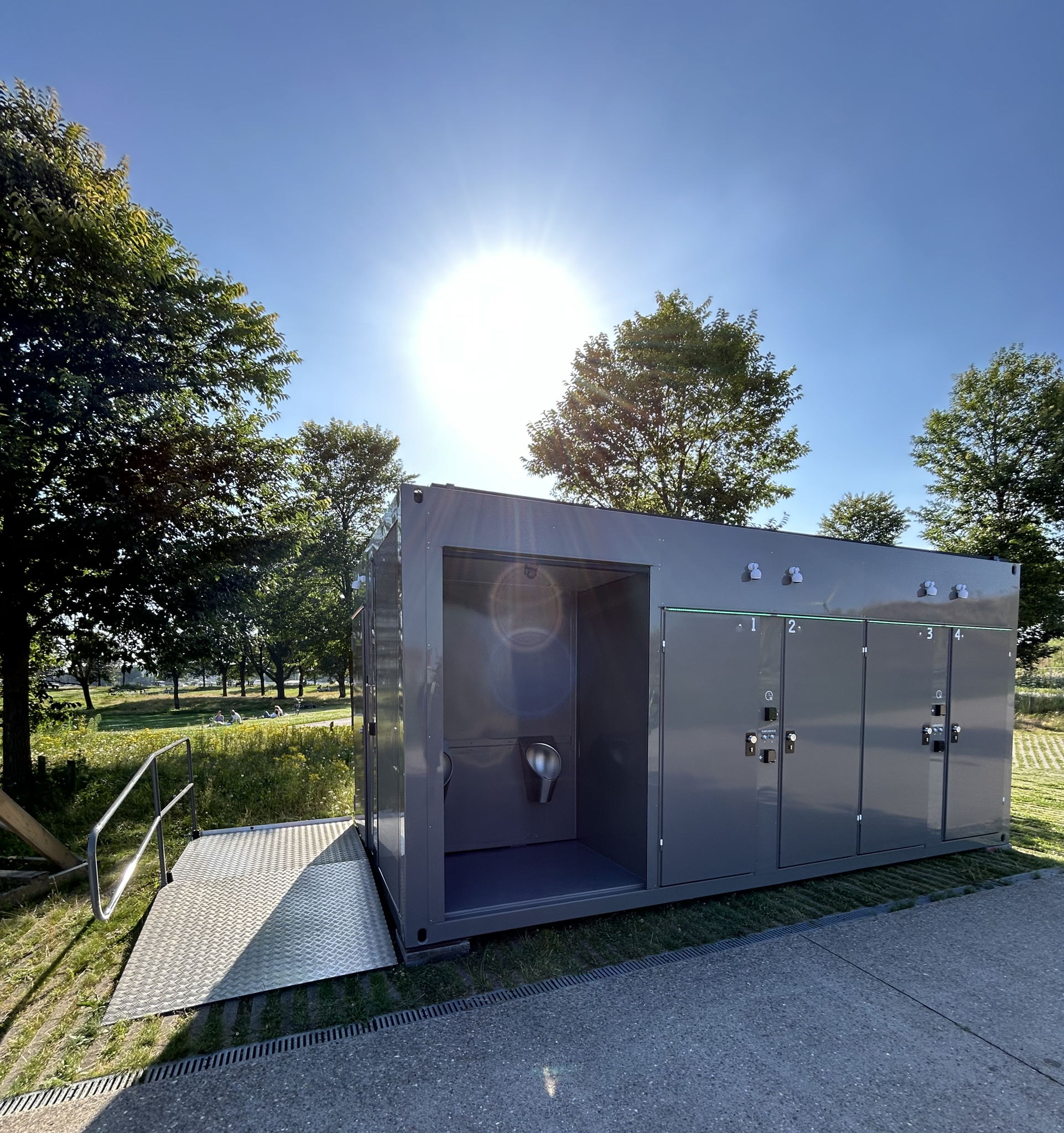
Alderman for Markets Johan Klaps (N-VA) showed equally little appetite for change. “We will not place extra mobile toilets on the Theaterplein during the Saturday and Sunday markets,” he said, arguing that the hospitality businesses around the square “not only have the disadvantages but also the benefits” of the market crowds, and that they remain free to charge non-customers for toilet use.
%20stad%20Antwerpen.jpg)
A Long-Running Shortage
The standoff is the latest chapter in a chronic problem. Antwerp has roughly 100 public toilets—76 standard and 24 wheelchair-accessible—across its ten districts. In April 2026, at a city council committee, Casier said there was no budget for additional facilities, only for maintaining existing ones, as VRT NWS reported at the time.
Opposition parties Groen and CD&V have repeatedly pressed the issue. Groen council member Ilse van Dienderen said people are defecating in the greenery of the Stadspark and noted the city’s ambition of matching its roughly 250 Velo bike-share stations in toilet numbers—a target she said will not be met by the end of the term. CD&V’s Pieter De Cock argued that Antwerp “is really lagging behind other cities” and that a self-styled world and tourist city cannot fail to provide for “the most banal needs of its citizens.”
Since 2023 the city has relied on pilot projects: a sanitary unit at Droogdokkenpark Belvédère opened in August 2024, the Stadspark’s Bar Capitale toilets were opened to non-customers for a contribution, and the Permeke library toilets at De Coninckplein are free during opening hours. Yet a separate pilot toilet on the Scheldt bend was closed in July 2025 after vandalism, with critics warning that wild urination would worsen.
What’s Next
The dispute lays bare a policy divide about who should pay for public hygiene: a budget-constrained city that says hospitality businesses benefit from market crowds, or the businesses themselves, which argue they are effectively providing a quasi-public service. Ballieu has drawn on his Brussels experience, where restaurants that opened their toilets to the public could receive a subsidy.
For now, the Theaterplein’s weekend crowds will continue to rely on two urinals and the goodwill of nearby restaurants. Whether the autumn Antwerp Toilet Plan moves beyond making existing facilities easier to find—and toward actually adding new ones—remains the open question for the market-goers, restaurateurs and residents at the heart of the debate.