First New Cat Species in a Century Found in Bolivia
Biologists have confirmed the first new species of wild cat described in more than 100 years, a small spotted feline from Bolivia’s cloud forests that is smaller than a domestic house cat. The discovery, published on 17 September in the journal Current Biology, was co-led by researchers at the University of Antwerp (UAntwerpen) alongside an international team, and formally names the animal Leopardus tilcayo — the tilcayo tiger cat.
The last time a new cat species was named was in 1923, when the Uruguayan grass cat (Leopardus fasciatus) was described. According to VRT NWS, the tilcayo is lighter than a house cat, with irregular dark rosettes, short round ears and long whiskers, and lives in the Yungas cloud forests of the eastern Andes.
A discovery that began with a “weird cat”
The story of L. tilcayo started by accident. In 2016, a man living in a forest community near La Paz found a small spotted kitten on a road, mistook it for a domestic breed and kept it for about a year, feeding it noodles, rice and eggs. Realising the animal was wild, he handed it to the Senda Verde wildlife sanctuary, where it was nicknamed “Tigrino”.
As National Geographic reports, the sanctuary then called biologist Paola Nogales-Ascarrunz, a National Geographic Explorer and founder of the Bolivian Felids Research Program. “I took a hundred pictures of it,” she recalled. “I was so fascinated.”
At first, researchers assumed Tigrino belonged to Leopardus tigrinus, a species described in 1775 and presumed to range across Central and South America. But in 2019, while preparing a booklet on Bolivia’s cats, Nogales-Ascarrunz noticed that the animal’s rosettes and tail did not match reference photos from Brazil. “This is so wrong,” she thought. Genetic sampling in 2021 confirmed her suspicion: Tigrino was something entirely new to science.
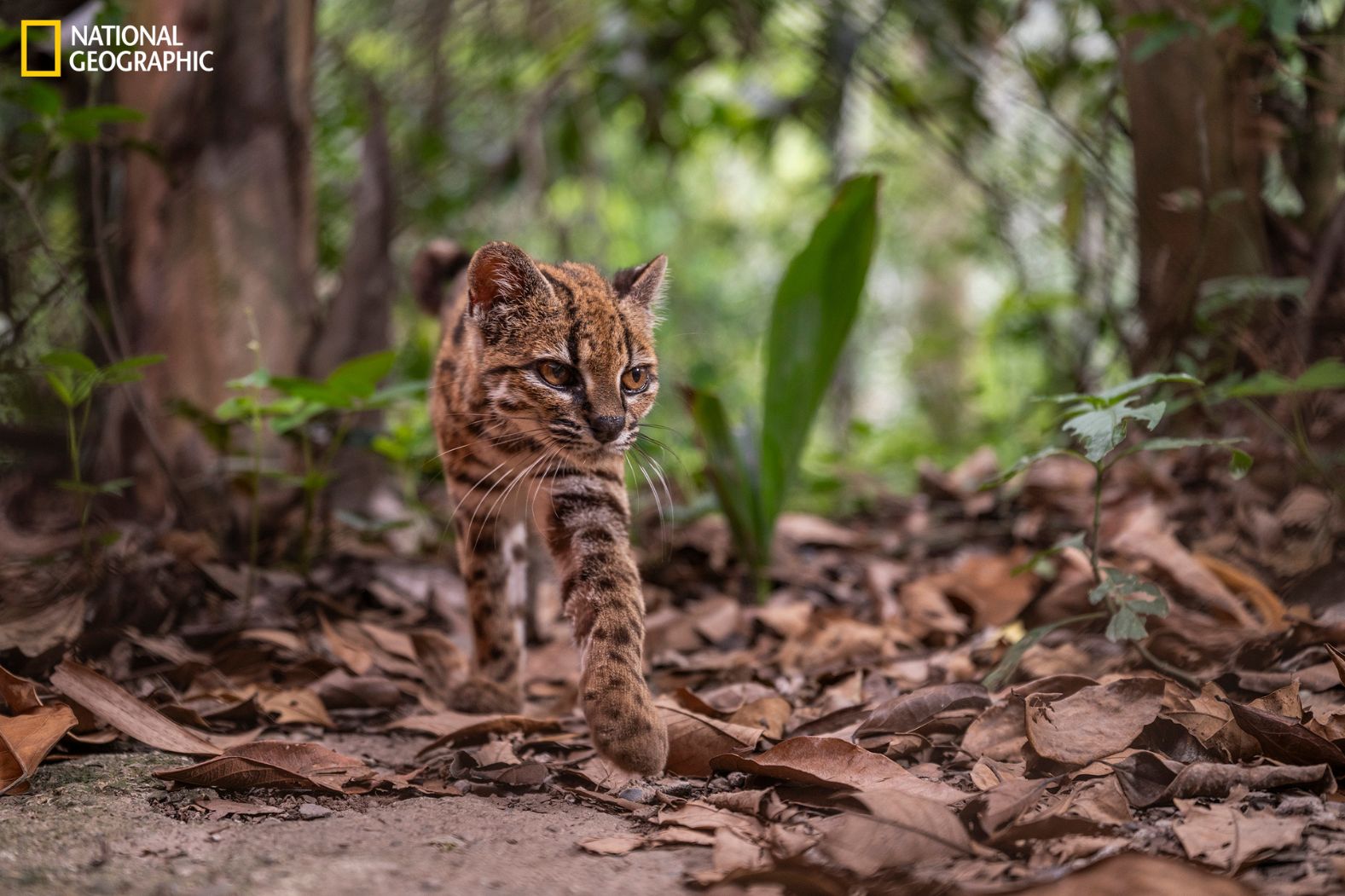
One species, five species
The study went well beyond naming a single animal. By sequencing complete genomes from 38 Leopardus individuals — combining modern samples with ancient DNA recovered from museum specimens, a technique known as museomics — the team showed that what science had long treated as one tiger-cat species is in fact at least five. Alongside L. tilcayo, the paper recognises L. tigrinus (now restricted to the Guiana Shield), L. pardinoides (the clouded tiger cat), L. emiliae (the eastern tiger cat) and L. guttulus (the southern tiger cat). It also describes a new Peruvian subspecies, Leopardus tigrinus antisuyo.
“What we once thought to be a single species, we’ve started to see that it was actually a species complex,” said geneticist Eduardo Eizirik of the Pontifical Catholic University of Rio Grande do Sul in Brazil, a co-lead author.
The tilcayo diverged from its closest relatives around 1.4 million years ago — a deeper split than that of the already-validated clouded tiger cat. Researchers typically use a rough threshold of about one million years of genetic separation to recognise a distinct felid species.
Why it stayed hidden
The discovery is striking because it is not a reclassification of a known subspecies, nor the revival of a historical name, but a genuinely novel mammal — and a felid, a group where new species are far rarer than among insects or microbes. As NBC News notes, “We didn’t have specimens in museums,” said co-author Tadeu de Oliveira of the State University of Maranhão in Brazil. “It had never been collected before.”
According to Jonas Lescroart, an evolutionary ecologist at UAntwerpen who co-led the study, the animal’s appearance is largely to blame. “Tiger cats are small, spotted felids from Central and South America that can barely be distinguished from one another on the basis of physical characteristics,” he told VRT NWS, adding that the species’ rarity, shy nature and the rugged terrain of the Yungas also played a role.
The naming itself honours local knowledge. Bolivian communities had called the animal “tilcayo” for generations, and researchers chose to preserve that name rather than invent a new one. “This is a traditional knowledge that they have in the community,” Nogales-Ascarrunz told NBC News. “We want to preserve that knowledge and we didn’t want to give it another name.”
A living holotype — and a conservation warning
One feature of the study is unusual: the reference specimen (holotype) is a living animal. Tigrino, now about ten years old, remains at Senda Verde and will stay there until his natural death, after which his body will join the collection of Bolivia’s National Natural History Museum. Normally, species descriptions rely on dead specimens.
“The discovery of the tilcayo hopefully releases more resources for preserving tiger-cat populations, which are often in a vulnerable situation,” Lescroart told VRT NWS. “At the same time we draw attention to the incredible natural value Bolivia is rich in.”
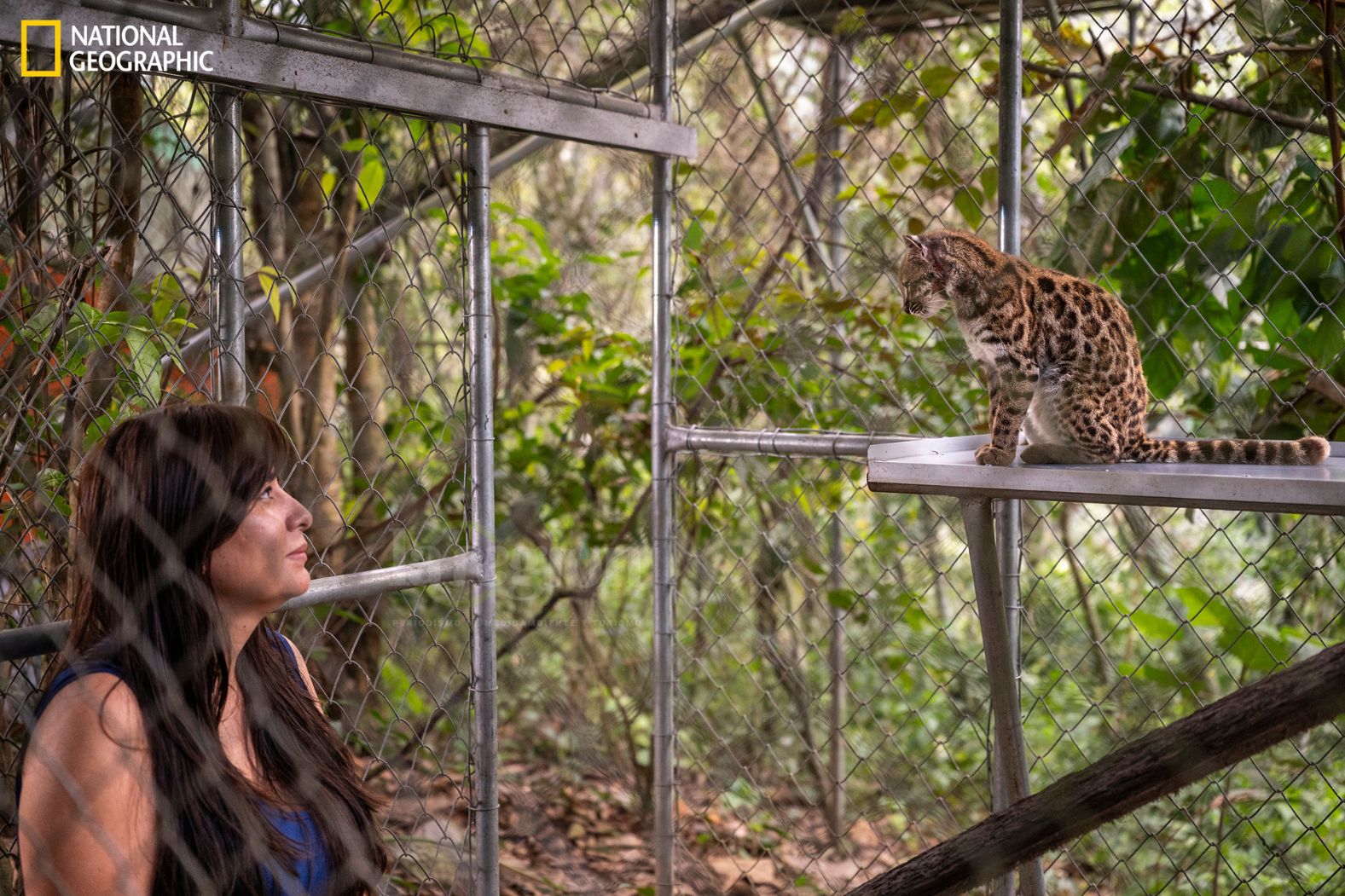
The conservation implications are significant. Splitting one broadly distributed “species” into five narrow-range ones reduces each population’s territory and estimated size, which typically raises each species’ extinction risk. L. tilcayo has not yet been formally assessed by the IUCN Red List, and scientists do not know how many exist in the wild.
“If you think [the tiger cat] is a single thing from southern Brazil all the way to Costa Rica, you’re going to find it’s not endangered,” Eizirik told National Geographic. “But if we find that it’s not a single thing, but actually five things, each of them must be assessed separately.”
Tadeu de Oliveira put the threat bluntly to NBC News: “All of them are in habitats that are vanishing fast.”
What to watch next
The IUCN is expected to reassess each newly delineated tiger cat separately, a process that could elevate their conservation priority. Habitat loss remains the principal danger.
Experts also expect the genomic methods used here to uncover more species elsewhere. “It’s by no means a stretch of the imagination that the improved methods used in this study will reveal new species of small wild cats in Africa and Asia,” James Sanderson of the Small Wild Cat Conservation Foundation told National Geographic, adding that the study hints the margay may actually comprise four species — a claim Eizirik says needs dedicated study.
For now, Bolivia’s documented mammal count remains at 407, with L. tilcayo replacing L. tigrinus on the national list, according to Erbol / La Región. As Bolivian biologist Enzo Aliaga-Rossel noted, the tilcayo is a mesopredator that helps regulate rodent populations — a role whose loss, he warned, has consequences for agriculture and public health.
Nogales-Ascarrunz framed the finding as both a scientific milestone and a call to action. “Sometimes we think that most of it is known, that there’s not a whole lot to discover,” she said. “But in fact, it’s the other way around.” To researchers and conservationists, the tilcayo is a reminder that even in a well-studied group like cats, discoveries — and the responsibility to protect them — remain.