U.S. Job Openings Slip to 7.1 Million as Labor Market Cools
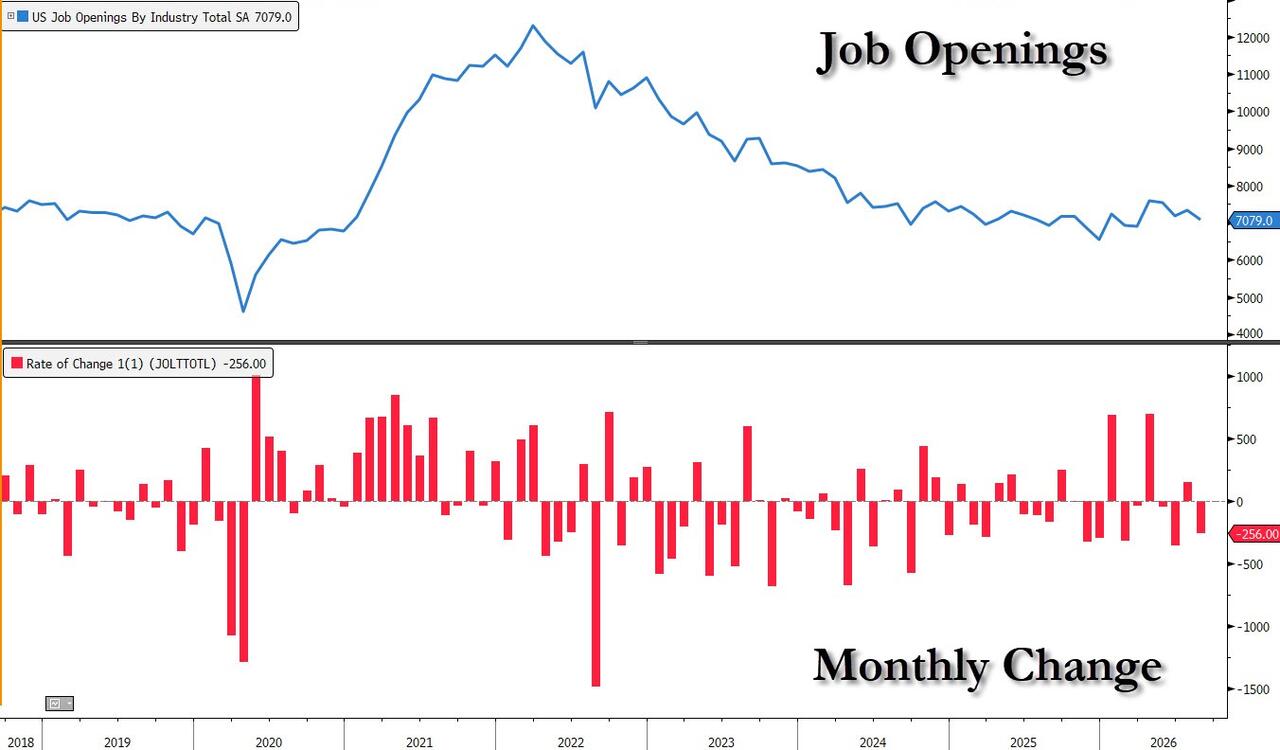
U.S. employers posted fewer job openings in August, with the Labor Department reporting Tuesday that openings fell to 7.08 million from a revised 7.34 million in July. The reading came in below the roughly 7.2 million that forecasters had expected — the third consecutive monthly miss — yet layoffs held near historic lows, painting a picture of a labor market that is cooling without cracking.
The figures, from the department’s Job Openings and Labor Turnover Survey (JOLTS), offer a snapshot of hiring demand as economists, investors, and policymakers watch for signs of resilience or strain in an economy buffeted by higher energy costs tied to the fighting with Iran. According to ABC News, which reported on the release, the market remains resilient in the face of higher energy costs caused by the fighting with Iran.
A Low-Hire, Low-Fire Labor Market
The headline decline was modest, but the details sketch a workforce where employers are neither shedding workers aggressively nor building out payrolls with confidence.
Layoffs and discharges remained little changed at 1.6 million, a rate of 1.0% that is historically low. Hires rose only slightly, up 46,000 to 5.19 million. Quits — often read as a barometer of worker confidence — fell again, down 23,000 to 3.07 million.
The openings-to-unemployed ratio slipped back to roughly 1.0, meaning there is now barely one job available for every unemployed worker. The surplus of openings over unemployed workers tumbled to about 48,000 from 419,000 a month earlier — a sharp narrowing of the bargaining power workers enjoyed during the post-pandemic hiring boom.
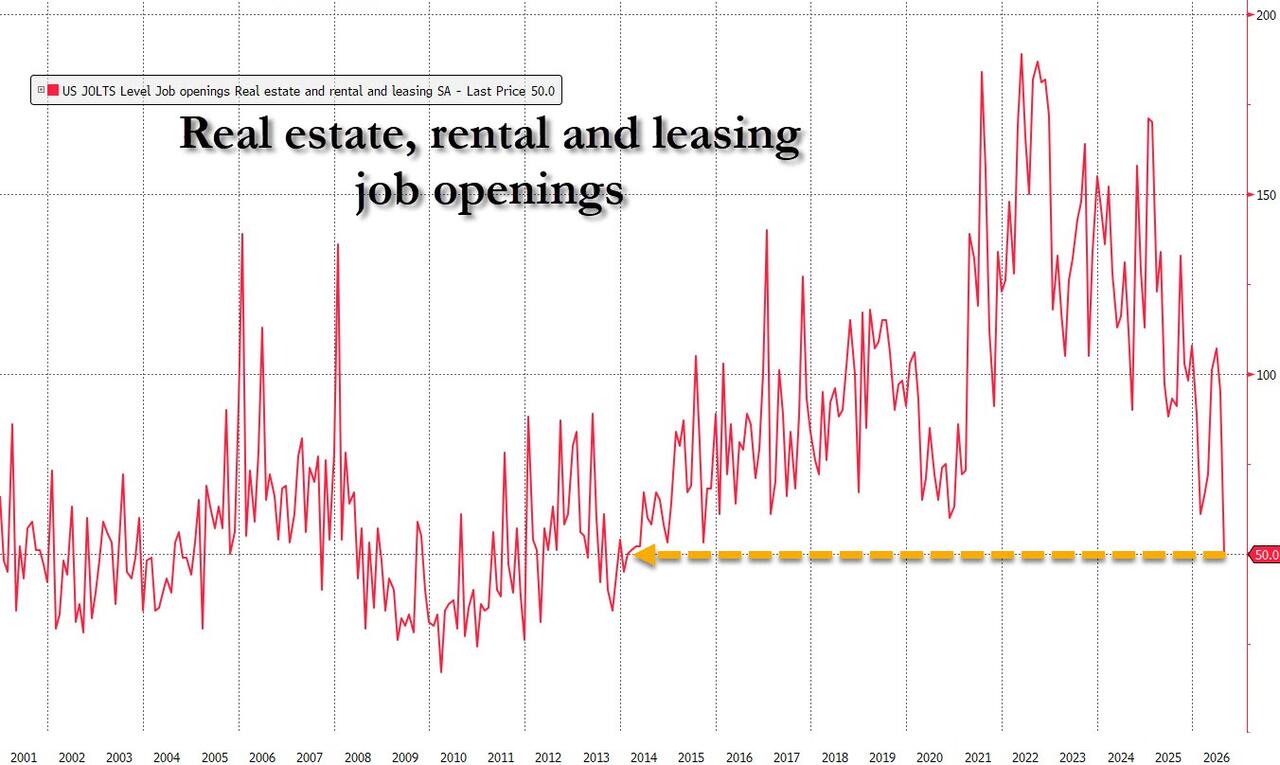
Sector detail was mixed. Openings rose in trade, information, and leisure and hospitality, but fell in construction, manufacturing, professional and business services, and private education. Real estate and rental and leasing openings plunged by nearly half, to 50,000 — the lowest level since February 2014.
Hiring Has Rebounded — But From a Very Low Base
The weak JOLTS print sits uneasily beside other measures of the labor market. The U.S. added a surprising 162,000 jobs in August, beating a Dow Jones consensus of roughly 53,000, and the unemployment rate held steady at 4.1%.
Employers have added an average 80,000 jobs a month so far in 2026, a marked improvement over the roughly 9,700-a-month average in 2025, when high interest rates and uncertainty over President Donald Trump’s trade policies discouraged hiring. Even so, hiring remains well below the 166,000 monthly jobs created on average in 2023 and 2024 — to say nothing of the 491,000-a-month pace during the 2021-2022 boom.
“Employers may not be laying workers off, but they aren’t hiring nearly as many as they did a few years ago,” AP economics writer Paul Wiseman noted in the ABC News report.
Looking ahead, forecasters surveyed by FactSet expect the September employment report, due Friday, October 2, to show about 95,000 jobs added — solid, but down from August — with the unemployment rate holding at 4.1%.
The Policy Backdrop Has Inverted
What makes this report especially consequential is the policy environment in which it lands. On September 16, the Federal Reserve raised its benchmark rate by 25 basis points to a range of 3.75%-4% — its first hike since July 2023, approved in a unanimous 12-0 vote. With inflation still above the central bank’s 2% target, a majority of officials have signaled at least one further increase this year.
That inverts the bad-news-is-good-news logic that dominated the previous two years. Weak labor data now buys the prospect of rate relief, while any strength risks licensing further tightening. The JOLTS miss therefore cuts both ways: it eases pressure on the Fed to hike again, but it also raises the odds that Friday’s jobs report comes in soft.
“Overall, this was a weak JOLTS report, with weakness in both openings and quits,” the market commentary site ZeroHedge wrote in its analysis of the release, adding that after some significant strength in the early part of 2026, the labor market is now hitting an air pocket.
A Structural Squeeze on Labor Supply
The cooling is partly a story about supply, not just demand. KPMG chief economist Diane Swonk has noted the labor force has declined by roughly 700,000 workers in 2026 as foreign-born participation falls and the workforce ages — a shift that helps explain how payroll growth can slow without pushing unemployment higher.
Immigration policy is compounding the squeeze in specific sectors. The July 27 termination of Temporary Protected Status for Haiti has intensified staffing pressure in healthcare, and an early-October cliff for Venezuelan beneficiaries looms. Federal government openings, meanwhile, fell to 77,000 — the lowest since February 2018.
“Anecdotal evidence supports continued job growth but underscores how narrow it has become,” Swonk wrote in her September employment primer.
What to Watch
For workers, the practical message of the August JOLTS report is one of stability without momentum: jobs remain relatively secure, but switching for a raise is getting harder, and fewer openings mean less leverage in negotiations.
For markets and the Fed, the focus now shifts to Friday’s September jobs report. A figure near the expected 95,000 would reinforce the soft-landing narrative; a sharp downside surprise, following three straight JOLTS misses, would raise harder questions about whether the energy shock from the Iran conflict is finally biting into hiring. Either way, the era of an extraordinarily tight labor market appears to be receding — and both workers and policymakers will have to adjust to a cooler, more cautious footing.