Volunteers Unlock 118,351 Medieval Kortrijk Records Online
More than two decades of painstaking volunteer work have culminated in the launch of a searchable online database containing all 118,351 historical aldermen’s deeds of the city of Kortrijk, covering the period from 1438 to 1796. Unlike earlier digitization efforts that merely scanned such documents, volunteers transcribed and indexed every deed into modern readable script, opening a vast trove of local history to researchers and the public alike.
According to the Belgian State Archives, Kortrijk is “probably the first city in the country” whose entire body of ancien régime aldermen’s deeds has been both digitized and indexed. The database was officially handed over by its initiator to the State Archivist in early November and made available online.
What Are Schepenakten?
Under the ancien régime, the schepenen — aldermen — wielded far broader powers than their modern namesakes. They governed the city, acted as judges, and performed duties similar to those of notaries, registering sale deeds, lease contracts, estate inventories, marriage contracts and more. They also ruled on inheritance disputes, neighbourly quarrels and other conflicts.
All of these judgments and deeds were recorded in 152 thick registers known as “akten en contracten” (deeds and contracts). The registers themselves had already been digitized years earlier and were consultable via AGATHA, the State Archives’ online search platform. But finding a specific deed previously meant ploughing through hundreds of folios written in a difficult-to-read medieval hand.
A Needle in a Haystack
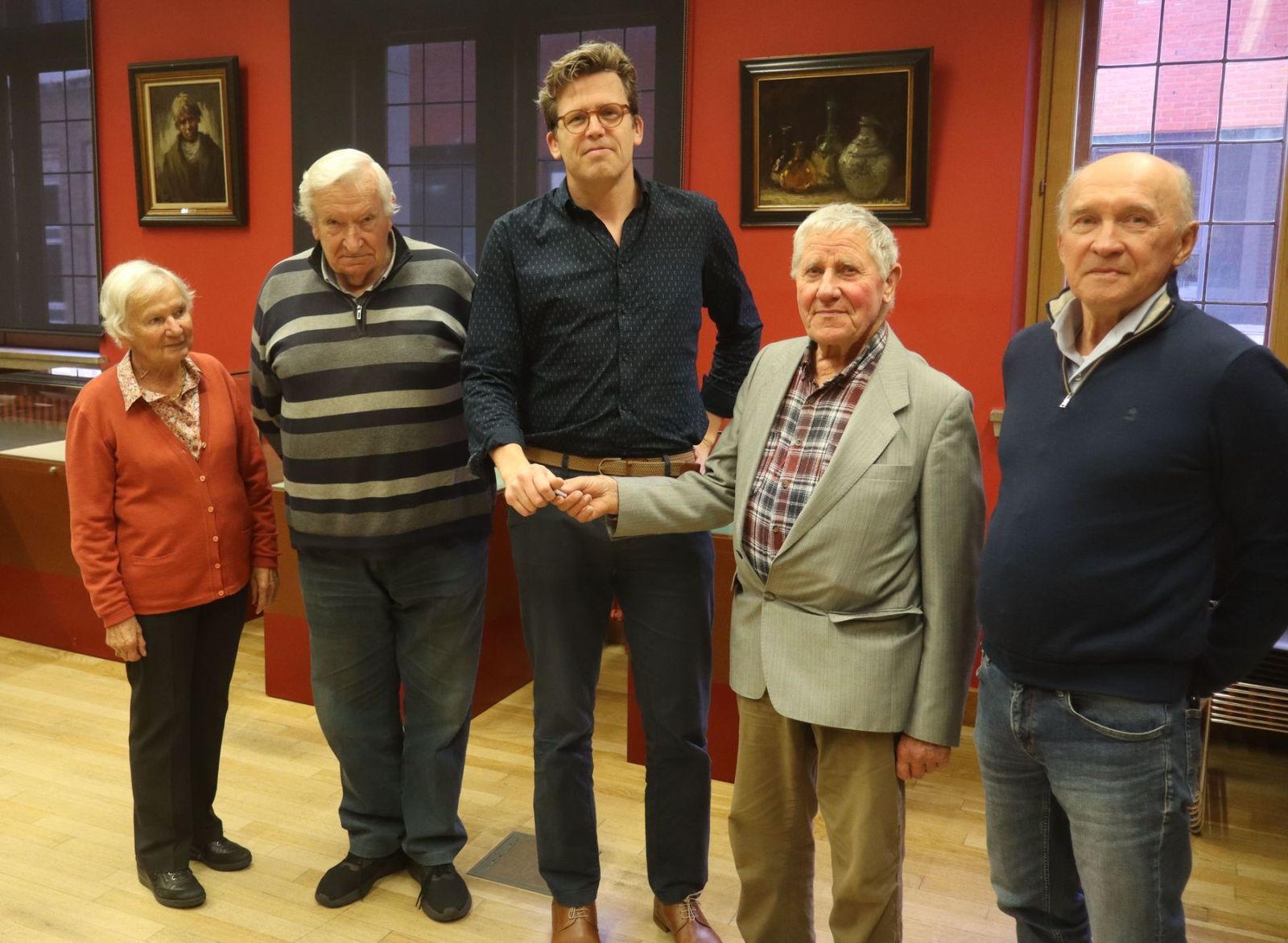
That changed with the volunteer project, which began in 2002 on the initiative of genealogist Marc Luyckx from Oekene, now part of Roeselare. Luyckx, now 82, was joined over the years by a dedicated team including Filips Benoit (77) from Deerlijk, as well as Gerda Laleeuwe, Tuur Struyve and Patrick Deruytter.
The scale of the achievement is hard to overstate. The database, now available as eight PDFs, records for each deed all family names, the subject, the date, and a reference to the correct register and folio — allowing users to locate and consult the full original document.
“Anyone who in the past went looking for a deed, but was not familiar with the script of that time, sometimes took days or weeks to decipher a deed,” Benoit said, as reported by VRT NWS. “It was almost as if you were searching for a needle in a haystack.”
Benoit stressed the documents’ unique value for anyone researching before the end of the 16th century. “That is really the only source of information. Only later did parish registers come along.”
A Goldmine for Genealogists and Historians
State Archivist Hendrik Callewier described the material as of inestimable value. “In the Middle Ages, aldermen were also notary and judge. That means the deeds also cover who bought a house, who married whom and what the contract looked like, how someone was punished when they had committed a crime,” he said. “That information is of inestimable value for local historians and people building their own family tree.”
The volunteers even uncovered some colourful historical finds along the way, including an inventory of a 15th-century brothel and a debate over whether Emperor Charles V was born in Ghent or in Eeklo.
The aldermen’s jurisdiction extended well beyond the city itself, spanning the kasselrij Kortrijk (Kortrijk castellany) — an area covering parts of present-day West and East Flanders. Many Kortrijkse buitenpoorters — external burgesses who held the burgess right but lived in villages and towns outside Kortrijk — remained subject to the aldermen’s authority. As a result, the deeds often concern people and matters far beyond Kortrijk.
Broader Significance
While other Flemish cities and municipalities have scanned their medieval documents, Kortrijk went a step further by making them genuinely legible. “This gives us insights into what kind of houses were built in the past, how marriage relationships went, how quarrels and conflicts were resolved,” Callewier said.
The database offers a window into medieval Kortrijk that was previously accessible only to trained palaeographers. It reveals which houses stood in the city and who lived in them, how marriages were contracted, and how disputes were settled — a socio-economic and legal record of centuries of daily life.
What’s Next
The completed database is accessible via the State Archives’ early-modern online offering and through the AGATHA register finding aid. For genealogists and historians, the work of Luyckx and his fellow volunteers has transformed a once-daunting archival maze into a navigable public resource — though as with any archive, further discoveries are certain to follow as researchers begin to explore the newly searchable material in earnest.