Belgium Drops Out of EU Beer Top 5 Over Data Gap
Belgium has fallen out of the European Union’s top five beer-producing countries for the first time, dropping to sixth place after failing to report non-alcoholic beer production figures to Eurostat, the EU’s statistical office. The administrative oversight allowed France to overtake Belgium in the annual ranking, according to VRT NWS.
A Methodological Shift
The ranking change stems from a methodological update by Eurostat. Starting with the 2025 data, published on 31 August, the agency now combines both alcoholic and non-alcoholic beer production when ranking member states. Belgium, however, did not provide Eurostat with data on its non-alcoholic beer production — an administrative oversight that penalized the country in the new statistical framework.
France, which did report its non-alcoholic beer figures, edged past Belgium for fifth place. According to Eurostat, EU countries produced a total of 34.4 billion litres of beer in 2025 — a slight decline of 0.7% compared with 2024, but a 2.2% increase compared with 2020.
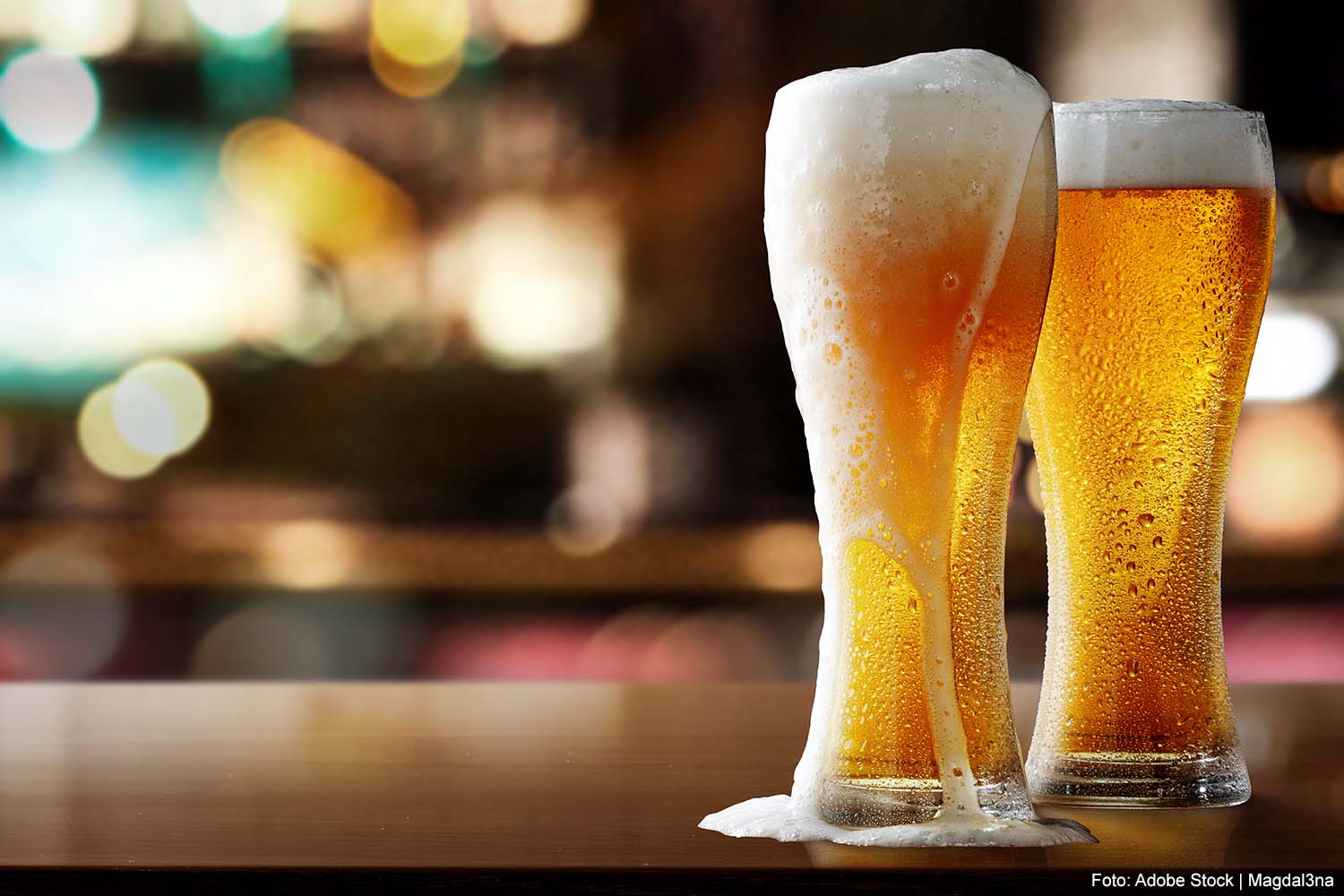
The New Top Five
Germany remains the EU’s dominant beer producer, brewing 7.4 billion litres in 2025, representing 21.6% of total EU production. Spain ranked second with 5.3 billion litres (15.5%), followed by Poland (3.5 billion litres; 10.2%). The Netherlands (2.4 billion litres; 6.9%) and France (2.1 billion litres; 6.0%) complete the top five.
Spain stands out as the notable exception to the general downward trend across Europe. Its beer production surged by nearly 24% in 2025, driven by growing domestic popularity, nearly 100 million tourists, and significant export activity. As Bière Actu reported, Belgium produced approximately 19 million hectolitres of beer in 2025, a 4% decrease compared with 2024.
Krishan Maudgal, CEO of Belgian Brewers, offered insight into Spain’s rise: “Spain has traditionally been a wine country, but beer is gaining popularity there. In the Mediterranean climate it can be served cold. And a beer bottle is smaller than a bottle of wine, handy for smaller consumption sizes. Brewers play into that well and position beer as the new popular drink.”
A Sector Under Pressure
The ranking change comes amid broader challenges for Belgium’s brewing industry. The sector has been facing sustained pressure, with production costs rising 25-30% over six years due to successive crises, as Maudgal noted in an interview with Made in.
Beer consumption in Belgium fell by 3.2% in 2025 to 6.19 million hectolitres, continuing a decade-long decline of nearly 20%. The number of breweries dropped from 411 in 2024 to 395 in 2025 — falling below 400 for the first time — with 28 closures and only 12 new openings. Direct employment in the sector declined by about 200 jobs to 6,605.
Exports, which account for roughly 70% of Belgian beer production, have also been declining since 2020, falling 4.8% in 2025. However, Belgium remains the largest beer exporter within the EU, with 1.5 billion litres exported in 2025 — about 20% of all EU exports, according to VILT.
The Rise of Alcohol-Free Beer
Paradoxically, the very segment that Belgium failed to report is one of the fastest-growing in the industry. Domestic consumption of low-alcohol beers (up to 3.5% alcohol) grew by 17% in 2025, representing 6.5% of total consumption. Beers under 0.5% alcohol alone recorded a 32% volume increase.
Of approximately 1,600 Belgian beers, over 150 are now alcohol-free — up from about 120 a year earlier. In Germany, non-alcoholic beer production grew 6.6% in 2025 while alcoholic beer production fell 5.8%, reflecting a broader European trend.
What’s Next for Belgian Beer
Despite the symbolic setback, industry leaders remain confident. Lorin Parys, chairman of Belgian Brewers, emphasized the country’s cultural significance: “Belgium is not just a beer country, it is the cradle of the global beer culture.” The country’s beer culture was recognized by UNESCO as intangible cultural heritage in 2016, and 2026 marks the tenth anniversary of that recognition.
If Belgium reports its non-alcoholic beer production data to Eurostat in 2026, it could potentially reclaim fifth place. The Eurostat figures only measure beer brewed within the country itself — not Belgian brands brewed globally by companies like AB InBev, the world’s largest brewer headquartered in Leuven.
For a nation that has long ranked among Europe’s brewing elite, the drop from the top five may prove temporary — a statistical correction rather than a structural decline. But it also serves as a reminder that even the most storied beer nations must adapt to changing consumption patterns and evolving statistical frameworks.